Molecular Imaging Program at Stanford (MIPS), Department of Radiology, Stanford University, Stanford, CA, USA.
Phys Med Biol. 2013 Feb 21;58(4):1207-20. doi: 10.1088/0031-9155/58/4/1207. Epub 2013 Jan 31.
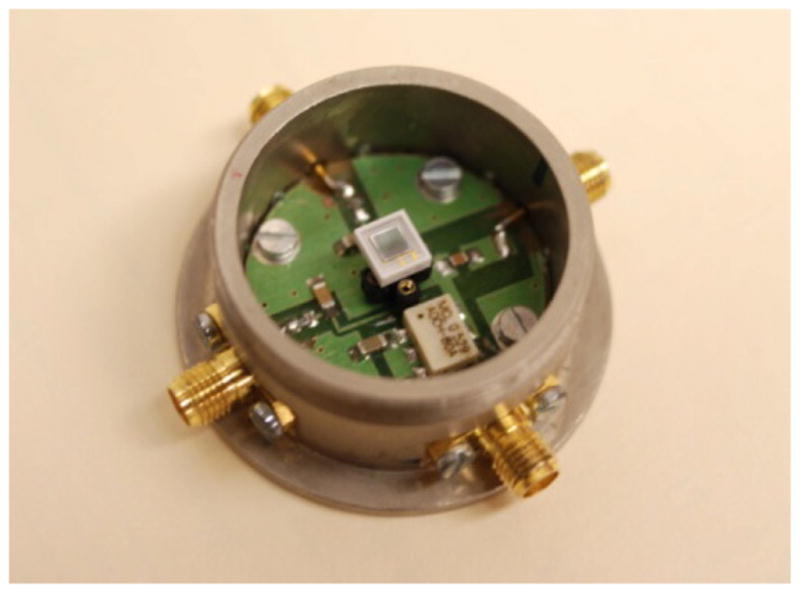
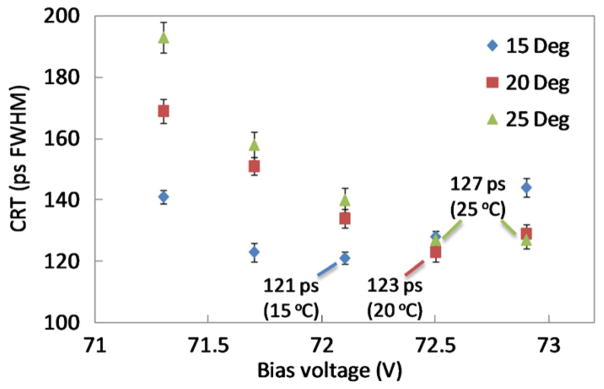
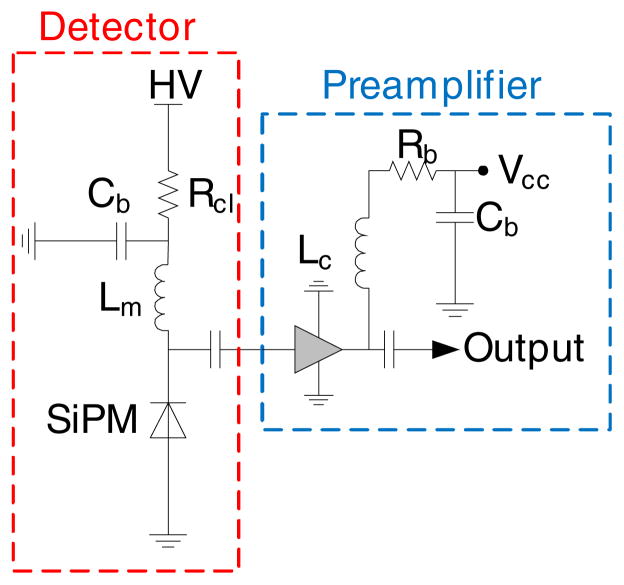
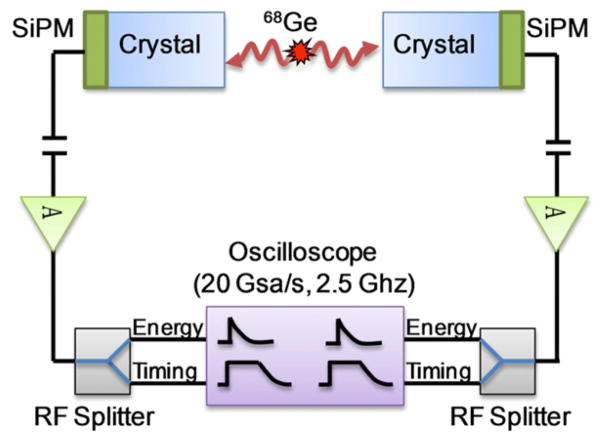
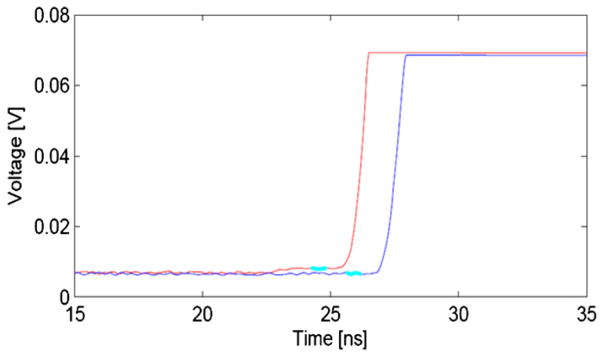
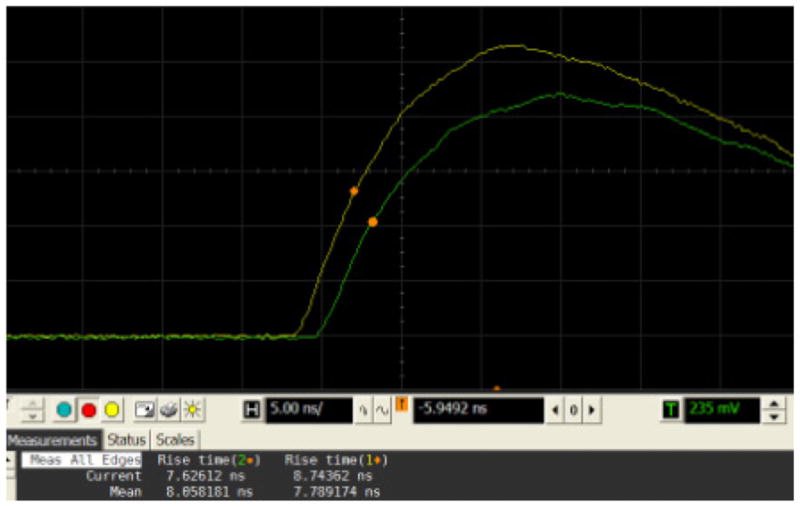
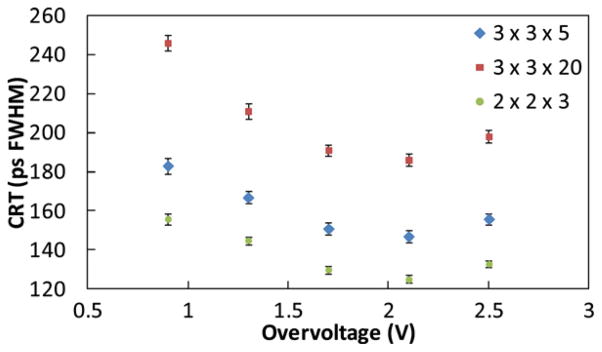
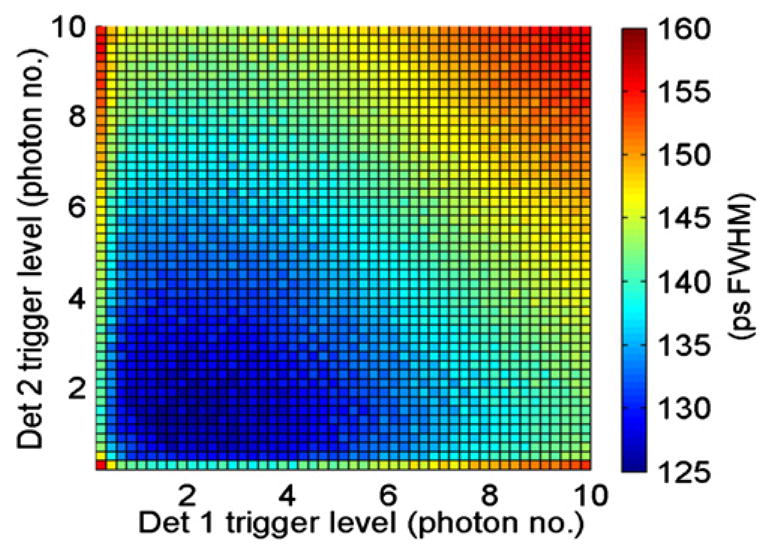
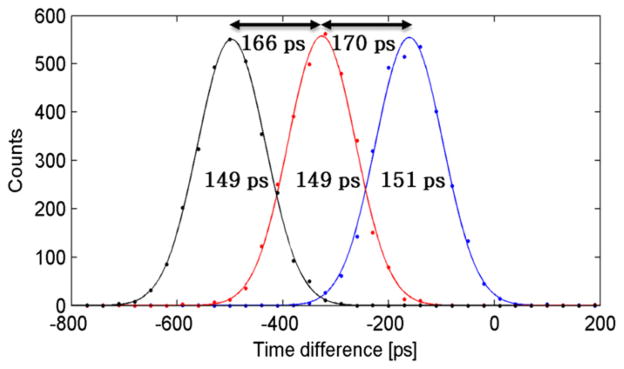
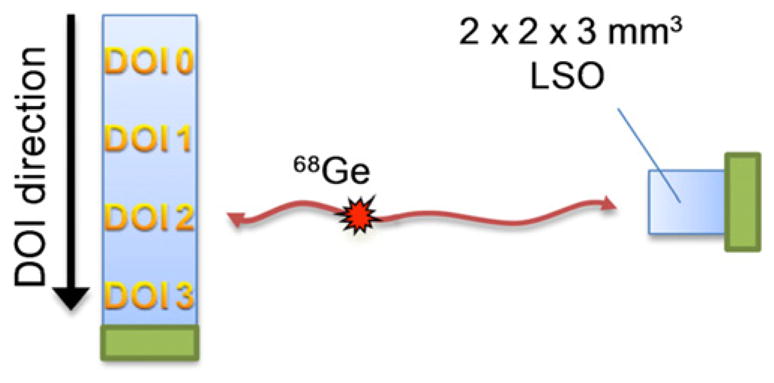
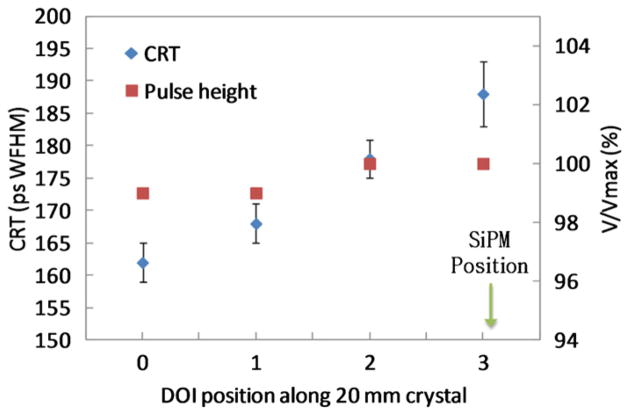
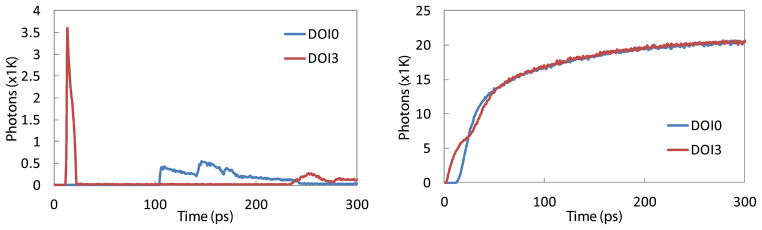
Precise timing resolution is crucial for applications requiring photon time-of-flight (ToF) information such as ToF positron emission tomography (PET). Silicon photomultipliers (SiPM) for PET, with their high output capacitance, are known to require custom preamplifiers to optimize timing performance. In this paper, we describe simple alternative front-end electronics based on a commercial low-noise RF preamplifier and methods that have been implemented to achieve excellent timing resolution. Two radiation detectors with L(Y)SO scintillators coupled to Hamamatsu SiPMs (MPPC S10362-33-050C) and front-end electronics based on an RF amplifier (MAR-3SM+), typically used for wireless applications that require minimal additional circuitry, have been fabricated. These detectors were used to detect annihilation photons from a Ge-68 source and the output signals were subsequently digitized by a high speed oscilloscope for offline processing. A coincident resolving time (CRT) of 147 ± 3 ps FWHM and 186 ± 3 ps FWHM with 3 × 3 × 5 mm(3) and with 3 × 3 × 20 mm(3) LYSO crystal elements were measured, respectively. With smaller 2 × 2 × 3 mm(3) LSO crystals, a CRT of 125 ± 2 ps FWHM was achieved with slight improvement to 121 ± 3 ps at a lower temperature (15° C). Finally, with the 20 mm length crystals, a degradation of timing resolution was observed for annihilation photon interactions that occur close to the photosensor compared to shallow depth-of-interaction (DOI). We conclude that commercial RF amplifiers optimized for noise, besides their ease of use, can produce excellent timing resolution comparable to best reported values acquired with custom readout electronics. On the other hand, as timing performance degrades with increasing photon DOI, a head-on detector configuration will produce better CRT than a side-irradiated setup for longer crystals.
精确的时间分辨率对于需要光子飞行时间 (ToF) 信息的应用至关重要,例如 ToF 正电子发射断层扫描 (PET)。由于其高输出电容,用于 PET 的硅光电倍增管 (SiPM) 需要定制前置放大器来优化时间性能。在本文中,我们描述了基于商业低噪声射频前置放大器的简单替代前端电子设备,以及为实现出色的时间分辨率而实施的方法。已经制造了两个具有 L(Y)SO 闪烁体耦合到 Hamamatsu SiPM (MPPC S10362-33-050C) 的辐射探测器和基于射频放大器 (MAR-3SM+) 的前端电子设备,这些探测器通常用于需要最小附加电路的无线应用。这些探测器用于检测来自 Ge-68 源的湮没光子,输出信号随后由高速示波器数字化,以便离线处理。使用 3×3×5mm(3) 和 3×3×20mm(3)LYSO 晶体元件,分别测量到 147 ± 3 ps FWHM 和 186 ± 3 ps FWHM 的符合分辨时间 (CRT)。使用更小的 2×2×3mm(3)LSO 晶体,在较低温度 (15°C) 下,CRT 略有改善至 121 ± 3 ps,达到 125 ± 2 ps。最后,对于与光电传感器接近的湮没光子相互作用,与较浅的深度交互 (DOI) 相比,使用 20mm 长度的晶体时,时间分辨率会降低。我们得出的结论是,除了易于使用之外,针对噪声进行优化的商业射频放大器可以产生与使用定制读出电子设备获得的最佳报告值相当的出色时间分辨率。另一方面,随着光子 DOI 的增加,时间性能会下降,对于较长的晶体,与侧面照射设置相比,正面照射探测器配置将产生更好的 CRT。