House of Competence - hiper.campus, Karlsruhe Institute of Technology Karlsruhe, Germany.
Front Psychol. 2013 Jul 9;4:411. doi: 10.3389/fpsyg.2013.00411. eCollection 2013.
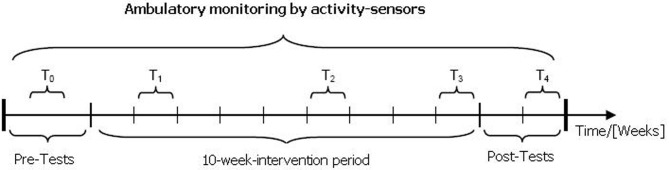
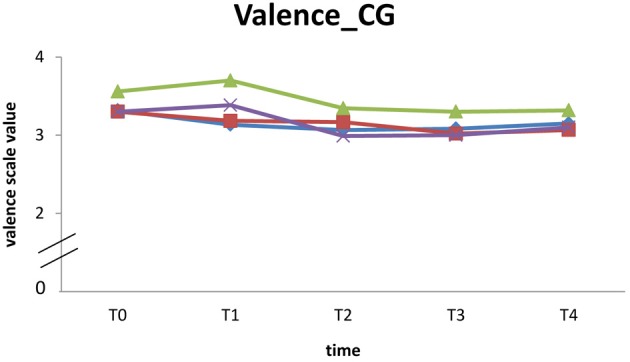
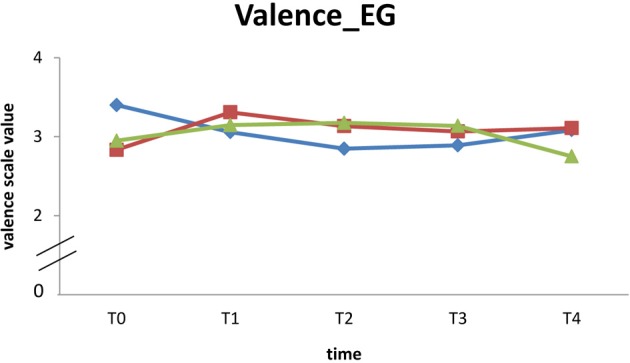
Exercise and physical activity have proven benefits for physical and psychological well-being. However, it is not clear if healthy young adults can enhance mood in everyday life through regular exercise. Earlier studies mainly showed positive effects of acute exercise and exercise programs on psychological well-being in children, older people and in clinical populations. Few studies controlled participants' physical activity in daily life, performed besides the exercise program, which can impact results. In addition the transition from mood enhancement induced by acute exercise to medium or long-term effects due to regular exercise is not yet determined. The purpose of this pilot study was to examine the acute effects of an aerobic running training on mood and trends in medium term changes of mood in everyday life of young adults. We conducted a 10-week aerobic endurance training with frequent mood assessments and continuous activity monitoring. 23 apprentices, separated into experimental and control group, were monitored over 12 weeks. To control the effectiveness of the aerobic exercise program, participants completed a progressive treadmill test pre and post the intervention period. The three basic mood dimensions energetic arousal, valence and calmness were assessed via electronic diaries. Participants had to rate their mood state frequently on 3 days a week at five times of measurement within 12 weeks. Participants' physical activity was assessed with accelerometers. All mood dimensions increased immediately after acute endurance exercise but results were not significant. The highest acute mood change could be observed in valence (p = 0.07; η(2) = 0.27). However, no medium term effects in mood states could be observed after a few weeks of endurance training. Future studies should focus on the interaction between acute and medium term effects of exercise training on mood. The decreasing compliance over the course of the study requires the development of strategies to maintain compliance over longer periods.
锻炼和体育活动已被证明对身心健康有益。然而,目前尚不清楚健康的年轻人是否可以通过定期锻炼来改善日常生活中的情绪。早期的研究主要显示了急性运动和运动计划对儿童、老年人和临床人群的心理健康的积极影响。很少有研究控制参与者在日常生活中的体育活动,除了运动计划之外,这些活动可能会影响结果。此外,由于定期运动引起的急性运动引起的情绪增强到由于定期运动引起的中期或长期影响的转变尚不确定。本研究的目的是检查有氧运动训练对年轻人日常生活中情绪的急性影响以及情绪中期变化的趋势。我们进行了为期 10 周的有氧运动耐力训练,频繁进行情绪评估,并持续进行活动监测。23 名学徒分为实验组和对照组,在 12 周内进行监测。为了控制有氧运动计划的有效性,参与者在干预期前后进行了渐进式跑步机测试。通过电子日记评估了三个基本情绪维度:能量激发、效价和平静。参与者必须在 12 周内每周 3 天、每天 5 次频繁地评估自己的情绪状态。参与者的体育活动通过加速度计进行评估。急性耐力运动后,所有情绪维度立即增加,但结果不显著。在效价方面,急性情绪变化最大(p = 0.07;η(2) = 0.27)。然而,耐力训练几周后,情绪状态没有观察到中期影响。未来的研究应重点关注运动训练对情绪的急性和中期影响的相互作用。随着研究的进行,顺应性逐渐降低,这需要制定策略来保持更长时间的顺应性。