Mathematics Department, Marshall University, Huntington, West Virginia, United States of America.
PLoS One. 2013 Aug 26;8(8):e71692. doi: 10.1371/journal.pone.0071692. eCollection 2013.
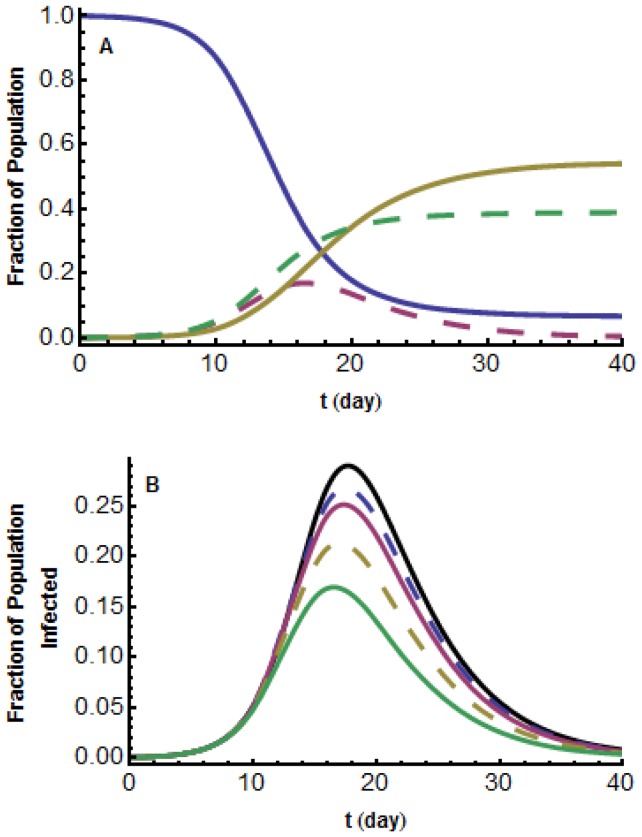
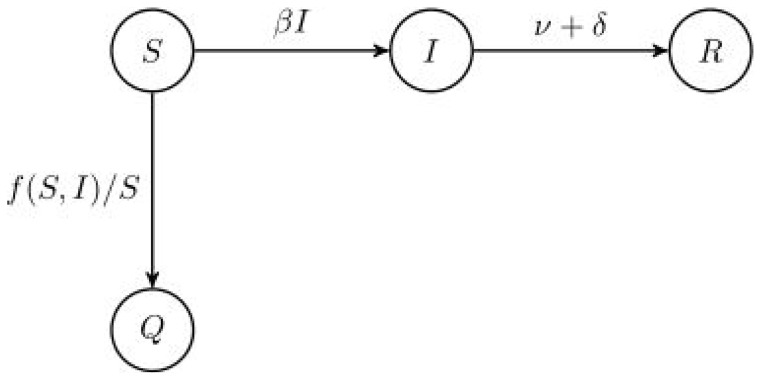
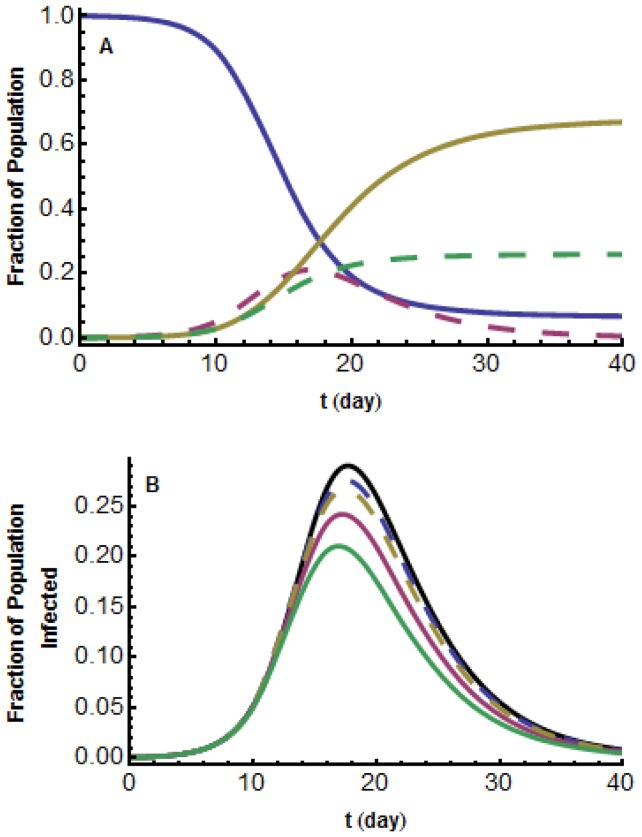
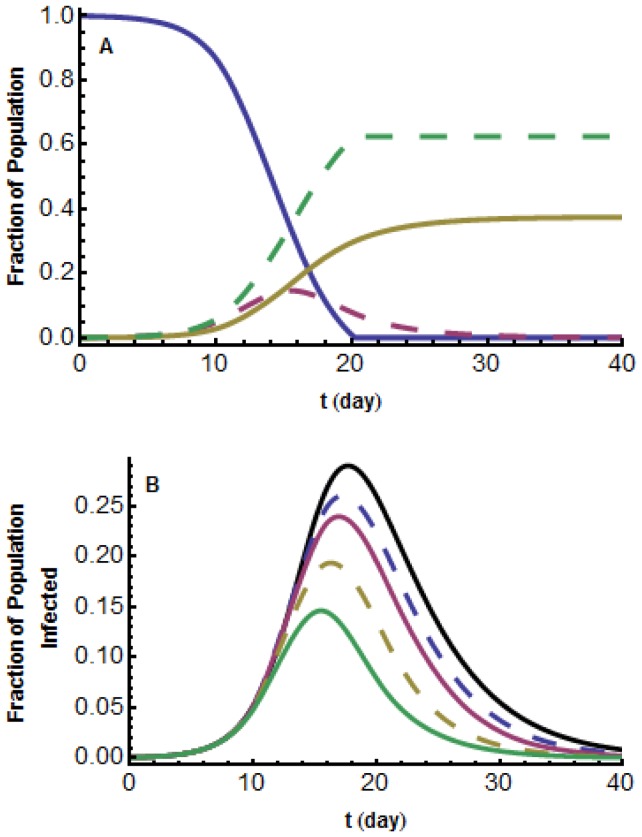
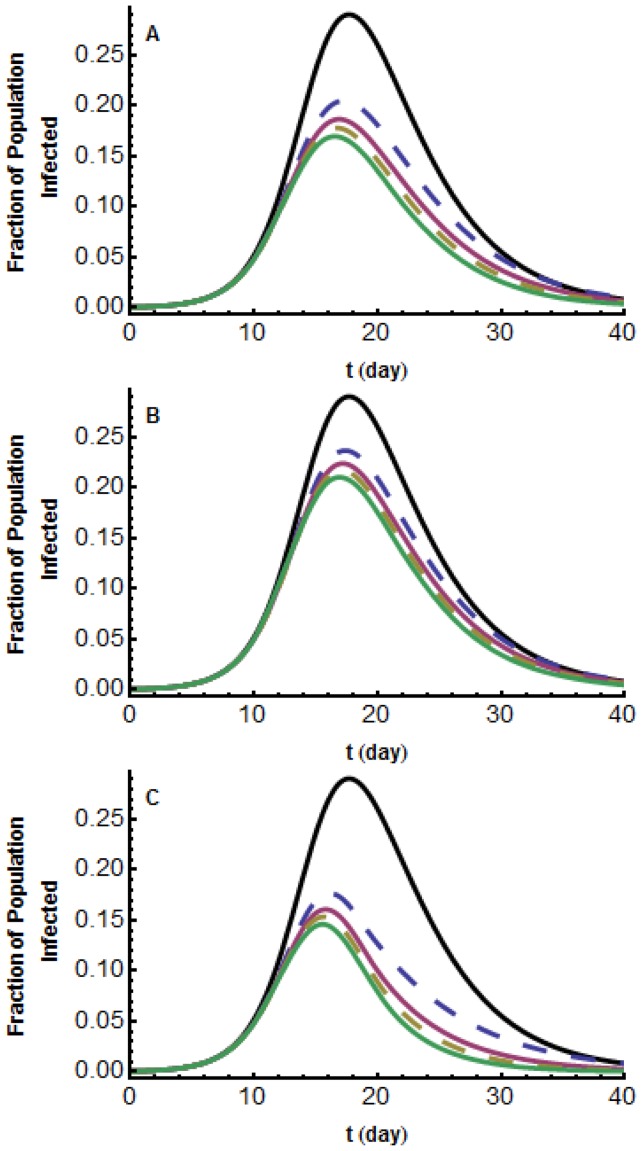
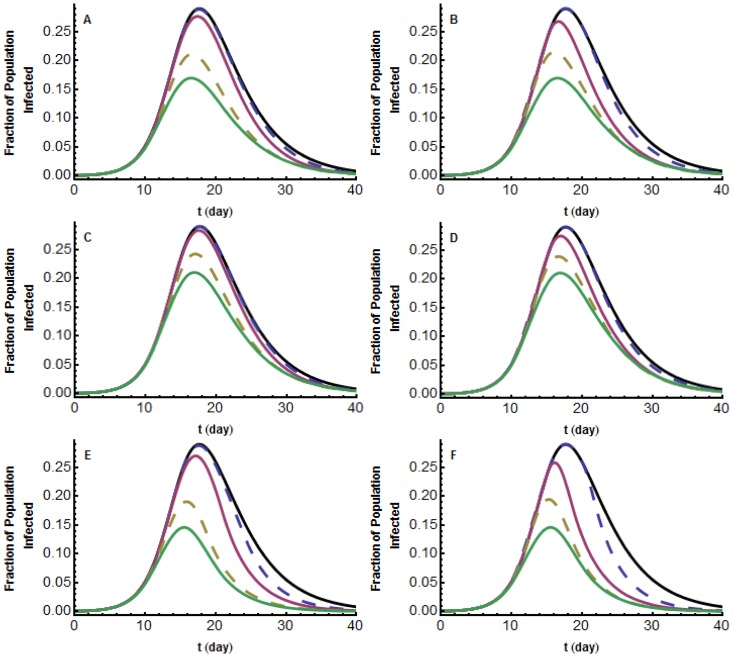
During outbreaks of infectious diseases with high morbidity and mortality, individuals closely follow media reports of the outbreak. Many will attempt to minimize contacts with other individuals in order to protect themselves from infection and possibly death. This process is called social distancing. Social distancing strategies include restricting socializing and travel, and using barrier protections. We use modeling to show that for short-term outbreaks, social distancing can have a large influence on reducing outbreak morbidity and mortality. In particular, public health agencies working together with the media can significantly reduce the severity of an outbreak by providing timely accounts of new infections and deaths. Our models show that the most effective strategy to reduce infections is to provide this information as early as possible, though providing it well into the course of the outbreak can still have a significant effect. However, our models for long-term outbreaks indicate that reporting historic infection data can result in more infections than with no reporting at all. We examine three types of media influence and we illustrate the media influence with a simulated outbreak of a generic emerging infectious disease in a small city. Social distancing can never be complete; however, for a spectrum of outbreaks, we show that leaving isolation (stopping applying social distancing measures) for up to 4 hours each day has modest effect on the overall morbidity and mortality.
在高发病率和死亡率的传染病爆发期间,个人会密切关注有关疫情的媒体报道。许多人会试图尽量减少与其他人的接触,以保护自己免受感染甚至死亡。这个过程被称为社交隔离。社交隔离策略包括限制社交活动和旅行,并使用隔离防护。我们通过建模表明,对于短期疫情爆发,社交隔离可以对降低疫情发病率和死亡率产生重大影响。特别是,公共卫生机构与媒体合作,通过及时报告新的感染和死亡人数,可以显著减轻疫情的严重程度。我们的模型表明,减少感染最有效的策略是尽早提供这些信息,尽管在疫情爆发过程中提供信息仍能产生重大影响。然而,我们对长期疫情的模型表明,报告历史感染数据可能会导致比不报告更多的感染。我们研究了三种媒体影响,并通过模拟一个小城市中一种常见新发传染病的爆发来举例说明媒体影响。社交隔离不可能完全实现;但是,对于一系列疫情爆发,我们表明,每天隔离 4 小时以内对整体发病率和死亡率的影响不大。