The National Research Centre for the Working Environment, Lersø Parkallé 105, Copenhagen DK-2100, Denmark.
Int J Environ Res Public Health. 2013 Oct 14;10(10):4996-5010. doi: 10.3390/ijerph10104996.
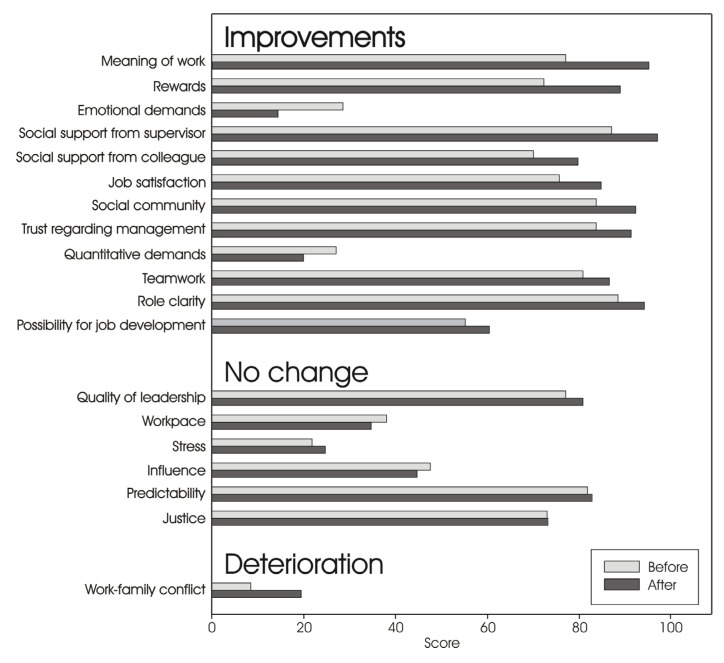
Global labour migration has increased in recent years and immigrant workers are often recruited into low status and low paid jobs such as cleaning. Research in a Danish context shows that immigrants working in the cleaning industry often form social networks based on shared languages and backgrounds, and that conflict between different ethnic groups may occur. This paper evaluates the impact of a multi-component intervention on the psychosocial work environment at a multi-ethnic Danish workplace in the cleaning sector. The intervention included Danish lessons, vocational training courses, and activities to improve collaboration across different groups of cleaners. Interviews about the outcome of the intervention were conducted with the cleaners and their supervisor. The Copenhagen Psychosocial Questionnaire was used as a supplement to the interviews. The results suggest that the psychosocial work environment had improved after the intervention. According to the interviews with the cleaners, the intervention had led to improved communication, trust, and collaboration. These findings are supported by the questionnaire where social support from supervisor and colleagues, social community, trust, and teamwork seem to have improved together with meaning of work, rewards, and emotional demands. The design of the intervention may provide inspiration for future psychosocial work environment interventions at multi-ethnic work places.
近年来,全球劳动力迁移有所增加,移民工人经常被招募到低地位和低薪的工作岗位,如清洁工作。丹麦的研究表明,在清洁行业工作的移民经常基于共同的语言和背景形成社交网络,不同族裔群体之间可能会发生冲突。本文评估了一项多组件干预措施对丹麦多族裔清洁场所清洁部门的心理社会工作环境的影响。该干预措施包括丹麦语课程、职业培训课程以及改善不同清洁工群体之间合作的活动。对清洁工及其主管进行了有关干预结果的访谈。哥本哈根心理社会问卷被用作访谈的补充。结果表明,干预后心理社会工作环境有所改善。根据清洁工的访谈,干预导致了沟通、信任和协作的改善。调查问卷也支持了这些发现,其中来自主管和同事的社会支持、社交群体、信任和团队合作似乎与工作意义、奖励和情绪需求一起得到了改善。干预措施的设计可能为未来在多族裔工作场所进行心理社会工作环境干预提供灵感。