Department of Pediatrics, University of Milan, Luigi Sacco Hospital, Milan 20157, Italy.
Nutrients. 2013 Nov 18;5(11):4553-65. doi: 10.3390/nu5114553.
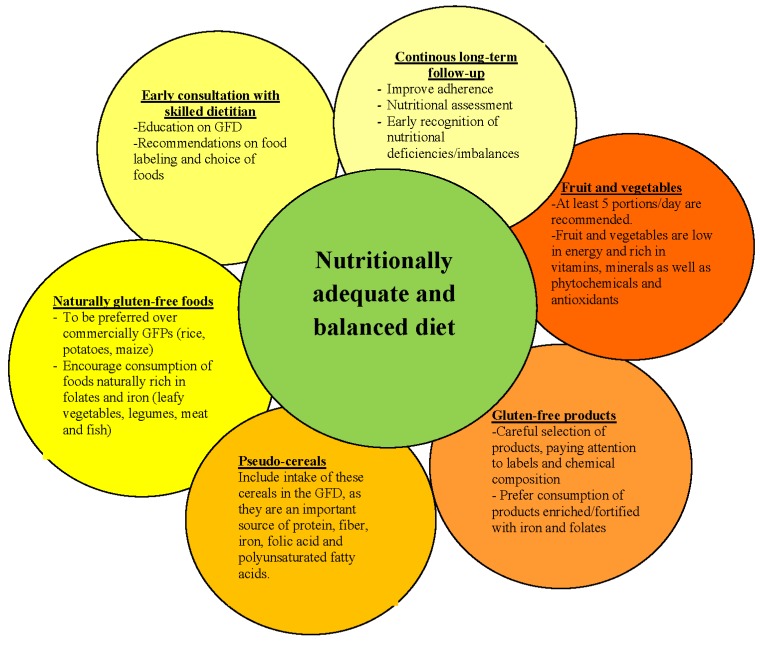
Gluten-free diet (GFD) is the cornerstone treatment for celiac disease (CD). GFD implies a strict and lifelong elimination from the diet of gluten, the storage protein found in wheat, barley, rye and hybrids of these grains, such as kamut and triticale. The absence of gluten in natural and processed foods, despite being the key aspect of GFD, may lead to nutritional consequences, such as deficits and imbalances. The nutritional adequacy of GFD is particularly important in children, this the age being of maximal energy and nutrient requirements for growth, development and activity. In recent years, attention has focused on the nutritional quality of gluten-free products (GFPs) available in the market. It is well recognized that GFPs are considered of lower quality and poorer nutritional value compared to the gluten-containing counterparts. The present review focuses on the nutritional adequacy of GFD at the pediatric age, with the aim being to increase awareness of the potential complications associated with this diet, to identify strategies in order to avoid them and to promote a healthier diet and lifestyle in children with CD.
无麸质饮食(GFD)是乳糜泻(CD)的基础治疗方法。GFD 意味着严格和终生从饮食中去除麸质,麸质是存在于小麦、大麦、黑麦和这些谷物的杂种,如 kamut 和黑小麦中的储存蛋白。尽管无麸质是 GFD 的关键方面,但天然和加工食品中仍然可能存在营养成分不足和失衡的情况。GFD 的营养充足性在儿童中尤为重要,因为这个年龄段是生长、发育和活动所需的最大能量和营养需求时期。近年来,人们越来越关注市场上可获得的无麸质产品(GFPs)的营养质量。人们普遍认识到,与含麸质的同类产品相比,GFPs 的质量较低,营养价值较差。本综述重点关注儿科 GFD 的营养充足性,旨在提高人们对这种饮食相关潜在并发症的认识,确定避免这些并发症的策略,并促进 CD 患儿更健康的饮食和生活方式。