Vazquez-Muñoz Roberto, Avalos-Borja Miguel, Castro-Longoria Ernestina
Departamento de Microbiología, Centro de Investigación Científica y de Educación Superior de Ensenada (CICESE), Ensenada, B.C., Mexico.
División de Materiales Avanzados, Instituto Potosino de Investigación Científica y Tecnológica (IPICYT), San Luis Potosí, S.L.P., México; Centro de Nanociencias y Nanotecnología, Universidad Nacional Autónoma de México (UNAM), Ensenada, B.C., Mexico.
PLoS One. 2014 Oct 7;9(10):e108876. doi: 10.1371/journal.pone.0108876. eCollection 2014.
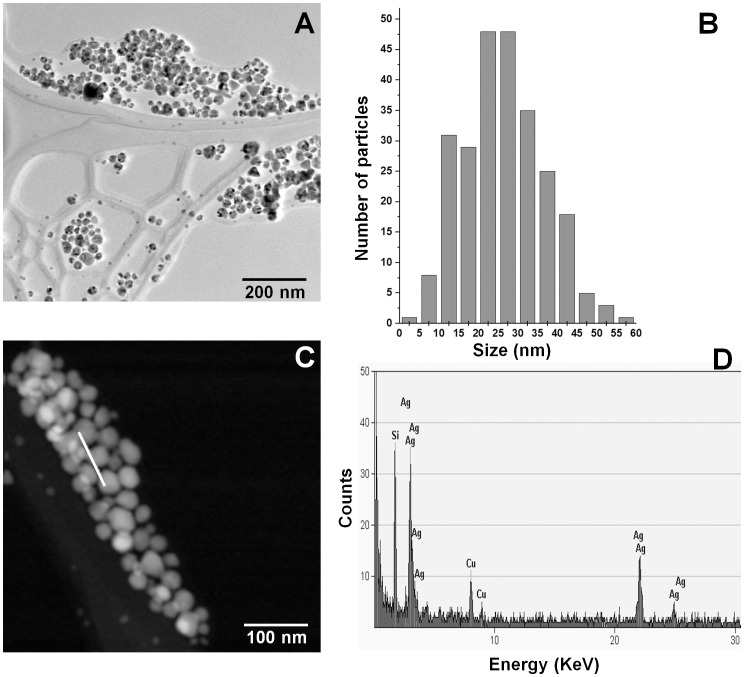
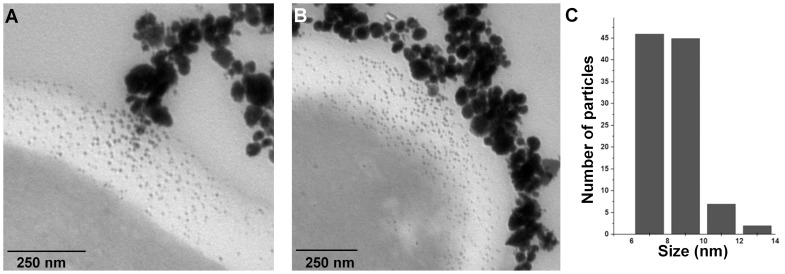
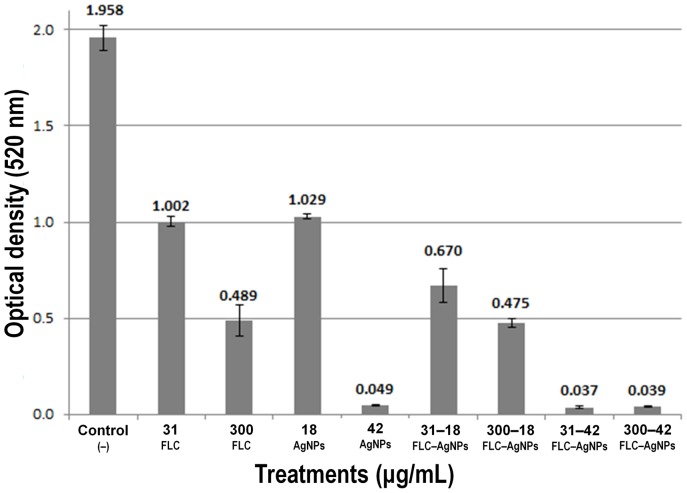
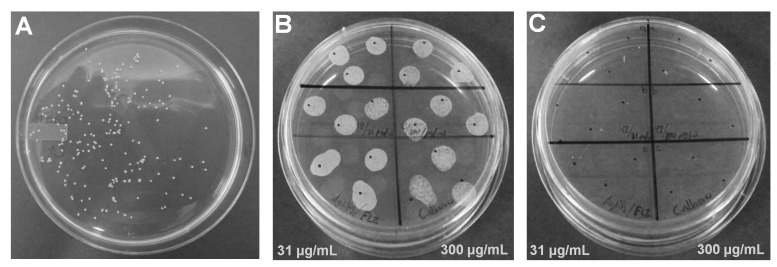
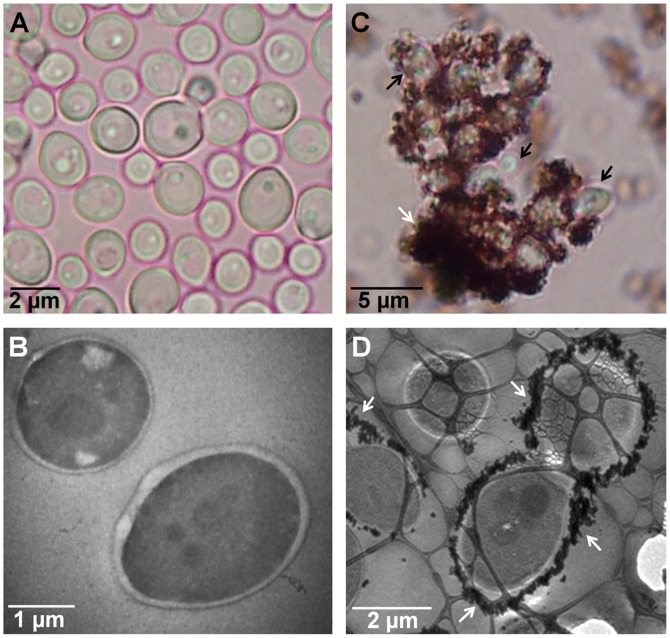
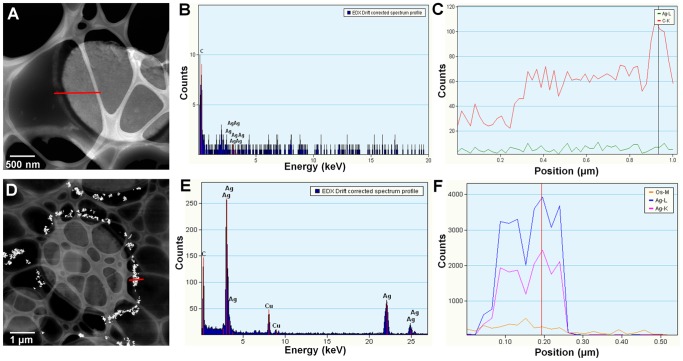
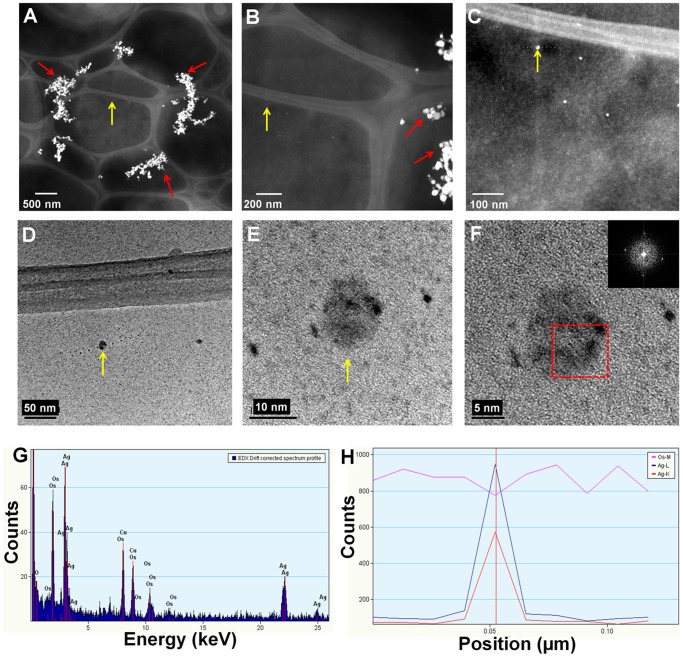
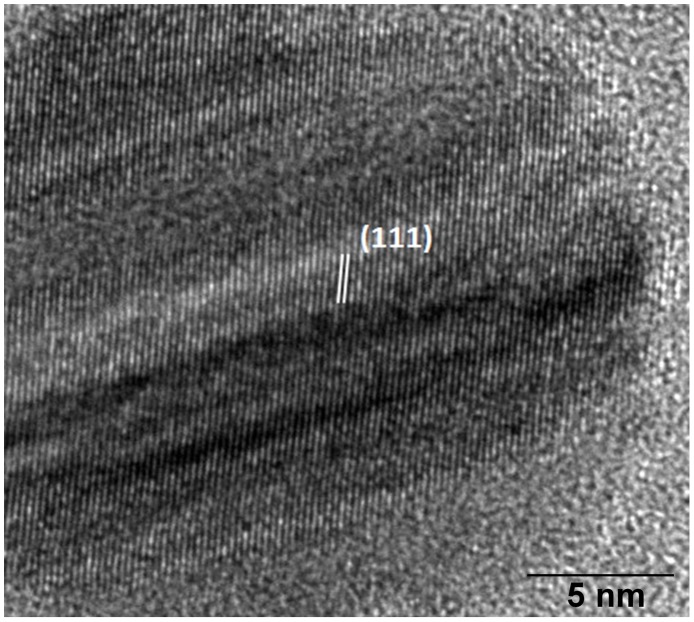
Candida albicans is the most common fungal pathogen in humans, and recently some studies have reported the antifungal activity of silver nanoparticles (AgNPs) against some Candida species. However, ultrastructural analyses on the interaction of AgNPs with these microorganisms have not been reported. In this work we evaluated the effect of AgNPs on C. albicans, and the minimum inhibitory concentration (MIC) was found to have a fungicidal effect. The IC50 was also determined, and the use of AgNPs with fluconazole (FLC), a fungistatic drug, reduced cell proliferation. In order to understand how AgNPs interact with living cells, the ultrastructural distribution of AgNPs in this fungus was determined. Transmission electron microscopy (TEM) analysis revealed a high accumulation of AgNPs outside the cells but also smaller nanoparticles (NPs) localized throughout the cytoplasm. Energy dispersive spectroscopy (EDS) analysis confirmed the presence of intracellular silver. From our results it is assumed that AgNPs used in this study do not penetrate the cell, but instead release silver ions that infiltrate into the cell leading to the formation of NPs through reduction by organic compounds present in the cell wall and cytoplasm.
白色念珠菌是人类最常见的真菌病原体,最近一些研究报道了银纳米颗粒(AgNPs)对某些念珠菌属的抗真菌活性。然而,尚未见关于AgNPs与这些微生物相互作用的超微结构分析报道。在本研究中,我们评估了AgNPs对白色念珠菌的作用,发现最低抑菌浓度(MIC)具有杀菌作用。还测定了半数抑制浓度(IC50),并且将AgNPs与抑菌药物氟康唑(FLC)联合使用可减少细胞增殖。为了了解AgNPs如何与活细胞相互作用,我们确定了AgNPs在该真菌中的超微结构分布。透射电子显微镜(TEM)分析显示,AgNPs在细胞外大量积累,但也有较小的纳米颗粒(NPs)分布于整个细胞质中。能量色散光谱(EDS)分析证实了细胞内银的存在。根据我们的结果推测,本研究中使用的AgNPs不会穿透细胞,而是释放银离子,这些银离子渗入细胞,通过细胞壁和细胞质中存在的有机化合物还原导致形成NPs。