Mehrabian Shima, Extra Jocelyne, Wu Ya-Huei, Pino Maribel, Traykov Latchezar, Rigaud Anne-Sophie
Department of Neurology, University Hospital (UH) "Alexandrovska", Sofia, Bulgaria.
Department of Gerontology, Hôpital Broca, Assitance Publique-Hôpitaux de Paris, EA 4468, Faculte de Médecine, Université Paris Descartes, Paris, France.
Med Devices (Auckl). 2014 Dec 19;8:21-9. doi: 10.2147/MDER.S70520. eCollection 2015.
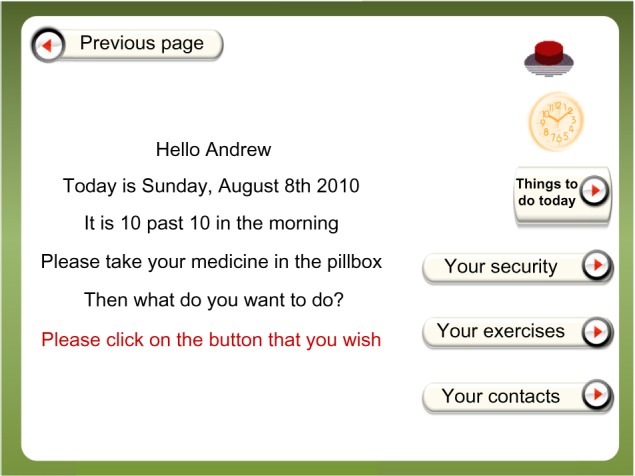
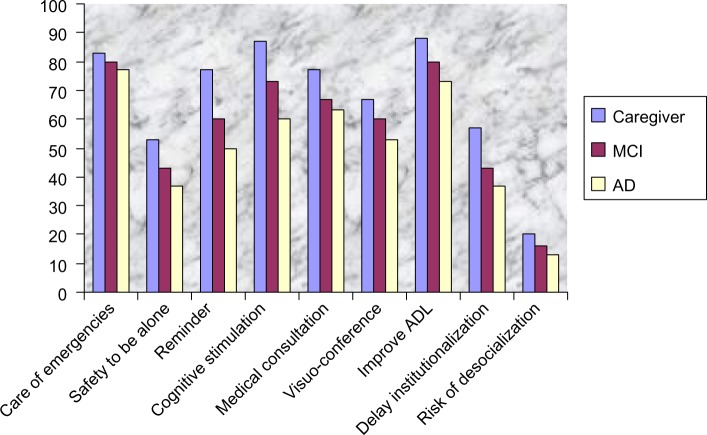
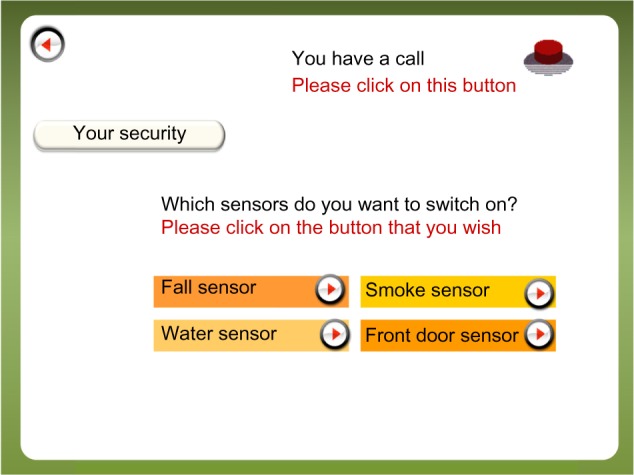
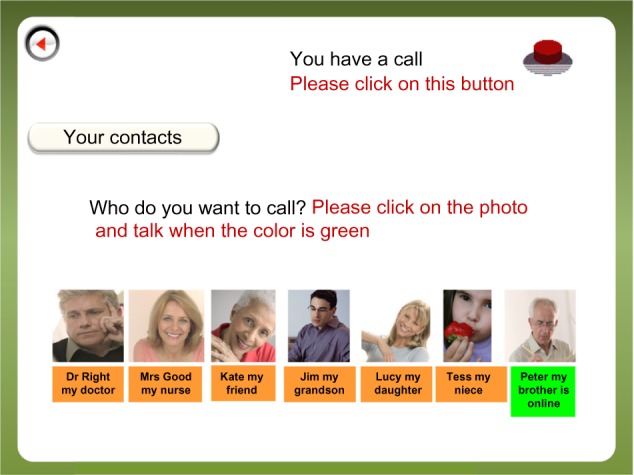
Assistive and telecare technologies have been developed to support older adults with cognitive impairments, as well as their caregivers, from their homes. The way potential users perceive telecare and smart home systems plays a key role in their acceptance of this new technology. We evaluate the acceptance of home telecare technologies among patients suffering from cognitive impairment and their caregivers. Prototypes of telecare devices were developed to demonstrate their features and capabilities and to train patients, families, and health care professionals in their use. We conducted semistructured interviews to elicit the perceptions of 30 patients with mild cognitive impairment, 32 patients with Alzheimer's disease, and 30 caregivers, regarding the risks and advantages of home telecare and smart houses. Survey results reflected participants' largely positive reactions to these technologies. Regarding home telecare, the cognitive stimulation program earned the highest proportion of positive responses, followed by the devices' care of emergencies. The participants generally agreed that home telecare and smart houses could significantly improve their quality of life. However, some technical and ethical concerns, such as the way of provision, installation, and monitoring of the systems, were reported to be in need of addressing before implementation of this system.
辅助和远程护理技术已被开发出来,以便在家中为患有认知障碍的老年人及其护理人员提供支持。潜在用户对远程护理和智能家居系统的认知方式在他们对这项新技术的接受程度中起着关键作用。我们评估了认知障碍患者及其护理人员对家庭远程护理技术的接受程度。开发了远程护理设备的原型,以展示其功能和能力,并培训患者、家庭和医疗保健专业人员如何使用。我们进行了半结构化访谈,以了解30名轻度认知障碍患者、32名阿尔茨海默病患者和30名护理人员对家庭远程护理和智能房屋的风险和优势的看法。调查结果反映出参与者对这些技术大多持积极态度。关于家庭远程护理,认知刺激计划获得了最高比例的积极回应,其次是设备对紧急情况的处理。参与者普遍认为家庭远程护理和智能房屋可以显著提高他们的生活质量。然而,一些技术和伦理问题,如系统的提供、安装和监测方式,据报告在实施该系统之前需要加以解决。