University of Cambridge Metabolic Research LaboratoriesWellcome Trust-MRC, Institute of Metabolic Science, Addenbrookes Hospital, Cambridge, UK.
University of Cambridge Metabolic Research LaboratoriesWellcome Trust-MRC, Institute of Metabolic Science, Addenbrookes Hospital, Cambridge, UK
Endocr Connect. 2016 Mar;5(2):65-73. doi: 10.1530/EC-16-0004. Epub 2016 Feb 10.
Mild cold exposure increases energy expenditure and can influence energy balance, but at the same time it does not increase appetite and energy intake.
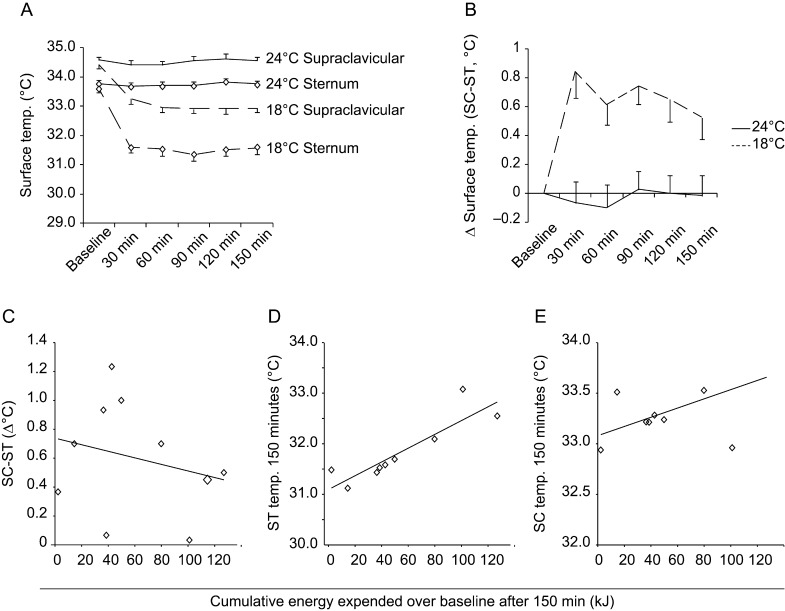
To quantify dermal insulative cold response, we assessed thermal comfort and skin temperatures changes by infrared thermography.
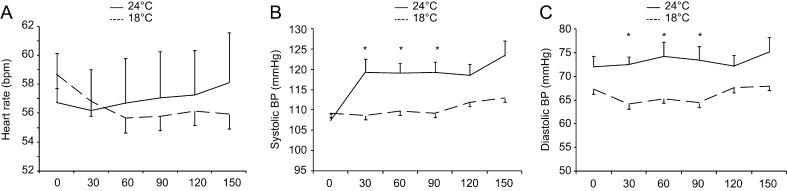
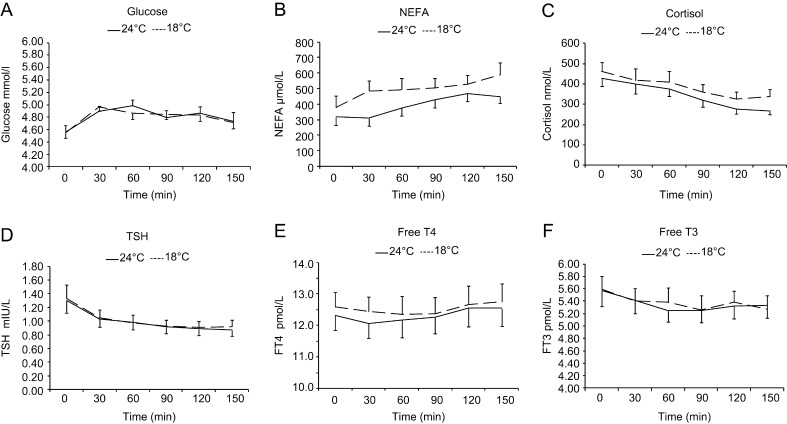
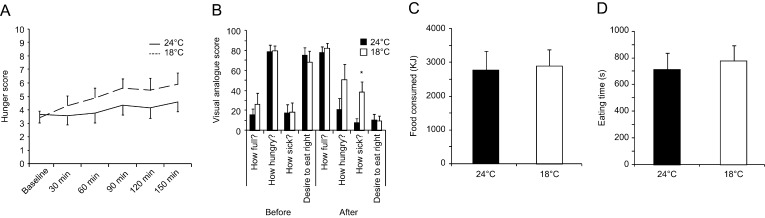
We exposed healthy volunteers to either a single episode of environmental mild cold or thermoneutrality. We measured hunger sensation and actual free food intake. After a thermoneutral overnight stay, five males and five females were exposed to either 18°C (mild cold) or 24°C (thermoneutrality) for 2.5 h. Metabolic rate, vital signs, skin temperature, blood biochemistry, cold and hunger scores were measured at baseline and for every 30 min during the temperature intervention. This was followed by an ad libitum meal to obtain the actual desired energy intake after cold exposure.
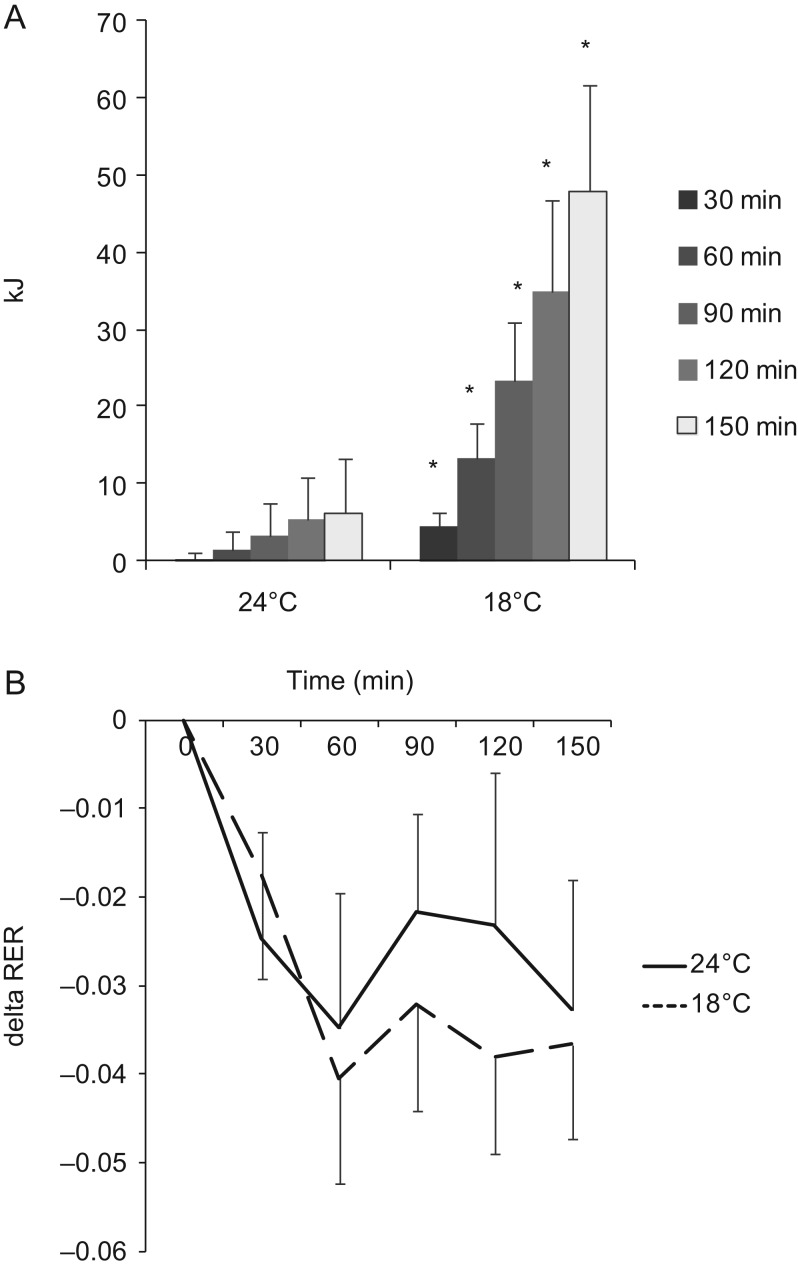
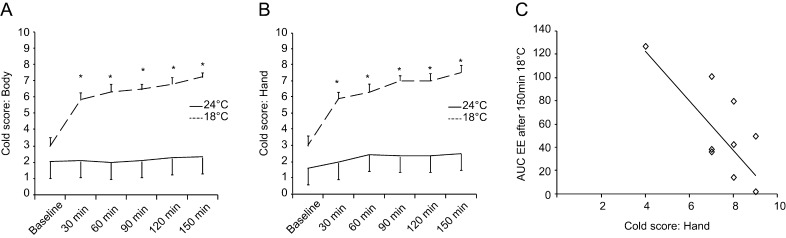
We could replicate the cold-induced increase in REE. But no differences were detected in hunger, food intake, or satiety after mild cold exposure compared with thermoneutrality. After long-term cold exposure, high cold sensation scores were reported, which were negatively correlated with thermogenesis. Skin temperature in the sternal area was tightly correlated with the increase in energy expenditure.
It is concluded that short-term mild cold exposure increases energy expenditure without changes in food intake. Mild cold exposure resulted in significant thermal discomfort, which was negatively correlated with the increase in energy expenditure. Moreover, there is a great between-subject variability in cold response. These data provide further insights on cold exposure as an anti-obesity measure.
轻度寒冷暴露会增加能量消耗,并可能影响能量平衡,但同时不会增加食欲和能量摄入。
通过红外热成像技术评估热舒适和皮肤温度变化,量化皮肤隔热冷反应。
我们让健康志愿者暴露于单次环境轻度寒冷或热中性环境中。我们测量了饥饿感和实际自由食物摄入量。在热中性的过夜停留后,五名男性和五名女性分别暴露于 18°C(轻度寒冷)或 24°C(热中性)环境中 2.5 小时。在基线和温度干预的每 30 分钟测量代谢率、生命体征、皮肤温度、血液生化、冷和饥饿评分。然后进行随意进食,以获得寒冷暴露后的实际所需能量摄入。
我们可以复制寒冷引起的 REE 增加。但是,与热中性相比,轻度寒冷暴露后饥饿感、食物摄入或饱腹感没有差异。长期寒冷暴露后,报告了高寒冷感评分,这与产热呈负相关。胸骨区域的皮肤温度与能量消耗的增加密切相关。
短期轻度寒冷暴露会增加能量消耗,而食物摄入没有变化。轻度寒冷暴露会导致明显的热不适,这与能量消耗的增加呈负相关。此外,寒冷反应存在很大的个体间变异性。这些数据为寒冷暴露作为一种抗肥胖措施提供了进一步的见解。