van den Berg Martin, Kypke Karin, Kotz Alexander, Tritscher Angelika, Lee Seoung Yong, Magulova Katarina, Fiedler Heidelore, Malisch Rainer
Institute for Risk Assessment Sciences (IRAS), Utrecht University, P.O. Box 80177, 3508 TD, Utrecht, The Netherlands.
WHO/UNEP Reference Laboratory, State Institute for Chemical and Veterinary Analysis of Food (CVUA), Bissierstrasse 5, 79114, Freiburg, Germany.
Arch Toxicol. 2017 Jan;91(1):83-96. doi: 10.1007/s00204-016-1802-z. Epub 2016 Jul 20.
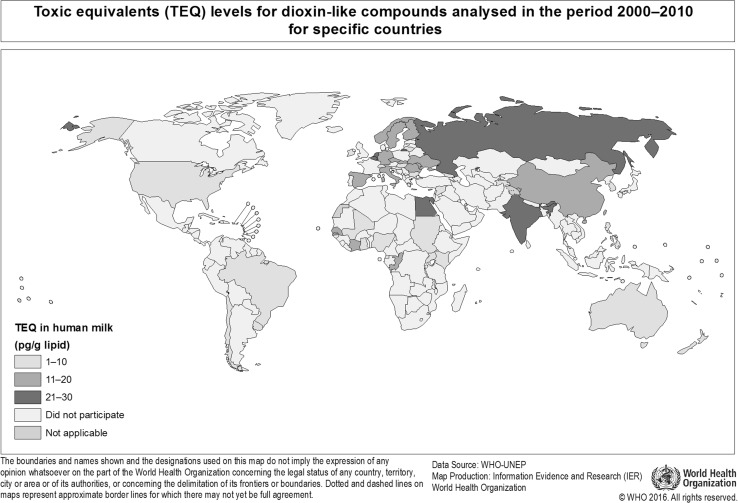
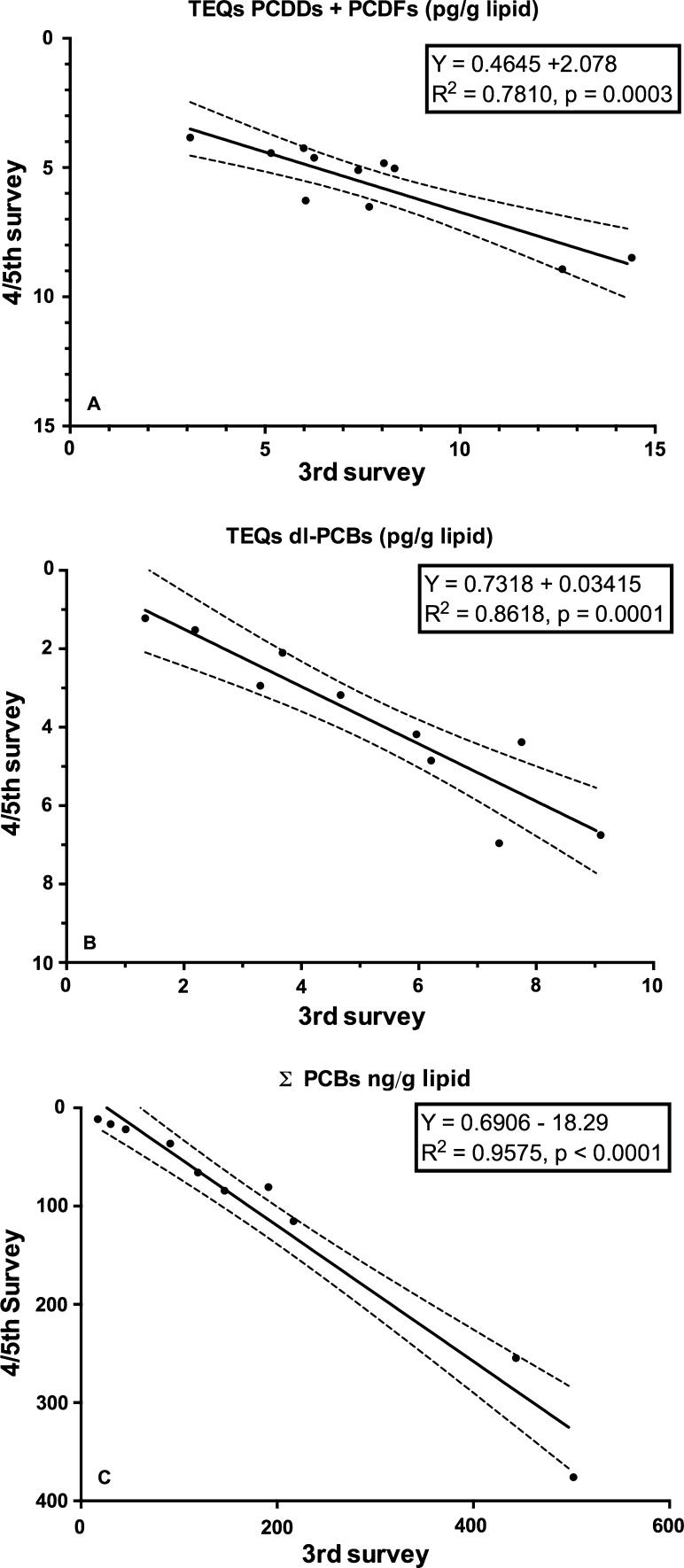
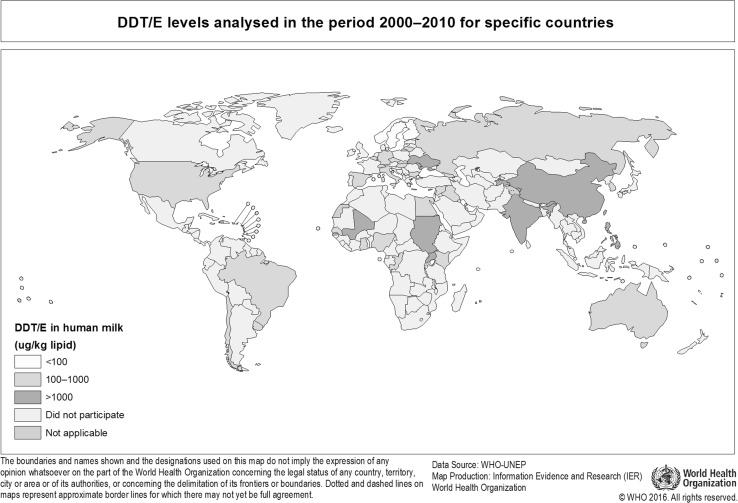
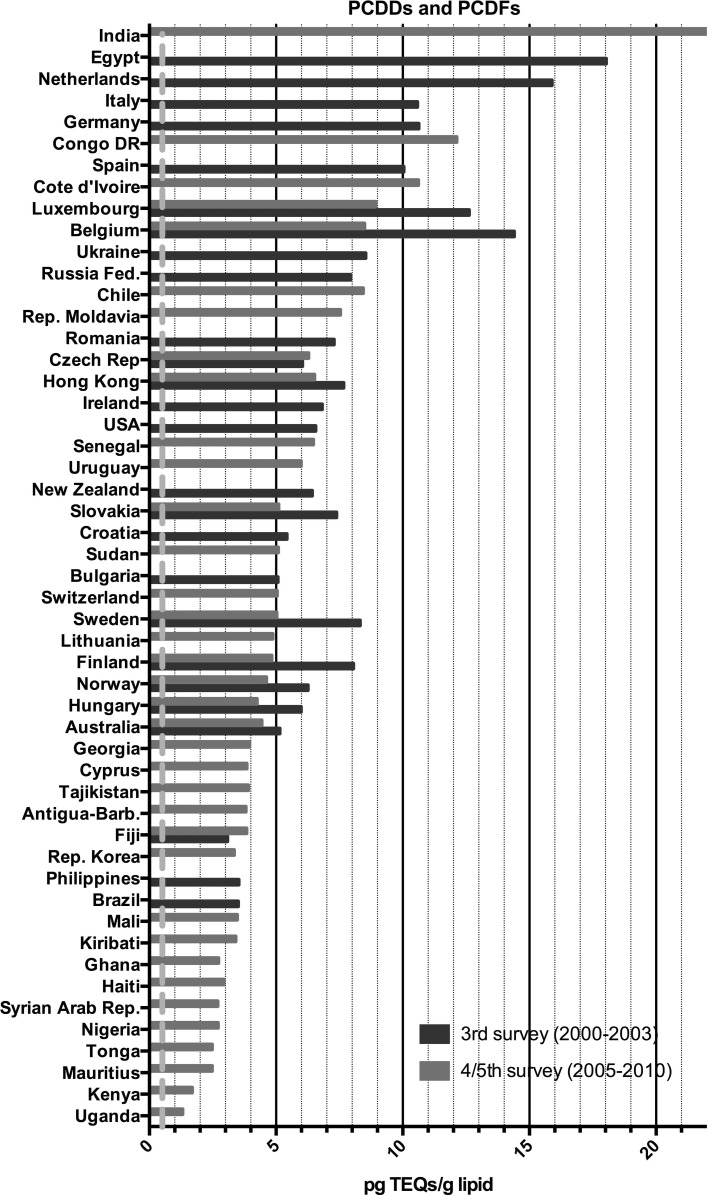
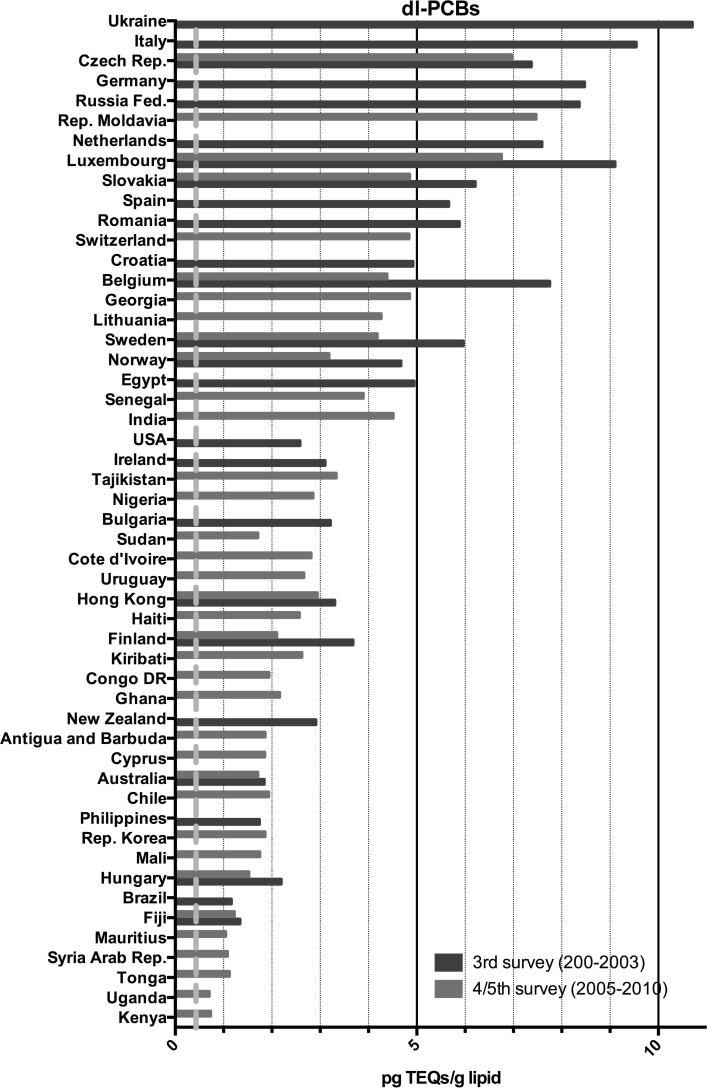
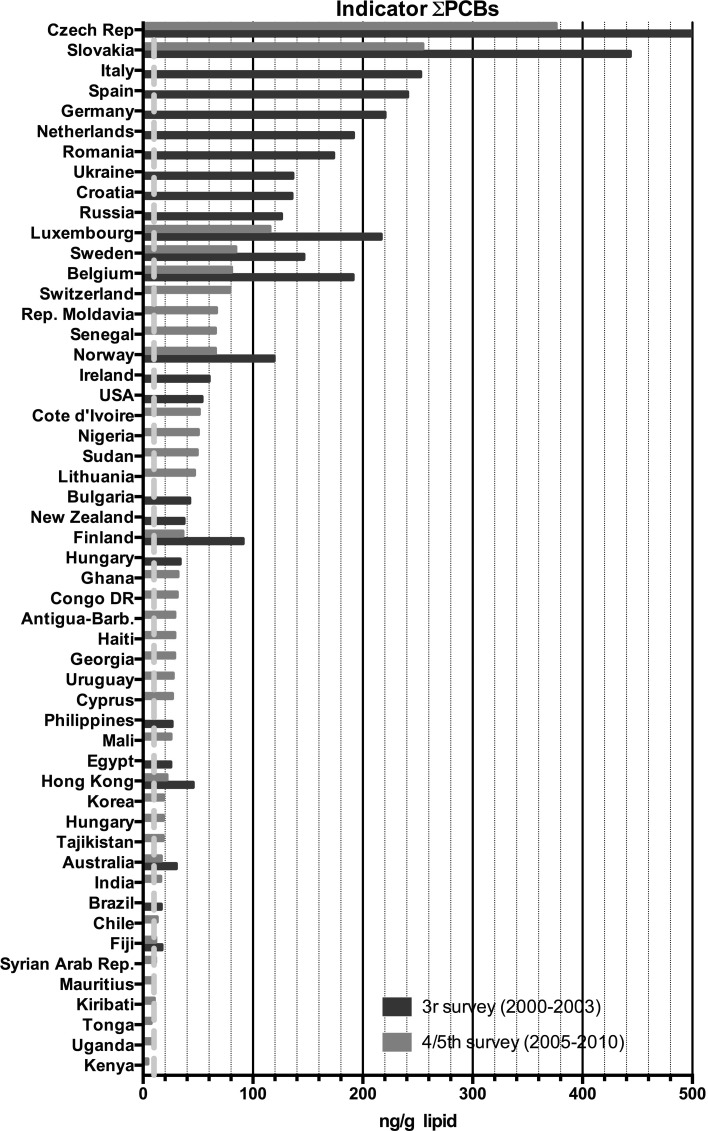
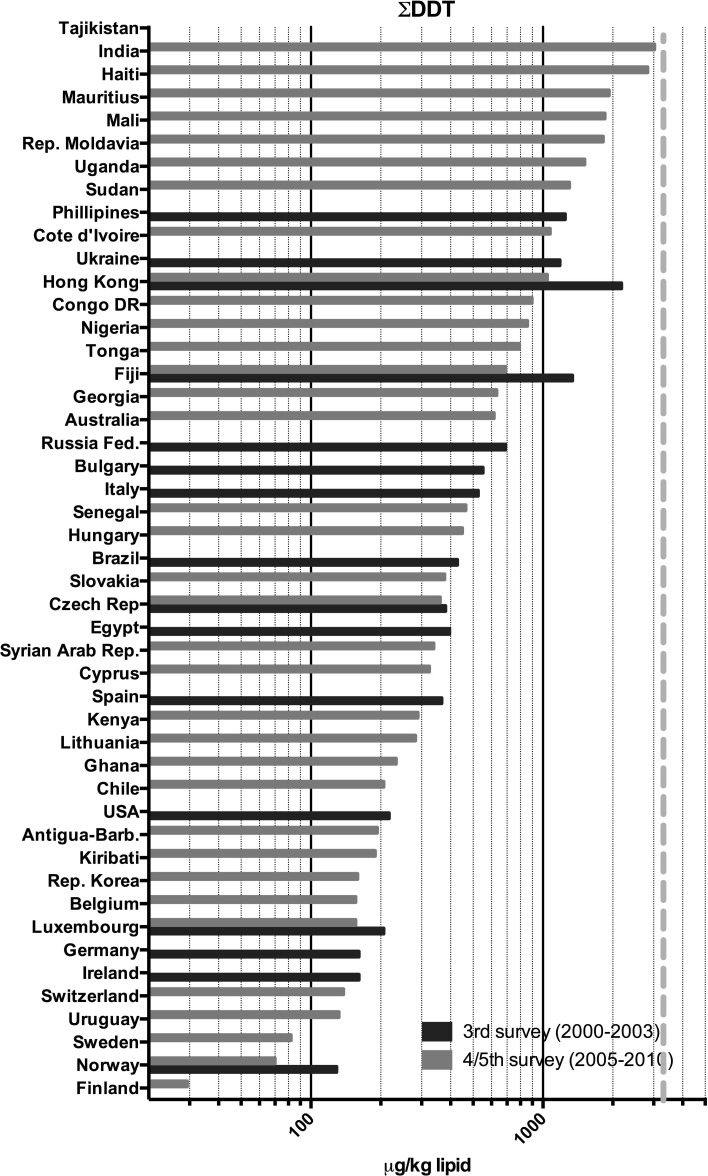
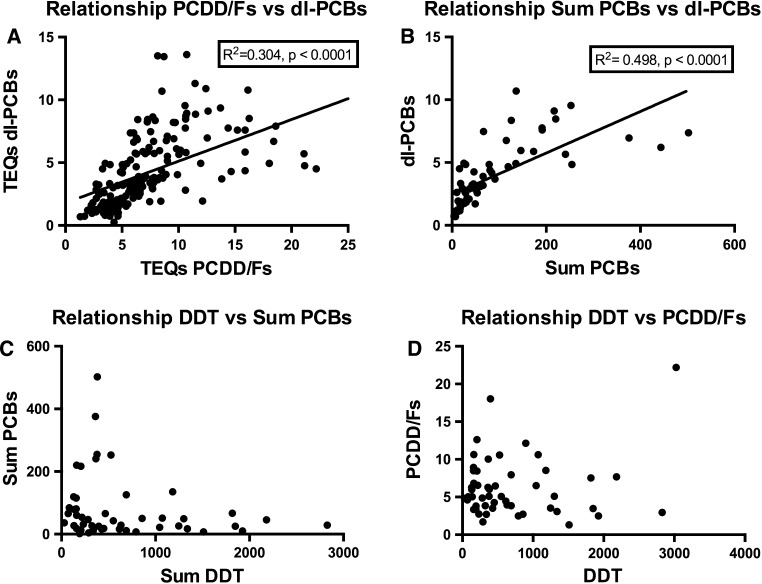
Since 1987, the World Health Organization (WHO) carried out global surveys on polychlorinated dibenzo-p-dioxins (PCDDs), polychlorinated dibenzofurans (PCDFs) and polychlorinated biphenyls (PCBs) in human milk. This study presents a review of the three most recent surveys from 2000 to 2010, including DDT. The objective was to identify global quantitative differences and provide baseline information for 52 countries or provide time-trends for countries with previous data. Individual human milk samples were collected following a WHO-designed procedure and combined to form a national pooled sample. Here, we report global levels for PCDDs, PCDFs, PCBs and the sum of o,p'-DDT, p,p'-DDT, o,p'-DDE, p,p'-DDE, o,p'-DDD and p,p'-DDD (ΣDDTs). A concise risk-benefit evaluation related to human milk contamination with these persistent organic pollutants (POPs) was also done. Large global and regional differences were observed. Levels of PCDDs and PCDFs were highest in India and some European and African countries. PCB levels were highest in East and West Europe. The highest levels of ΣDDTs were found in less industrialized countries. A temporal downward trend for PCDDs, PCDFs and PCBs is indicated. A risk-benefit assessment indicates that human milk levels of PCDDs, PCDFs and PCBs are still significantly above those considered toxicologically safe, while ΣDDTs are below or around those considered safe. With respect to potential adverse health effects, a more dominant role of in utero exposure versus lactational exposure is indicated. If potential adverse effects are balanced against positive health aspects for (breastfed) infants, the advantages of breastfeeding far outweigh the possible disadvantages. Our observations provide a strong argument to plea for further global source-directed measures to reduce human exposure further to dioxin-like compounds.
自1987年以来,世界卫生组织(WHO)对母乳中的多氯二苯并对二噁英(PCDDs)、多氯二苯并呋喃(PCDFs)和多氯联苯(PCBs)开展了全球调查。本研究对2000年至2010年的三项最新调查进行了综述,其中包括滴滴涕(DDT)。目的是确定全球范围内的定量差异,并为52个国家提供基线信息,或为有既往数据的国家提供时间趋势。按照WHO设计的程序收集个体母乳样本,并合并形成国家混合样本。在此,我们报告了PCDDs、PCDFs、PCBs以及o,p'-滴滴涕、p,p'-滴滴涕、o,p'-滴滴伊、p,p'-滴滴伊、o,p'-滴滴滴和p,p'-滴滴滴之和(Σ滴滴涕)的全球水平。还对这些持久性有机污染物(POPs)污染母乳的情况进行了简要的风险效益评估。观察到全球和区域存在较大差异。PCDDs和PCDFs的水平在印度以及一些欧洲和非洲国家最高。PCBs水平在东欧和西欧最高。Σ滴滴涕的最高水平出现在工业化程度较低的国家。PCDDs、PCDFs和PCBs呈现出随时间下降的趋势。风险效益评估表明,母乳中PCDDs、PCDFs和PCBs的水平仍显著高于毒理学上认为安全的水平,而Σ滴滴涕低于或接近认为安全的水平。关于潜在的健康不良影响,表明子宫内暴露比哺乳期暴露发挥更主要的作用。如果将潜在的不良影响与(母乳喂养)婴儿的积极健康方面进行权衡,母乳喂养的好处远远超过可能的不利之处。我们的观察结果有力地支持了呼吁采取进一步的全球源头控制措施,以进一步减少人类接触二噁英类化合物。