
小尺寸与大尺寸氧化铁磁性纳米颗粒:热疗及细胞摄取特性
Small versus Large Iron Oxide Magnetic Nanoparticles: Hyperthermia and Cell Uptake Properties.
作者信息
Iacovita Cristian, Florea Adrian, Dudric Roxana, Pall Emoke, Moldovan Alin Iulian, Tetean Romulus, Stiufiuc Rares, Lucaciu Constantin Mihai
机构信息
Department of Pharmaceutical Physics-Biophysics, Faculty of Pharmacy, "Iuliu Hatieganu" University of Medicine and Pharmacy, Pasteur 6, 400349 Cluj-Napoca, Romania.
Department of Cell and Molecular Biology, Faculty of Medicine, ''Iuliu Hatieganu'' University of Medicine and Pharmacy, Pasteur 6, 400349 Cluj-Napoca, Romania.
出版信息
Molecules. 2016 Oct 13;21(10):1357. doi: 10.3390/molecules21101357.
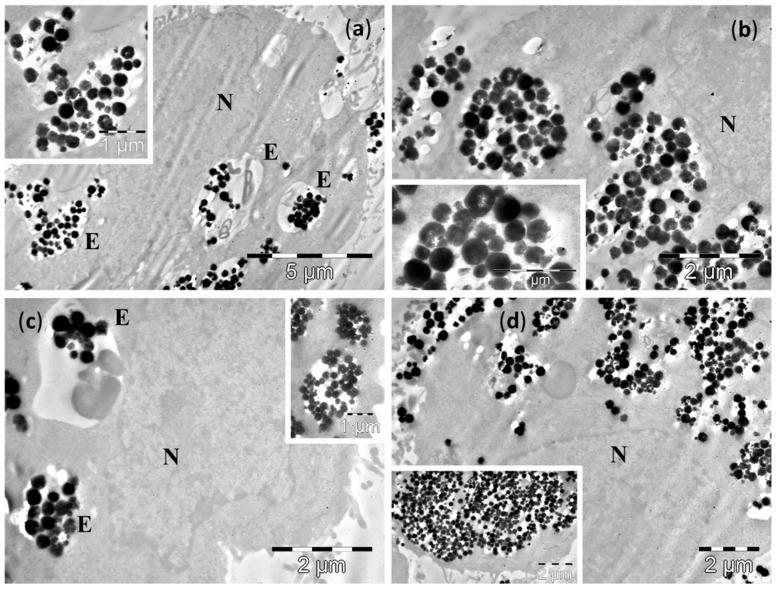
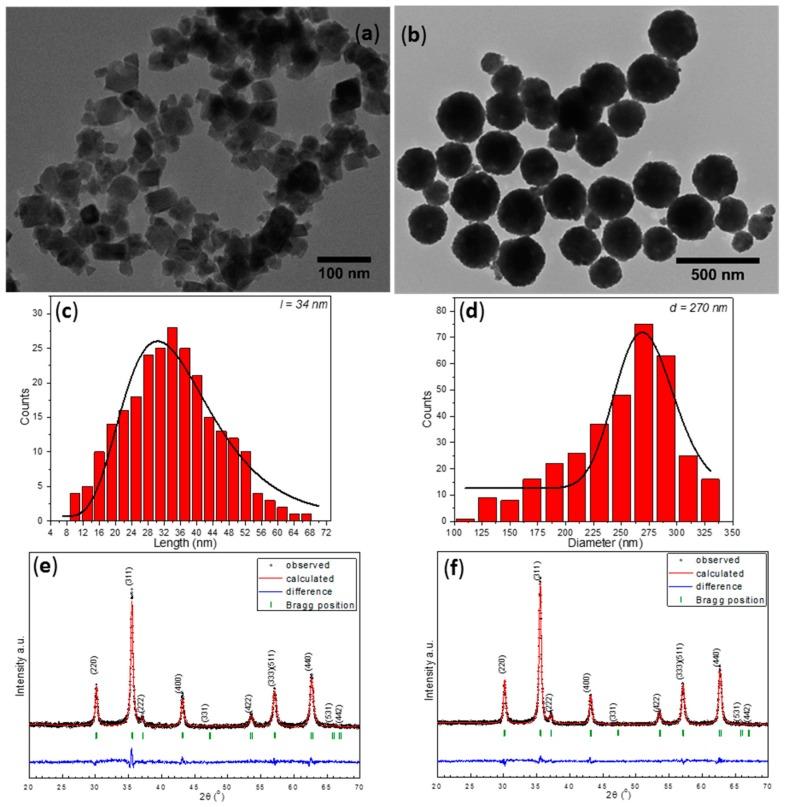
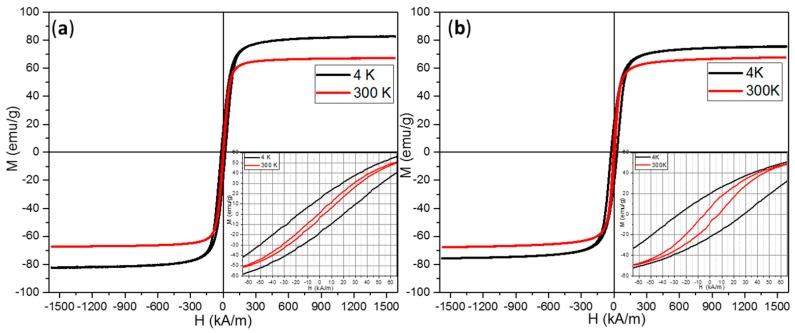
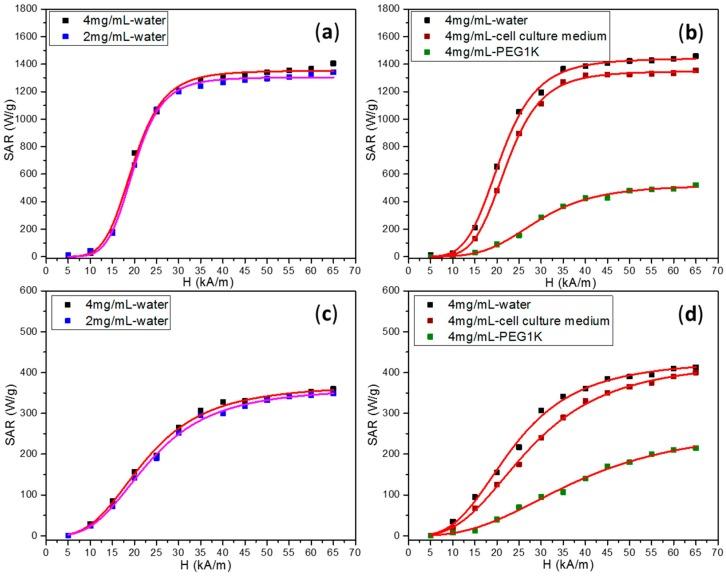
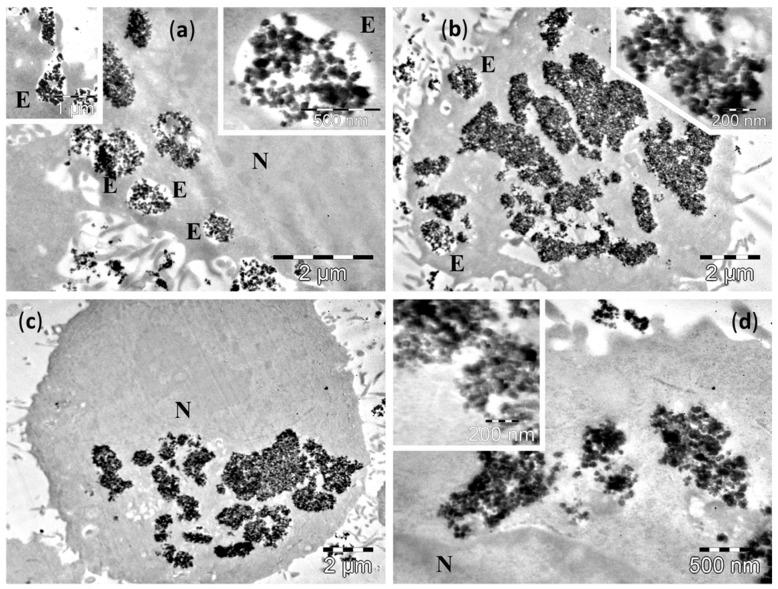
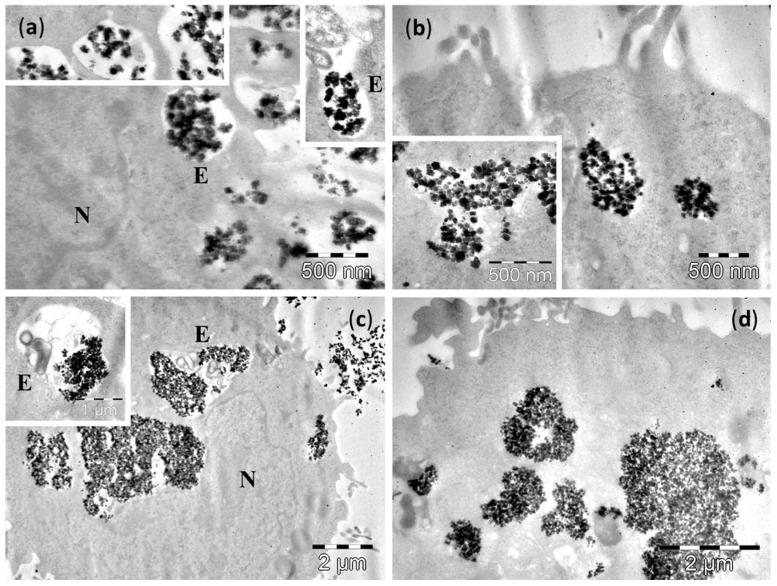
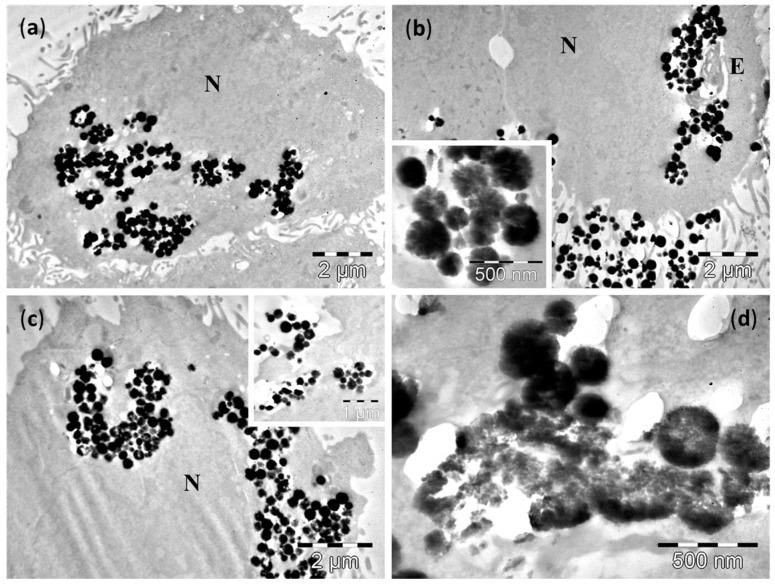
Efficient use of magnetic hyperthermia in clinical cancer treatment requires biocompatible magnetic nanoparticles (MNPs), with improved heating capabilities. Small (34 nm) and large (270 nm) Fe₃O₄-MNPs were synthesized by means of a polyol method in polyethylene-glycol (PEG) and ethylene-glycol (EG), respectively. They were systematically investigated by means of X-ray diffraction, transmission electron microscopy and vibration sample magnetometry. Hyperthermia measurements showed that Specific Absorption Rate (SAR) dependence on the external alternating magnetic field amplitude (up to 65 kA/m, 355 kHz) presented a sigmoidal shape, with remarkable SAR saturation values of ~1400 W/g for the small monocrystalline MNPs and only 400 W/g for the large polycrystalline MNPs, in water. SAR values were slightly reduced in cell culture media, but decreased one order of magnitude in highly viscous PEG1000. Toxicity assays performed on four cell lines revealed almost no toxicity for the small MNPs and a very small level of toxicity for the large MNPs, up to a concentration of 0.2 mg/mL. Cellular uptake experiments revealed that both MNPs penetrated the cells through endocytosis, in a time dependent manner and escaped the endosomes with a faster kinetics for large MNPs. Biodegradation of large MNPs inside cells involved an all-or-nothing mechanism.
在临床癌症治疗中有效使用磁热疗需要具有改善加热能力的生物相容性磁性纳米颗粒(MNPs)。分别通过在聚乙二醇(PEG)和乙二醇(EG)中采用多元醇法合成了小尺寸(约34nm)和大尺寸(约270nm)的Fe₃O₄-MNPs。通过X射线衍射、透射电子显微镜和振动样品磁强计对它们进行了系统研究。热疗测量表明,比吸收率(SAR)对外部交变磁场幅度(高达65kA/m,355kHz)的依赖性呈S形,在水中,小尺寸单晶MNPs的SAR饱和值约为1400W/g,大尺寸多晶MNPs的SAR饱和值仅为400W/g。在细胞培养基中SAR值略有降低,但在高粘性PEG1000中降低了一个数量级。对四种细胞系进行的毒性试验表明,在浓度高达0.2mg/mL时,小尺寸MNPs几乎没有毒性,大尺寸MNPs的毒性水平非常低。细胞摄取实验表明,两种MNPs均通过内吞作用以时间依赖性方式穿透细胞,并且大尺寸MNPs以更快的动力学从内体中逃逸。细胞内大尺寸MNPs的生物降解涉及一种全有或全无的机制。
 Zotero 插件