Langsjoen Rose M, Rubinstein Rebecca J, Kautz Tiffany F, Auguste Albert J, Erasmus Jesse H, Kiaty-Figueroa Liddy, Gerhardt Renessa, Lin David, Hari Kumar L, Jain Ravi, Ruiz Nicolas, Muruato Antonio E, Silfa Jael, Bido Franklin, Dacso Matthew, Weaver Scott C
Institute for Human Infections and Immunity and Center for Tropical Diseases, University of Texas Medical Branch, Galveston, TX, United States of America.
Institute for Translational Sciences, University of Texas Medical Branch, Galveston, TX, United States of America.
PLoS Negl Trop Dis. 2016 Dec 28;10(12):e0005189. doi: 10.1371/journal.pntd.0005189. eCollection 2016 Dec.
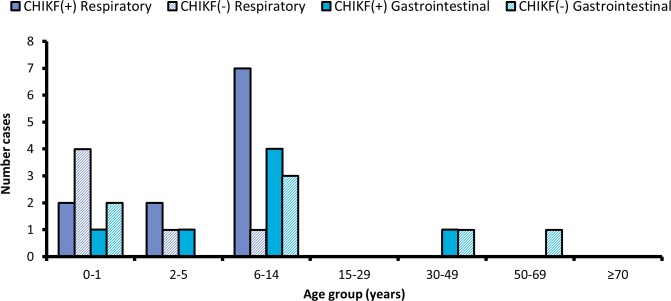
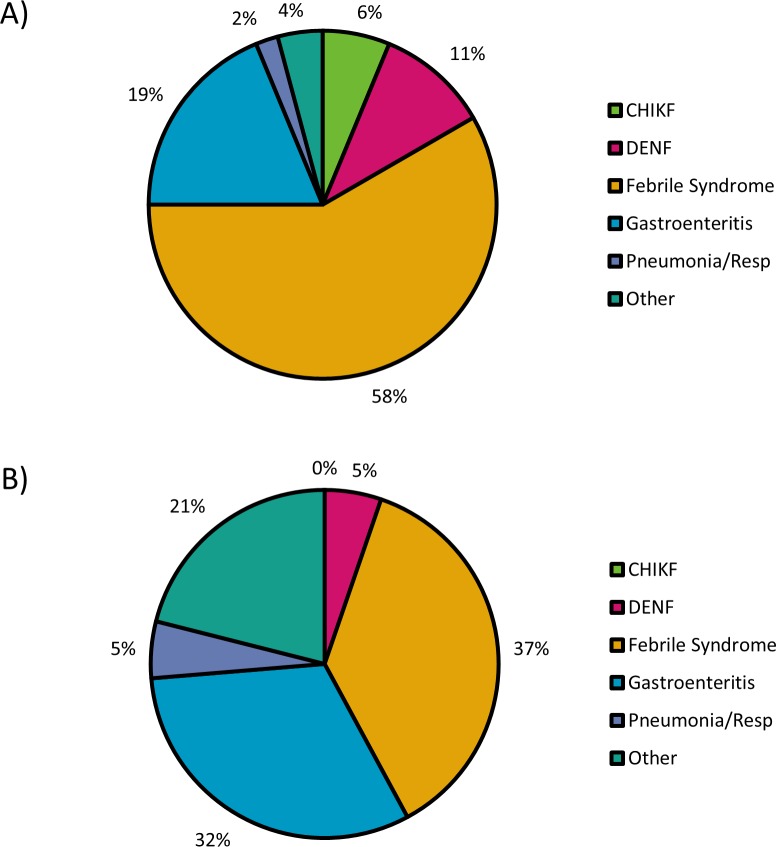
Since emerging in Saint Martin in 2013, chikungunya virus (CHIKV), an alphavirus transmitted by the Aedes aegypti mosquito, has infected approximately two million individuals in the Americas, with over 500,000 reported cases in the Dominican Republic (DR). CHIKV-infected patients typically present with a febrile syndrome including polyarthritis/polyarthralgia, and a macropapular rash, similar to those infected with dengue and Zika viruses, and malaria. Nevertheless, many Dominican cases are unconfirmed due to the unavailability and high cost of laboratory testing and the absence of specific treatment for CHIKV infection. To obtain a more accurate representation of chikungunya fever (CHIKF) clinical signs and symptoms, and confirm the viral lineage responsible for the DR CHIKV outbreak, we tested 194 serum samples for CHIKV RNA and IgM antibodies from patients seen in a hospital in La Romana, DR using quantitative RT-PCR and IgM capture ELISA, and performed retrospective chart reviews. RNA and antibodies were detected in 49% and 24.7% of participants, respectively. Sequencing revealed that the CHIKV strain responsible for the La Romana outbreak belonged to the Asian/American lineage and grouped phylogenetically with recent Mexican and Trinidadian isolates. Our study shows that, while CHIKV-infected individuals were infrequently diagnosed with CHIKF, uninfected patients were never falsely diagnosed with CHIKF. Participants testing positive for CHIKV RNA were more likely to present with arthralgia, although it was reported in just 20.0% of CHIKF+ individuals. High percentages of respiratory (19.6%) signs and symptoms, especially among children, were noted, though it was not possible to determine whether individuals infected with CHIKV were co-infected with other pathogens. These results suggest that CHIKV may have been underdiagnosed during this outbreak, and that CHIKF should be included in differential diagnoses of diverse undifferentiated febrile syndromes in the Americas.
自2013年在圣马丁岛出现以来,基孔肯雅病毒(CHIKV),一种由埃及伊蚊传播的甲病毒,已在美洲感染了约200万人,在多米尼加共和国(DR)报告的病例超过50万例。感染CHIKV的患者通常表现为发热综合征,包括多关节炎/多关节痛,以及大丘疹皮疹,类似于感染登革热、寨卡病毒和疟疾的患者。然而,由于实验室检测的不可用和高成本以及CHIKV感染缺乏特异性治疗,许多多米尼加病例未经证实。为了更准确地了解基孔肯雅热(CHIKF)的临床体征和症状,并确认导致多米尼加CHIKV疫情的病毒谱系,我们使用定量逆转录聚合酶链反应(RT-PCR)和IgM捕获酶联免疫吸附测定(ELISA)对多米尼加拉罗马纳一家医院就诊的患者的194份血清样本进行了CHIKV RNA和IgM抗体检测,并进行了回顾性病历审查。分别在49%和24.7%的参与者中检测到RNA和抗体。测序显示,导致拉罗马纳疫情的CHIKV毒株属于亚洲/美洲谱系,在系统发育上与最近的墨西哥和特立尼达分离株聚类。我们的研究表明,虽然感染CHIKV的个体很少被诊断为CHIKF,但未感染的患者从未被误诊为CHIKF。CHIKV RNA检测呈阳性的参与者更有可能出现关节痛,尽管只有20.0%的CHIKF+个体报告有此症状。注意到有很高比例的呼吸道(19.6%)体征和症状,尤其是在儿童中,尽管无法确定感染CHIKV的个体是否同时感染了其他病原体。这些结果表明,在这次疫情期间CHIKV可能未被充分诊断,并且CHIKF应纳入美洲各种未分化发热综合征的鉴别诊断中。