Kouhsoltani Maryam, Moradzadeh Khiavi Monir, Tahamtan Shabnam
Dental and Periodontal Research Center and Faculty of Dentistry, Tabriz University of Medical Sciences, Tabriz, Iran.
Department of Oral and Maxillofacial Pathology, Faculty of Dentistry, Tehran University of Medical Sciences, Tehran, Iran.
J Dent Res Dent Clin Dent Prospects. 2016 Fall;10(4):241-246. doi: 10.15171/joddd.2016.038. Epub 2016 Dec 21.
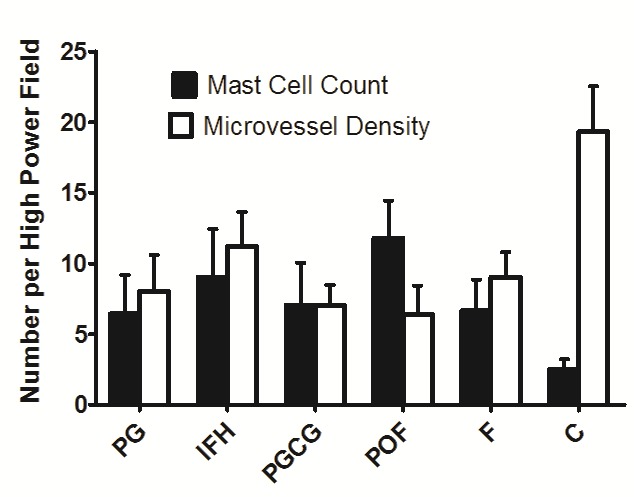
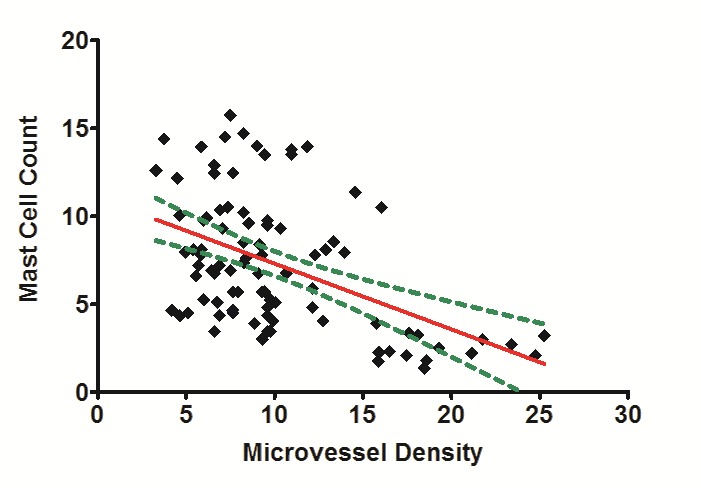
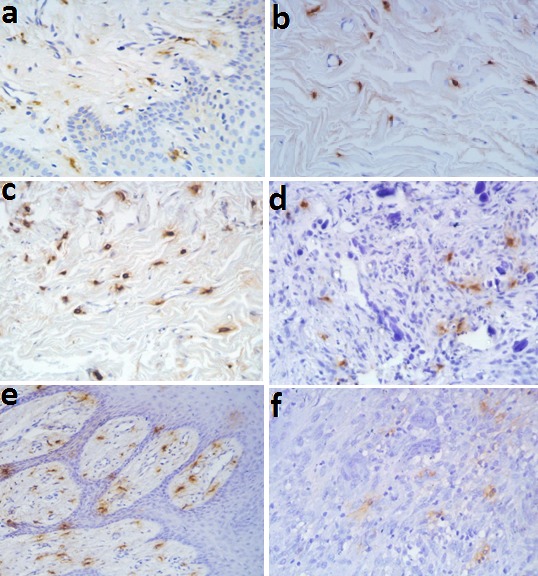
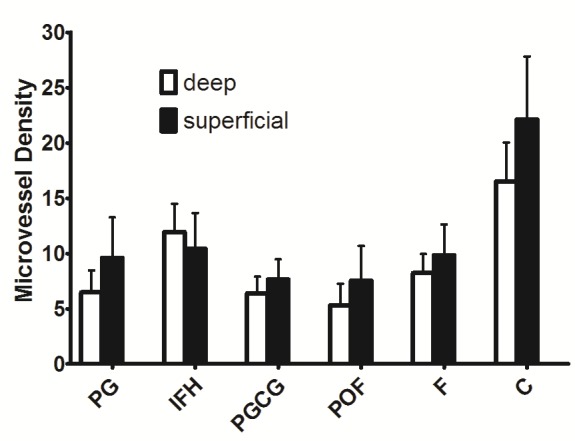
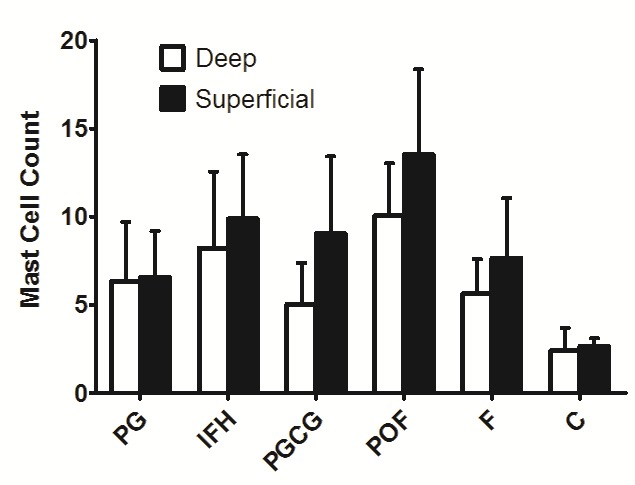
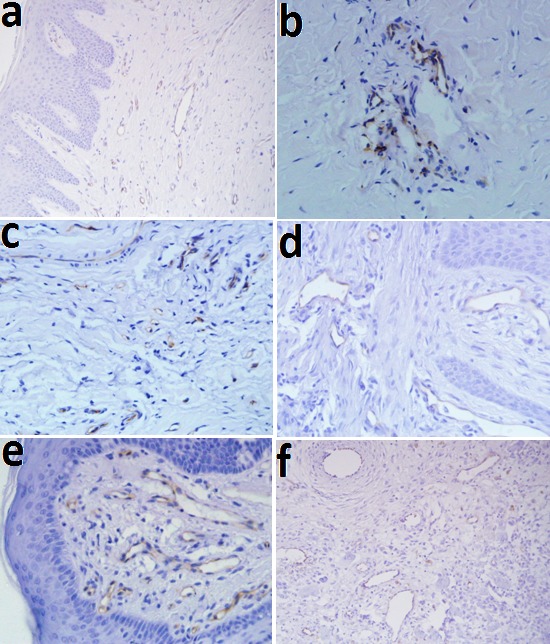
Reliable immunohistochemical assays to assess the definitive role of mast cells (MCs) and angiogenesis in the pathogenesis of oral reactive lesions are generally not available. The aim of the present study was to evaluate mast cell counts (MCC) and microvessel density (MVD) in oral reactive lesions and determine the correlation between MCC and MVD. Seventy-five cases of reactive lesions of the oral cavity, including pyogenic granuloma, fibroma, peripheral giant cell granuloma, inflammatory fibrous hyperplasia, peripheral ossifying fibroma (15 for each category) were immunohisto-chemically stained with MC tryptase and CD31. Fifteen cases of normal gingival tissue were considered as the control group. The mean MCC and MVD in superficial and deep connective tissues were assessed and total MCC and MVD was computed for each lesion. . Statistically significant differences were observed in MCC and MVD between the study groups (P < 0.001). MC tryptase and CD31 expression increased in the superficial connective tissue of each lesion in comparison to the deep con-nective tissue. A significant negative correlation was not found between MCC and MVD in oral reactive lesions (P < 0.001, r = -0.458). Although MCs were present in the reactive lesions of the oral cavity, a direct correlation between MCC and MVD was not found in these lesions. Therefore, a significant interaction between MCs and endothelial cells and an active role for MCs in the growth of oral reactive lesions was not found in this study.
目前尚无可靠的免疫组织化学检测方法来评估肥大细胞(MCs)和血管生成在口腔反应性病变发病机制中的决定性作用。本研究的目的是评估口腔反应性病变中的肥大细胞计数(MCC)和微血管密度(MVD),并确定MCC与MVD之间的相关性。对75例口腔反应性病变进行免疫组织化学染色,包括化脓性肉芽肿、纤维瘤、外周巨细胞肉芽肿、炎性纤维增生、外周骨化性纤维瘤(各15例),采用MC类胰蛋白酶和CD31进行染色。15例正常牙龈组织作为对照组。评估浅、深结缔组织中的平均MCC和MVD,并计算每个病变的总MCC和MVD。研究组之间的MCC和MVD存在统计学显著差异(P < 0.001)。与深结缔组织相比,每个病变的浅结缔组织中MC类胰蛋白酶和CD31表达增加。口腔反应性病变中MCC与MVD之间未发现显著负相关(P < 0.001,r = -0.458)。虽然MCs存在于口腔反应性病变中,但在这些病变中未发现MCC与MVD之间的直接相关性。因此,本研究未发现MCs与内皮细胞之间存在显著相互作用,也未发现MCs在口腔反应性病变生长中起积极作用。