• 文献检索
  • 文档翻译
  • 深度研究
  • 学术资讯
  • Suppr Zotero 插件Zotero 插件
  • 邀请有礼
  • 套餐&价格
  • 历史记录
应用&插件
Suppr Zotero 插件Zotero 插件浏览器插件Mac 客户端Windows 客户端微信小程序
定价
高级版会员购买积分包购买API积分包
服务
文献检索文档翻译深度研究API 文档MCP 服务
关于我们
关于 Suppr公司介绍联系我们用户协议隐私条款
关注我们

Suppr 超能文献

核心技术专利:CN118964589B侵权必究
粤ICP备2023148730 号-1Suppr @ 2026

文献检索

告别复杂PubMed语法,用中文像聊天一样搜索,搜遍4000万医学文献。AI智能推荐,让科研检索更轻松。

立即免费搜索

文件翻译

保留排版,准确专业,支持PDF/Word/PPT等文件格式,支持 12+语言互译。

免费翻译文档

深度研究

AI帮你快速写综述,25分钟生成高质量综述,智能提取关键信息,辅助科研写作。

立即免费体验

通过改变决策边界来克服犹豫不决。

Overcoming indecision by changing the decision boundary.

作者信息

Malhotra Gaurav, Leslie David S, Ludwig Casimir J H, Bogacz Rafal

机构信息

School of Experimental Psychology, University of Bristol.

Department of Mathematics and Statistics, Lancaster University.

出版信息

J Exp Psychol Gen. 2017 Jun;146(6):776-805. doi: 10.1037/xge0000286. Epub 2017 Apr 13.

DOI:10.1037/xge0000286
PMID:28406682
原文链接:https://pmc.ncbi.nlm.nih.gov/articles/PMC5459222/
Abstract

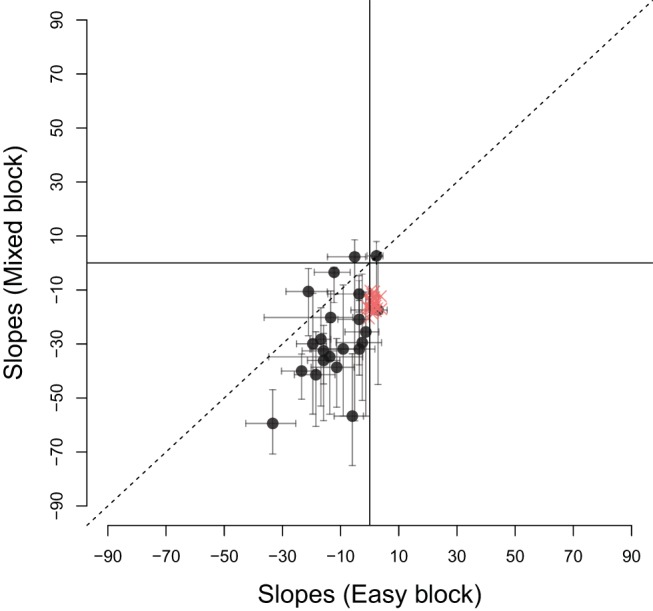
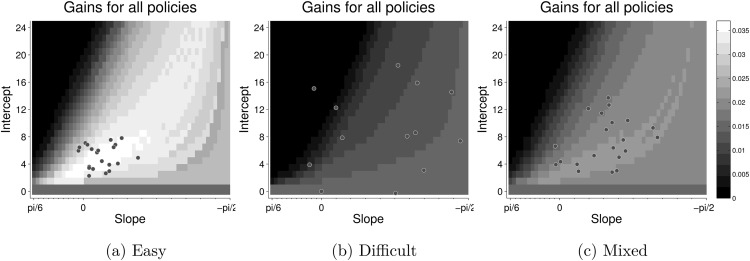
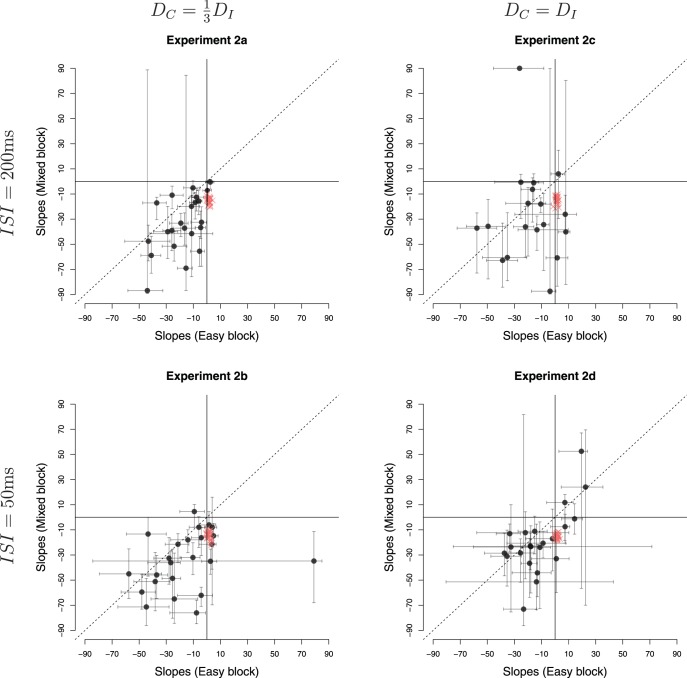
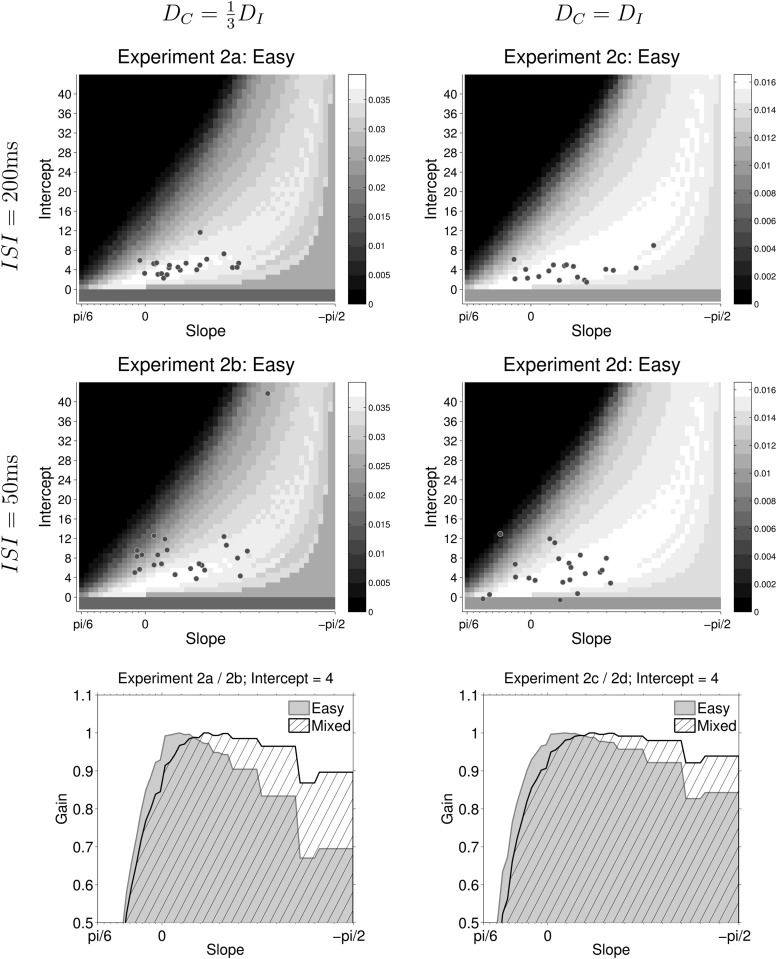
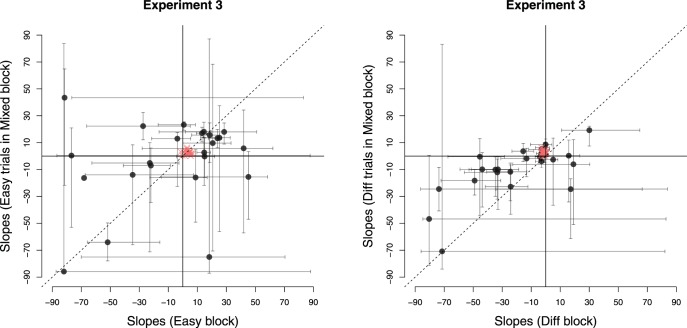
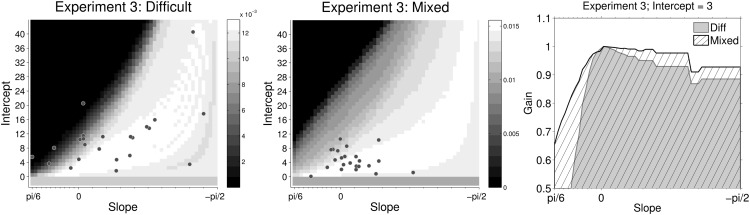
The dominant theoretical framework for decision making asserts that people make decisions by integrating noisy evidence to a threshold. It has recently been shown that in many ecologically realistic situations, decreasing the decision boundary maximizes the reward available from decisions. However, empirical support for decreasing boundaries in humans is scant. To investigate this problem, we used an ideal observer model to identify the conditions under which participants should change their decision boundaries with time to maximize reward rate. We conducted 6 expanded-judgment experiments that precisely matched the assumptions of this theoretical model. In this paradigm, participants could sample noisy, binary evidence presented sequentially. Blocks of trials were fixed in duration, and each trial was an independent reward opportunity. Participants therefore had to trade off speed (getting as many rewards as possible) against accuracy (sampling more evidence). Having access to the actual evidence samples experienced by participants enabled us to infer the slope of the decision boundary. We found that participants indeed modulated the slope of the decision boundary in the direction predicted by the ideal observer model, although we also observed systematic deviations from optimality. Participants using suboptimal boundaries do so in a robust manner, so that any error in their boundary setting is relatively inexpensive. The use of a normative model provides insight into what variable(s) human decision makers are trying to optimize. Furthermore, this normative model allowed us to choose diagnostic experiments and in doing so we present clear evidence for time-varying boundaries. (PsycINFO Database Record

摘要

决策的主导理论框架认为,人们通过将有噪声的证据整合到一个阈值来做出决策。最近有研究表明,在许多生态现实情境中,降低决策边界能使决策可获得的奖励最大化。然而,关于人类降低边界的实证支持却很少。为了研究这个问题,我们使用了一个理想观察者模型来确定参与者应该在哪些条件下随时间改变他们的决策边界以最大化奖励率。我们进行了6个扩展判断实验,这些实验精确匹配了这个理论模型的假设。在这个范式中,参与者可以依次对呈现的有噪声的二元证据进行采样。试验块的持续时间是固定的,并且每个试验都是一个独立的奖励机会。因此,参与者必须在速度(在速度(尽可能多地获得奖励)和准确性(采样更多证据)之间进行权衡。能够获取参与者实际经历的证据样本使我们能够推断出决策边界的斜率。我们发现,参与者确实按照理想观察者模型预测的方向调整了决策边界的斜率,尽管我们也观察到了与最优性的系统性偏差。使用次优边界的参与者以一种稳健的方式这样做,以至于他们边界设置中的任何错误成本相对较低。使用规范模型可以深入了解人类决策者试图优化的变量。此外,这个规范模型使我们能够选择诊断性实验,并且在此过程中我们为随时间变化的边界提供了明确的证据。(《心理学文摘数据库记录》 )
https://cdn.ncbi.nlm.nih.gov/pmc/blobs/dc2c/5459222/fb440931fd85/xge_146_6_776_fig17a.jpg
https://cdn.ncbi.nlm.nih.gov/pmc/blobs/dc2c/5459222/f8144f3f9d23/xge_146_6_776_fig1a.jpg
https://cdn.ncbi.nlm.nih.gov/pmc/blobs/dc2c/5459222/e9231fa29b24/xge_146_6_776_fig2a.jpg
https://cdn.ncbi.nlm.nih.gov/pmc/blobs/dc2c/5459222/407060b30e44/xge_146_6_776_fig3a.jpg
https://cdn.ncbi.nlm.nih.gov/pmc/blobs/dc2c/5459222/3215c69720c9/xge_146_6_776_fig4a.jpg
https://cdn.ncbi.nlm.nih.gov/pmc/blobs/dc2c/5459222/d9a7b8e9c8d9/xge_146_6_776_fig5a.jpg
https://cdn.ncbi.nlm.nih.gov/pmc/blobs/dc2c/5459222/5d275775d938/xge_146_6_776_fig6a.jpg
https://cdn.ncbi.nlm.nih.gov/pmc/blobs/dc2c/5459222/3fe35a14711f/xge_146_6_776_fig7a.jpg
https://cdn.ncbi.nlm.nih.gov/pmc/blobs/dc2c/5459222/9c932a43b75a/xge_146_6_776_fig8a.jpg
https://cdn.ncbi.nlm.nih.gov/pmc/blobs/dc2c/5459222/f0cba36560e9/xge_146_6_776_fig9a.jpg
https://cdn.ncbi.nlm.nih.gov/pmc/blobs/dc2c/5459222/b0eb79b411b9/xge_146_6_776_fig10a.jpg
https://cdn.ncbi.nlm.nih.gov/pmc/blobs/dc2c/5459222/38581a27db8d/xge_146_6_776_fig11a.jpg
https://cdn.ncbi.nlm.nih.gov/pmc/blobs/dc2c/5459222/5f6f64353d22/xge_146_6_776_fig12a.jpg
https://cdn.ncbi.nlm.nih.gov/pmc/blobs/dc2c/5459222/5da6eca607b2/xge_146_6_776_fig13a.jpg
https://cdn.ncbi.nlm.nih.gov/pmc/blobs/dc2c/5459222/e3d79375876c/xge_146_6_776_fig14a.jpg
https://cdn.ncbi.nlm.nih.gov/pmc/blobs/dc2c/5459222/40d4cf1dcf09/xge_146_6_776_fig15a.jpg
https://cdn.ncbi.nlm.nih.gov/pmc/blobs/dc2c/5459222/05f3f42376db/xge_146_6_776_fig16a.jpg
https://cdn.ncbi.nlm.nih.gov/pmc/blobs/dc2c/5459222/fb440931fd85/xge_146_6_776_fig17a.jpg
https://cdn.ncbi.nlm.nih.gov/pmc/blobs/dc2c/5459222/f8144f3f9d23/xge_146_6_776_fig1a.jpg
https://cdn.ncbi.nlm.nih.gov/pmc/blobs/dc2c/5459222/e9231fa29b24/xge_146_6_776_fig2a.jpg
https://cdn.ncbi.nlm.nih.gov/pmc/blobs/dc2c/5459222/407060b30e44/xge_146_6_776_fig3a.jpg
https://cdn.ncbi.nlm.nih.gov/pmc/blobs/dc2c/5459222/3215c69720c9/xge_146_6_776_fig4a.jpg
https://cdn.ncbi.nlm.nih.gov/pmc/blobs/dc2c/5459222/d9a7b8e9c8d9/xge_146_6_776_fig5a.jpg
https://cdn.ncbi.nlm.nih.gov/pmc/blobs/dc2c/5459222/5d275775d938/xge_146_6_776_fig6a.jpg
https://cdn.ncbi.nlm.nih.gov/pmc/blobs/dc2c/5459222/3fe35a14711f/xge_146_6_776_fig7a.jpg
https://cdn.ncbi.nlm.nih.gov/pmc/blobs/dc2c/5459222/9c932a43b75a/xge_146_6_776_fig8a.jpg
https://cdn.ncbi.nlm.nih.gov/pmc/blobs/dc2c/5459222/f0cba36560e9/xge_146_6_776_fig9a.jpg
https://cdn.ncbi.nlm.nih.gov/pmc/blobs/dc2c/5459222/b0eb79b411b9/xge_146_6_776_fig10a.jpg
https://cdn.ncbi.nlm.nih.gov/pmc/blobs/dc2c/5459222/38581a27db8d/xge_146_6_776_fig11a.jpg
https://cdn.ncbi.nlm.nih.gov/pmc/blobs/dc2c/5459222/5f6f64353d22/xge_146_6_776_fig12a.jpg
https://cdn.ncbi.nlm.nih.gov/pmc/blobs/dc2c/5459222/5da6eca607b2/xge_146_6_776_fig13a.jpg
https://cdn.ncbi.nlm.nih.gov/pmc/blobs/dc2c/5459222/e3d79375876c/xge_146_6_776_fig14a.jpg
https://cdn.ncbi.nlm.nih.gov/pmc/blobs/dc2c/5459222/40d4cf1dcf09/xge_146_6_776_fig15a.jpg
https://cdn.ncbi.nlm.nih.gov/pmc/blobs/dc2c/5459222/05f3f42376db/xge_146_6_776_fig16a.jpg
https://cdn.ncbi.nlm.nih.gov/pmc/blobs/dc2c/5459222/fb440931fd85/xge_146_6_776_fig17a.jpg

相似文献

1
Overcoming indecision by changing the decision boundary.通过改变决策边界来克服犹豫不决。
J Exp Psychol Gen. 2017 Jun;146(6):776-805. doi: 10.1037/xge0000286. Epub 2017 Apr 13.
2
Time-varying decision boundaries: insights from optimality analysis.时变决策边界:优化分析的见解。
Psychon Bull Rev. 2018 Jun;25(3):971-996. doi: 10.3758/s13423-017-1340-6.
3
Integration to boundary in decisions between numerical sequences.数值序列判断中的边界整合。
Cognition. 2019 Dec;193:104022. doi: 10.1016/j.cognition.2019.104022. Epub 2019 Jul 29.
4
Normative decision rules in changing environments.规范决策规则在不断变化的环境中。
Elife. 2022 Oct 25;11:e79824. doi: 10.7554/eLife.79824.
5
Do humans produce the speed-accuracy trade-off that maximizes reward rate?人类是否会产生使奖励率最大化的速度-准确性权衡?
Q J Exp Psychol (Hove). 2010 May;63(5):863-91. doi: 10.1080/17470210903091643. Epub 2009 Sep 10.
6
Optimality and some of its discontents: successes and shortcomings of existing models for binary decisions.最优性及其一些争议:现有二元决策模型的成功与不足
Top Cogn Sci. 2014 Apr;6(2):258-78. doi: 10.1111/tops.12084. Epub 2014 Mar 20.
7
Learning to allocate limited time to decisions with different expected outcomes.学会为具有不同预期结果的决策分配有限的时间。
Cogn Psychol. 2017 Jun;95:17-49. doi: 10.1016/j.cogpsych.2017.03.002. Epub 2017 Apr 19.
8
The hare and the tortoise: emphasizing speed can change the evidence used to make decisions.《野兔与乌龟》:强调速度会改变用于决策的证据。
J Exp Psychol Learn Mem Cogn. 2014 Sep;40(5):1226-43. doi: 10.1037/a0036801. Epub 2014 May 5.
9
Deep Brain Stimulation of the Subthalamic Nucleus Does Not Affect the Decrease of Decision Threshold during the Choice Process When There Is No Conflict, Time Pressure, or Reward.深部脑刺激丘脑底核不会影响无冲突、无时间压力或无奖励时选择过程中决策阈值的降低。
J Cogn Neurosci. 2018 Jun;30(6):876-884. doi: 10.1162/jocn_a_01252. Epub 2018 Feb 28.
10
Confidence and corrections: how we make and un-make up our minds.信心与修正:我们如何形成并改变自己的想法。
Neuron. 2009 Sep 24;63(6):724-6. doi: 10.1016/j.neuron.2009.09.011.

引用本文的文献

1
Normative evidence weighing and accumulation in correlated environments.相关环境中的规范性证据权衡与积累
Elife. 2025 Jul 14;13:RP100258. doi: 10.7554/eLife.100258.
2
The limits of metacognitive control during perceptual decision-making: opting out without improving accuracy.知觉决策过程中元认知控制的局限性:在不提高准确性的情况下选择退出。
Front Psychol. 2025 May 20;16:1551665. doi: 10.3389/fpsyg.2025.1551665. eCollection 2025.
3
Basal ganglia components have distinct computational roles in decision-making dynamics under conflict and uncertainty.

本文引用的文献

1
Time-varying decision boundaries: insights from optimality analysis.时变决策边界:优化分析的见解。
Psychon Bull Rev. 2018 Jun;25(3):971-996. doi: 10.3758/s13423-017-1340-6.
2
Comparing fixed and collapsing boundary versions of the diffusion model.比较扩散模型的固定边界和塌缩边界版本。
J Math Psychol. 2016 Aug;73:59-79. doi: 10.1016/j.jmp.2016.04.008. Epub 2016 May 24.
3
People adopt optimal policies in simple decision-making, after practice and guidance.经过实践和指导后,人们在简单决策中会采用最优策略。
基底神经节组件在冲突和不确定性下的决策动态中具有不同的计算作用。
PLoS Biol. 2025 Jan 23;23(1):e3002978. doi: 10.1371/journal.pbio.3002978. eCollection 2025 Jan.
4
To Speak Up or Not to Speak Up, Organisational and Individual Antecedents That Undergird This Behaviour in Resource Constrained Region.说出来还是不说出来:资源受限地区这种行为背后的组织和个体先行因素
J Adv Nurs. 2025 Jun;81(6):2990-3002. doi: 10.1111/jan.16446. Epub 2024 Sep 4.
5
Bayesian confidence in optimal decisions.贝叶斯置信度在最优决策中的应用。
Psychol Rev. 2024 Oct;131(5):1114-1160. doi: 10.1037/rev0000472. Epub 2024 Jul 18.
6
The neural network RTNet exhibits the signatures of human perceptual decision-making.神经网络 RTNet 表现出人类感知决策的特征。
Nat Hum Behav. 2024 Sep;8(9):1752-1770. doi: 10.1038/s41562-024-01914-8. Epub 2024 Jul 12.
7
Normative evidence weighing and accumulation in correlated environments.相关环境中的规范性证据权衡与积累
bioRxiv. 2025 Feb 8:2024.05.29.596489. doi: 10.1101/2024.05.29.596489.
8
Expressions for Bayesian confidence of drift diffusion observers in fluctuating stimuli tasks.波动刺激任务中漂移扩散观察者的贝叶斯置信度表达式。
J Math Psychol. 2023 Dec;117:102815. doi: 10.1016/j.jmp.2023.102815.
9
Multiphasic value biases in fast-paced decisions.多阶段价值偏见在快节奏决策中的表现。
Elife. 2023 Feb 13;12:e67711. doi: 10.7554/eLife.67711.
10
Using cognitive modeling to examine the effects of competition on strategy and effort in races and tournaments.运用认知建模来考察竞赛对比赛和锦标赛中策略和努力的影响。
Psychon Bull Rev. 2023 Jun;30(3):1158-1169. doi: 10.3758/s13423-022-02213-x. Epub 2022 Nov 16.
Psychon Bull Rev. 2017 Apr;24(2):597-606. doi: 10.3758/s13423-016-1135-1.
4
Diffusion Decision Model: Current Issues and History.扩散决策模型:当前问题与历史
Trends Cogn Sci. 2016 Apr;20(4):260-281. doi: 10.1016/j.tics.2016.01.007. Epub 2016 Mar 5.
5
Spatiotemporal dynamics of random stimuli account for trial-to-trial variability in perceptual decision making.随机刺激的时空动态解释了感知决策中逐次试验的变异性。
Sci Rep. 2016 Jan 11;6:18832. doi: 10.1038/srep18832.
6
Revisiting the evidence for collapsing boundaries and urgency signals in perceptual decision-making.重新审视感知决策中边界崩溃和紧急信号的证据。
J Neurosci. 2015 Feb 11;35(6):2476-84. doi: 10.1523/JNEUROSCI.2410-14.2015.
7
Optimal decision making in heterogeneous and biased environments.异构和有偏环境中的最优决策制定
Psychon Bull Rev. 2015 Feb;22(1):38-53. doi: 10.3758/s13423-014-0669-3.
8
Reward optimization in the primate brain: a probabilistic model of decision making under uncertainty.灵长类动物大脑中的奖励优化:不确定条件下决策的概率模型。
PLoS One. 2013;8(1):e53344. doi: 10.1371/journal.pone.0053344. Epub 2013 Jan 22.
9
Robust versus optimal strategies for two-alternative forced choice tasks.用于二选一强制选择任务的稳健策略与最优策略
J Math Psychol. 2010 Apr 1;54(2):230-246. doi: 10.1016/j.jmp.2009.12.004. Epub 2010 Jan 13.
10
Decision making by urgency gating: theory and experimental support. urgency 门控决策:理论与实验支持。
J Neurophysiol. 2012 Dec;108(11):2912-30. doi: 10.1152/jn.01071.2011. Epub 2012 Sep 19.