Moran Lyndsey, Lengua Liliana J, Zalewski Maureen, Ruberry Erika, Klien Melanie, Thompson Stephanie, Kiff Cara
University of Washington.
University of Oregon.
J Res Pers. 2017 Apr;67:61-74. doi: 10.1016/j.jrp.2016.03.003. Epub 2016 Mar 31.
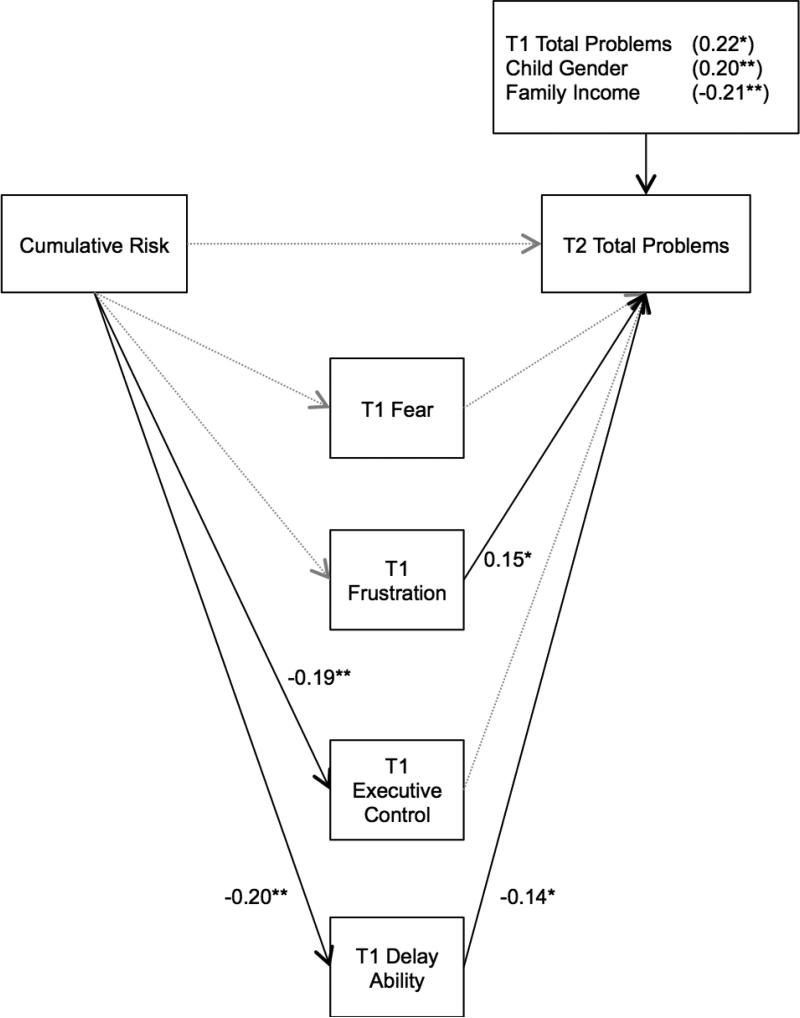
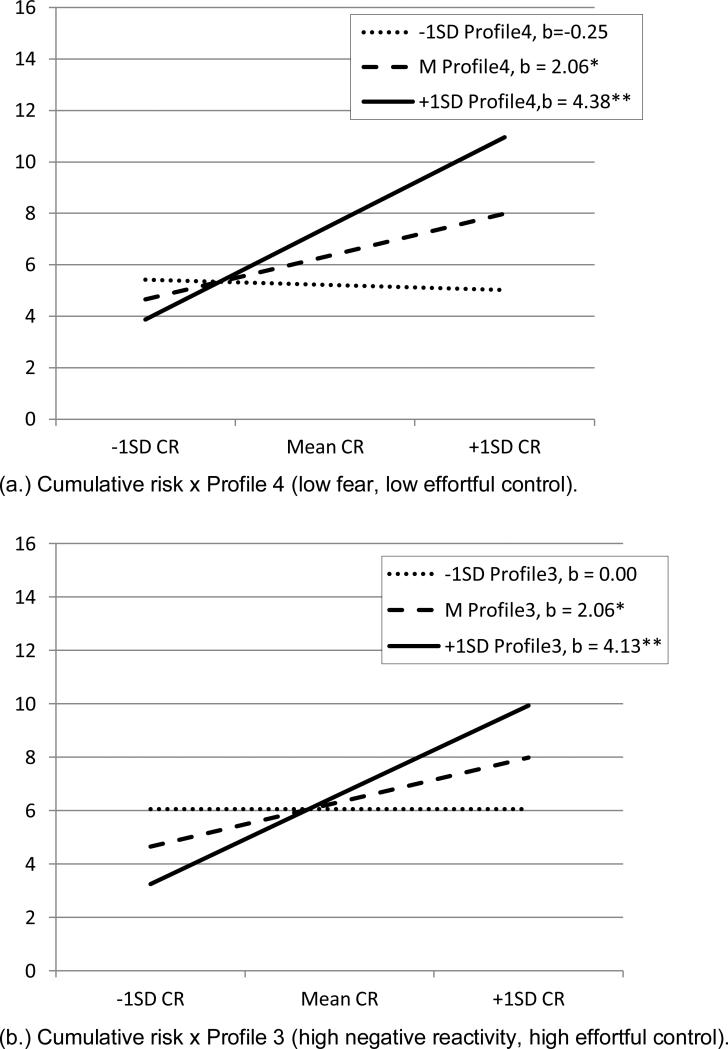
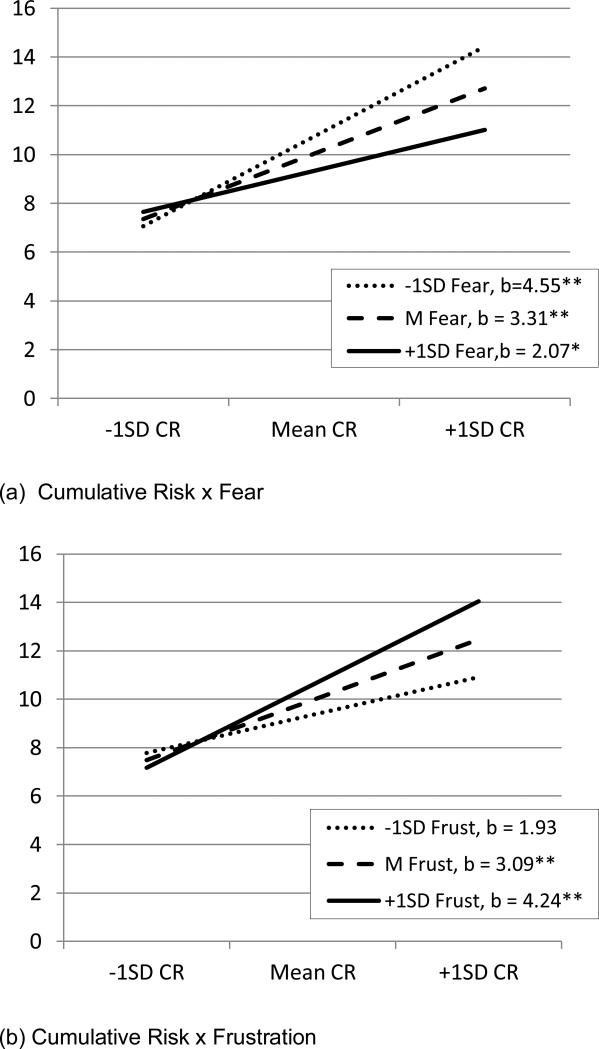
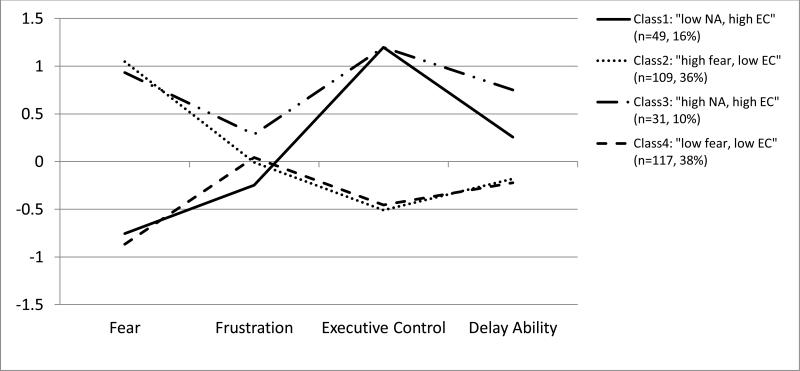
Using both variable- and person-centered approaches, this study examined the role of temperament in relation to children's vulnerable or resilient responses to cumulative risk. Observed reactivity and regulation dimensions of temperament were tested as mediating and moderating the relation between family cumulative risk and teacher-reported adjustment problems in a sample of 259 preschool-age children. Further, latent profile analyses were used to examine whether profiles of temperament, accounting for multiple characteristics simultaneously, provided additional information about the role of temperament in children's responses to risk. Results support a diathesis-stress model in which high frustration, low fear, and low delay ability confer particular vulnerability for children in high-risk contexts. Benefits of multiple approaches are highlighted.
本研究采用以变量为中心和以个体为中心的方法,考察了气质在儿童对累积风险的易感性或恢复力反应中的作用。在259名学龄前儿童样本中,对观察到的气质反应性和调节维度进行了测试,以检验其在家庭累积风险与教师报告的适应问题之间关系中的中介和调节作用。此外,潜在剖面分析用于检验同时考虑多种特征的气质剖面是否能提供关于气质在儿童风险反应中作用的更多信息。结果支持了一种素质-应激模型,即高挫折感、低恐惧和低延迟能力使处于高风险环境中的儿童特别容易受到伤害。强调了多种方法的益处。