Kakar Ashish, Rao Bappanadu H Sripathi, Hegde Shashikanth, Deshpande Nikhil, Lindner Annette, Nagursky Heiner, Patney Aditya, Mahajan Harsh
Yenepoya University Dental College, University Road, Mangalore, 575018, India.
Dental Foundations and Research Centre, Malad, Mumbai, 400064, India.
Int J Implant Dent. 2017 Dec;3(1):25. doi: 10.1186/s40729-017-0086-2. Epub 2017 Jun 22.
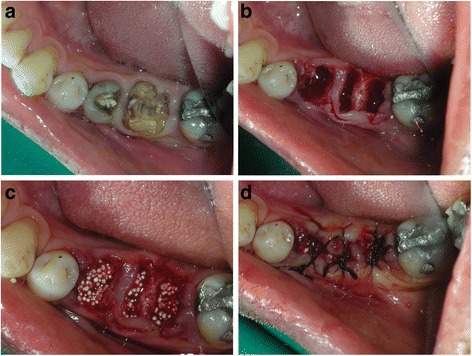
Post-Extraction ridge preservation using bone graft substitutes is a conservative technique to maintain the width of the alveolar ridge. The objective of the present study was to evaluate an in situ hardening biphasic (HA/β-TCP) bone graft substitutes for ridge preservation without primary wound closure or a dental membrane.
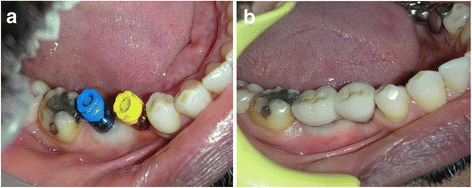
A total of 15 patients reported for tooth extraction were enrolled in this study. Implants were placed in average 5.2 ± 2 months after socket grafting. At this visit, Cone Beam CT (CBCT) images and core biopsies were taken. Implant stability (ISQ) was assessed at the insertion as well as at the day of final restoration.
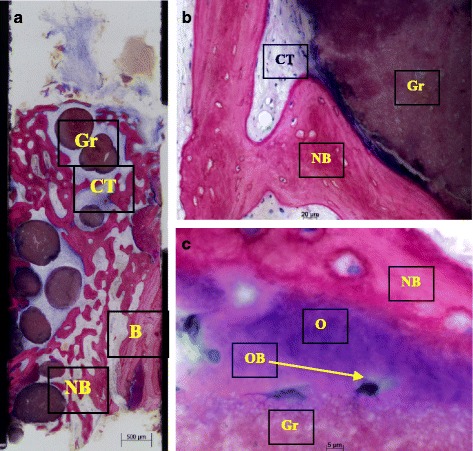
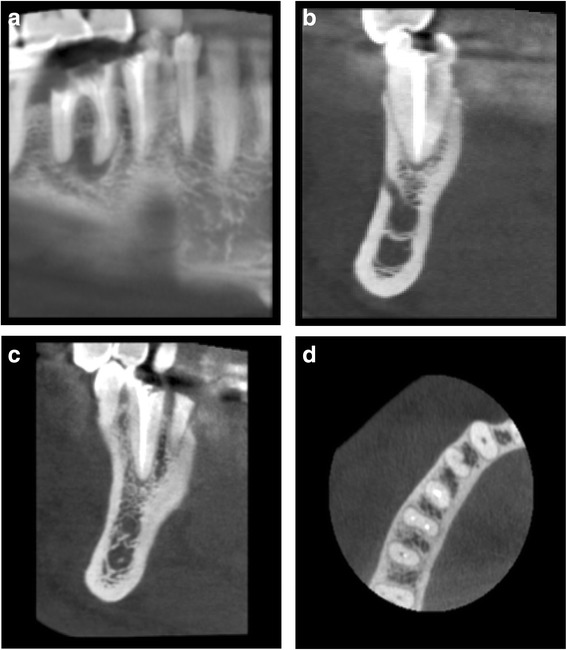
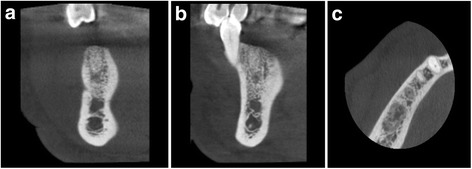
CBCT data revealed 0.79 ± 0.73 mm ridge width reduction from grafting to implant placement. Histomorphometric analysis of core biopsy samples revealed in average 21.34 ± 9.14% of new bone in the grafted sites. Primary implant stability was high (ISQ levels 70.3 ± 9.6) and further increased until final restoration.
The results of this study show that grafting of intact post-extraction sockets using a biphasic in situ hardening bone graft substitute results in an effective preservation of the ridge contour and sufficient new bone formation in the grafted sites, which is imperative for successful implant placement.
使用骨移植替代物进行拔牙后牙槽嵴保存是一种维持牙槽嵴宽度的保守技术。本研究的目的是评估一种原位硬化双相(HA/β-TCP)骨移植替代物用于牙槽嵴保存,无需一期伤口闭合或使用牙膜。
本研究共纳入15例前来拔牙的患者。拔牙窝植骨后平均5.2±2个月植入种植体。在此次就诊时,进行锥形束CT(CBCT)扫描并取核心活检样本。在种植体植入时以及最终修复当天评估种植体稳定性(ISQ)。
CBCT数据显示,从植骨到种植体植入,牙槽嵴宽度减少了0.79±0.73mm。核心活检样本的组织形态计量学分析显示,植骨部位平均有21.34±9.14%的新骨形成。种植体初期稳定性较高(ISQ值为70.3±9.6),并在最终修复前持续增加。
本研究结果表明,使用双相原位硬化骨移植替代物对完整的拔牙窝进行植骨,可有效保存牙槽嵴轮廓,并在植骨部位形成足够的新骨,这对种植体的成功植入至关重要。