Department of Infectious Diseases, Istituto Superiore di Sanità, viale Regina Elena 299, 00161, Rome, Italy.
Instituto de Salud Carlos III, Centro Nacional de Microbiología, Majadahonda, 28220, Madrid, Spain.
Eur J Clin Microbiol Infect Dis. 2017 Nov;36(11):2029-2040. doi: 10.1007/s10096-017-3029-1. Epub 2017 Jul 1.
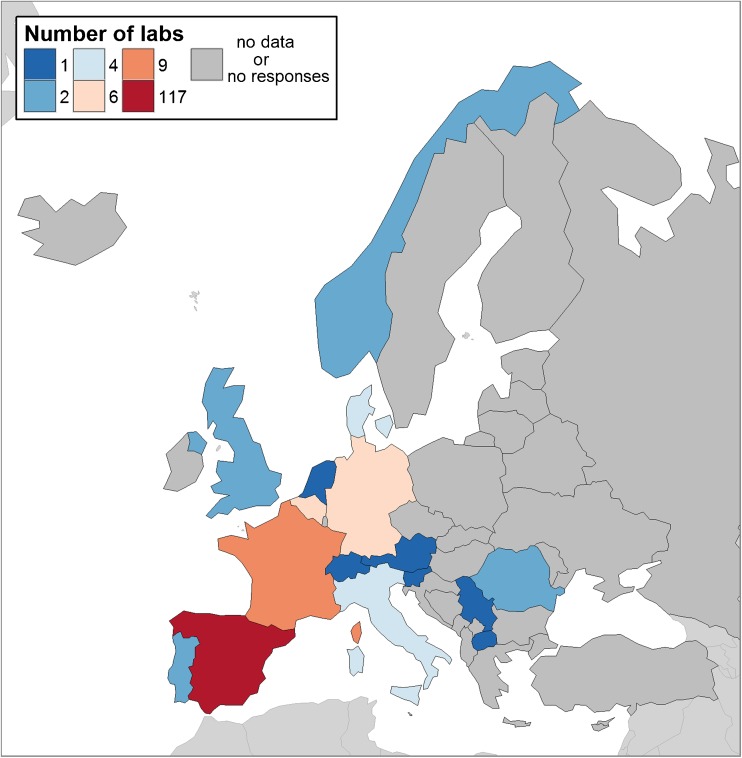
Human cysticercosis (CC) is a parasitic zoonosis caused by the larval stage (cyst) of the Taenia solium. Cysts can establish in the human central nervous system (neurocysticercosis, NCC) and other organs and tissues; they also develop in pigs, the natural intermediate host. Human taeniosis may be caused by T. solium, Taenia saginata and Taenia asiatica tapeworms; these infections are usually asymptomatic, but show a significant relevance as they perpetuate the parasites' life cycle, and, in the case of T. solium, they are the origin of (N)CC. In European Union (EU) member states and associated countries, the occurrence of autochthonous T. solium cases is debated, and imported cases have significantly increased lately; the status of T. asiatica has been never reported, whereas T. saginata is prevalent and causes an economic impact due to condemned carcasses. Based on their effects on the EU society, the specific diagnosis of these pathologies is relevant for their prevention and control. The aims of this study were to know the diagnostic tests used in European laboratories for human taeniosis/cysticercosis by means of a questionnaire, to determine potential gaps in their detection, and to obtain preliminary data on the number of diagnosed taeniosis/CC cases.
人体囊虫病 (CC) 是一种由猪带绦虫幼虫 (囊) 引起的寄生虫性人畜共患病。囊肿可在人体中枢神经系统 (神经囊虫病,NCC) 和其他器官和组织中建立;它们也在猪等天然中间宿主中发育。人类带绦虫病可能由猪带绦虫、牛带绦虫和亚洲带绦虫引起;这些感染通常无症状,但具有重要意义,因为它们延续了寄生虫的生命周期,而且在猪带绦虫的情况下,它们是 (N)CC 的起源。在欧盟 (EU) 成员国和相关国家,关于自生猪带绦虫病的发生存在争议,最近进口病例显著增加;亚洲带绦虫的情况从未报告过,而牛带绦虫则很普遍,由于被废弃的尸体而造成经济影响。基于这些疾病对欧盟社会的影响,对这些病理进行特定诊断对其预防和控制具有重要意义。本研究的目的是通过问卷调查了解欧洲实验室用于人类带绦虫病/囊虫病诊断的检测方法,确定其检测中的潜在差距,并获得诊断带绦虫病/CC 病例数的初步数据。