De Regge Melissa, De Pourcq Kaat, Meijboom Bert, Trybou Jeroen, Mortier Eric, Eeckloo Kristof
Faculty of Economics and Business Administration, Department of Innovation, Entrepreneurship, and Service Management, Ghent University, Tweekerkenstraat 2, B-9000, Ghent, Belgium.
Department of Strategic Policy Cell, Ghent University Hospital, De Pintelaan 185, B-9000, Ghent, Belgium.
BMC Health Serv Res. 2017 Aug 9;17(1):550. doi: 10.1186/s12913-017-2500-0.
Multiple studies have investigated the outcome of integrated care programs for chronically ill patients. However, few studies have addressed the specific role hospitals can play in the downstream collaboration for chronic disease management. Our objective here is to provide a comprehensive overview of the role of the hospitals by synthesizing the advantages and disadvantages of hospital interference in the chronic discourse for chronically ill patients found in published empirical studies.
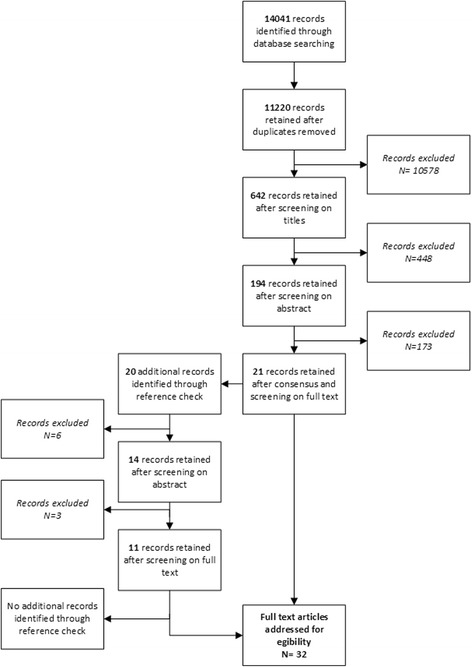
Systematic literature review. Two reviewers independently investigated relevant studies using a standardized search strategy.
Thirty-two articles were included in the systematic review. Overall, the quality of the included studies is high. Four important themes were identified: the impact of transitional care interventions initiated from the hospital's side, the role of specialized care settings, the comparison of inpatient and outpatient care, and the effect of chronic care coordination on the experience of patients.
Our results show that hospitals can play an important role in transitional care interventions and the coordination of chronic care with better outcomes for the patients by taking a leading role in integrated care programs. Above that, the patient experiences are positively influenced by the coordinating role of a specialist. Specialized care settings, as components of the hospital, facilitate the coordination of the care processes. In the future, specialized care centers and primary care could play a more extensive role in care for chronic patients by collaborating.
多项研究调查了慢性病患者综合护理项目的结果。然而,很少有研究探讨医院在慢性病管理的下游合作中可以发挥的具体作用。我们的目的是通过综合已发表的实证研究中发现的医院干预慢性病患者护理的利弊,全面概述医院的作用。
系统文献综述。两名综述员使用标准化检索策略独立调查相关研究。
32篇文章纳入系统综述。总体而言,纳入研究的质量较高。确定了四个重要主题:医院发起的过渡性护理干预的影响、专科护理机构的作用、住院护理与门诊护理的比较以及慢性病护理协调对患者体验的影响。
我们的结果表明,医院可以在过渡性护理干预以及慢性病护理协调中发挥重要作用,通过在综合护理项目中发挥主导作用,为患者带来更好的结果。除此之外,专科医生的协调作用对患者体验有积极影响。作为医院组成部分的专科护理机构有助于护理过程的协调。未来,专科护理中心和初级护理通过合作可以在慢性病患者护理中发挥更广泛的作用。