State Key Laboratory of Breeding Base for Zhejiang Sustainable Pest, and Key Laboratory for Food Microbial Technology of Zhejiang Province, Institute of Plant Protection and Microbiology, Zhejiang Academy of Agricultural Sciences, 198 Shiqiao Road, Hangzhou, Zhejiang, 310021, P. R. China.
Department of Gastroenterology and Hepatology, Chinese PLA General Hospital, 28 Fuxing Road, Beijing, 100853, China.
Sci Rep. 2017 Aug 11;7(1):7947. doi: 10.1038/s41598-017-08478-w.
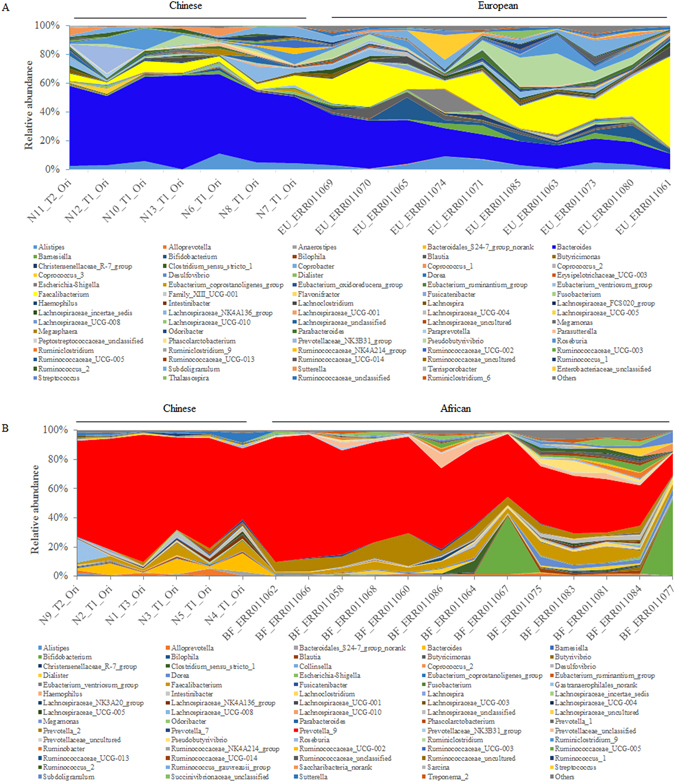
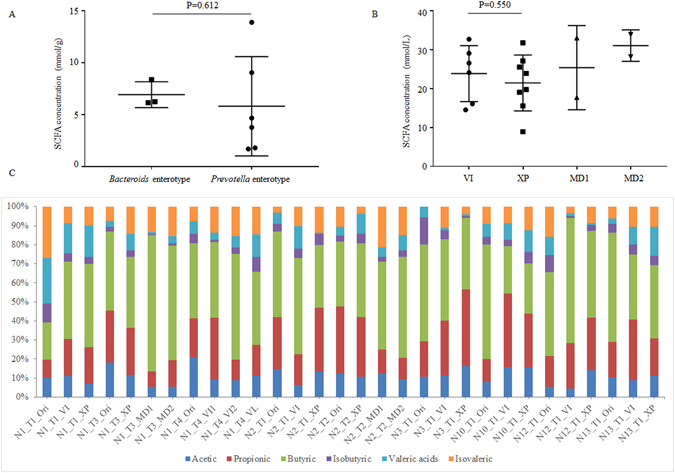
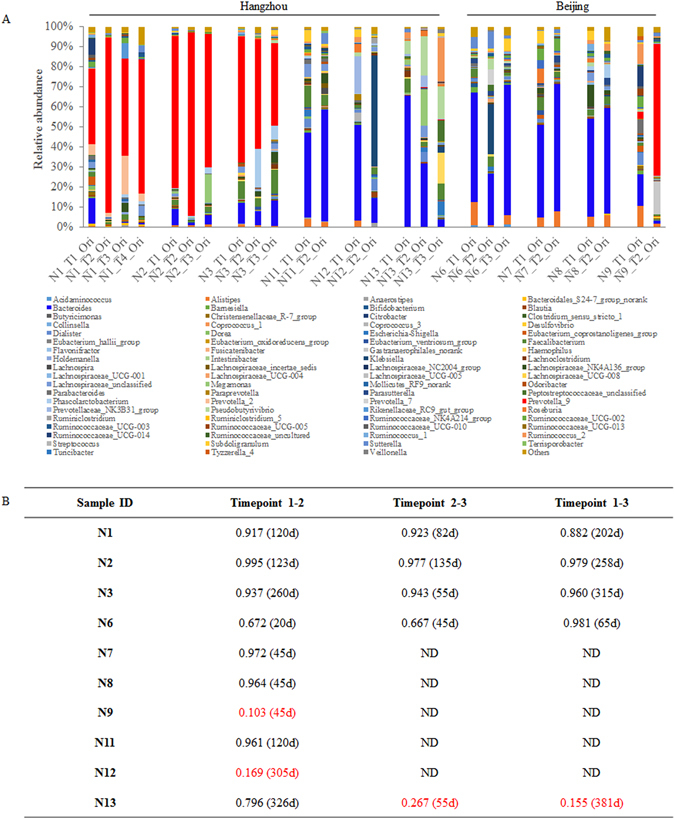
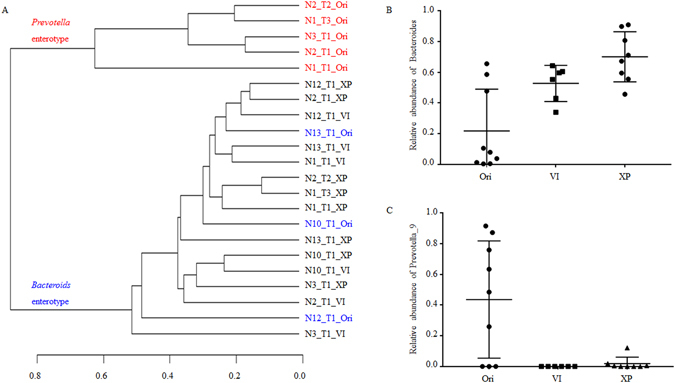
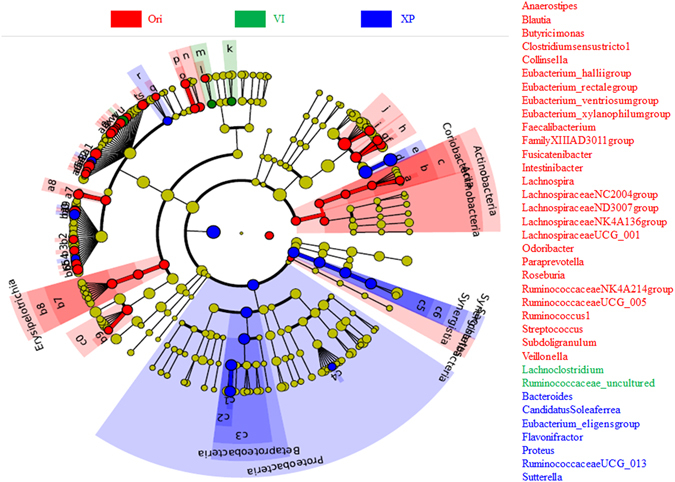
Although many gut microbial enterotypes have been reported in Europe, Africa and the U.S., their effects on human health are still not yet clear. Culturing gut microbial enterotypes in vitro will be helpful to study their effects and applications. Here, fecal samples from 13 healthy Chinese volunteers were collected and subjected to next-generation sequencing. The results showed that seven of these samples belong to the Bacteroides enterotype and another six to the Prevotella enterotype. Stability of these Chinese gut microbial enterotypes was also evaluated. Results showed that most of the tested volunteer gut microbiota to be very stable. For one volunteer, the bacterial community returned to the state it was in before intestinal lavage and antibiotics treatment after four months. XP medium was found effective for simulating the Bacteroides enterotype independent of the original gut microbial community in an in vitro chemostat culture system. Although, the Prevotella enterotype was not very well simulated in vitro, different culture elements selectively enriched different gut bacteria. Pectin and xylan were found to be related to the enrichment of the genera Bacteroides, Sutterella, and Flavonifractor in this chemostat culture system.
尽管在欧洲、非洲和美国已经报道了许多肠道微生物菌群类型,但它们对人类健康的影响尚不清楚。在体外培养肠道微生物菌群类型将有助于研究它们的影响和应用。在这里,收集了 13 名健康中国志愿者的粪便样本,并进行了下一代测序。结果表明,其中 7 个样本属于拟杆菌菌群类型,另外 6 个样本属于普雷沃氏菌菌群类型。还评估了这些中国肠道微生物菌群类型的稳定性。结果表明,大多数志愿者的肠道微生物菌群非常稳定。对于一名志愿者,在四个月后,肠道灌洗和抗生素治疗后,肠道菌群恢复到灌洗和抗生素治疗前的状态。发现 XP 培养基在体外恒化培养系统中能有效地模拟拟杆菌菌群类型,而不依赖于原始肠道微生物群落。虽然在体外不能很好地模拟普雷沃氏菌菌群类型,但不同的培养元素选择性地富集了不同的肠道细菌。果胶和木聚糖被发现与在这个恒化培养系统中属拟杆菌、萨特氏菌和黄杆菌的富集有关。