Lee Sang-Min, Nguyen SonBinh T
Department of Chemistry and Center of Cancer Nanotechnology Excellence, Northwestern University, 2145 Sheridan Road, Evanston, Illinois 60208-3113.
Department of Chemistry, The Catholic University of Korea, Bucheon, Gyeonggi-do 420-743 Korea.
Macromolecules. 2013 Dec 10;46(23):9169-9180. doi: 10.1021/ma401529w. Epub 2013 Nov 27.
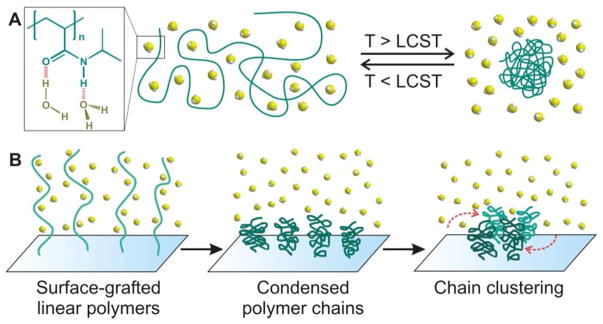
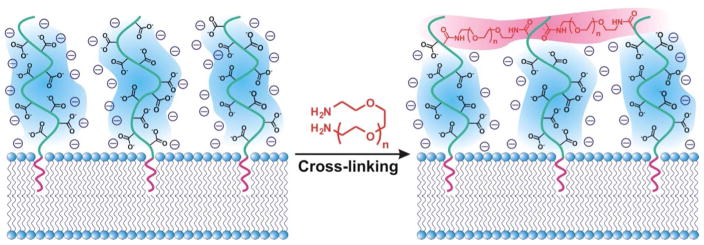
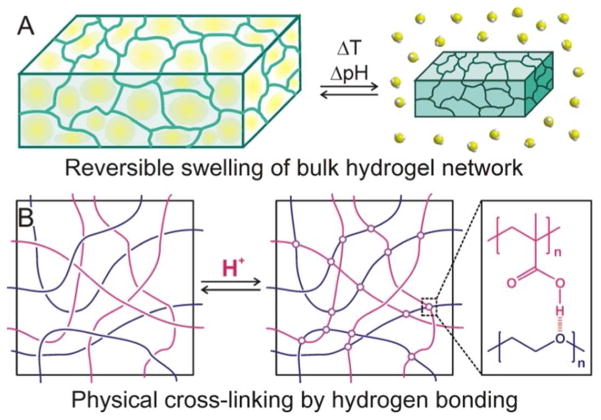
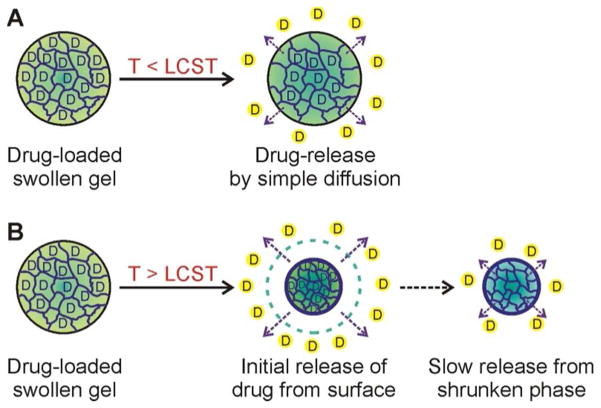
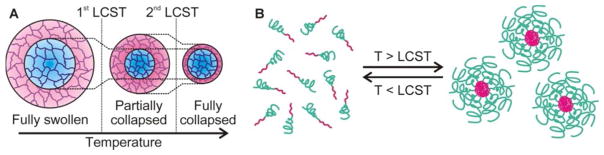
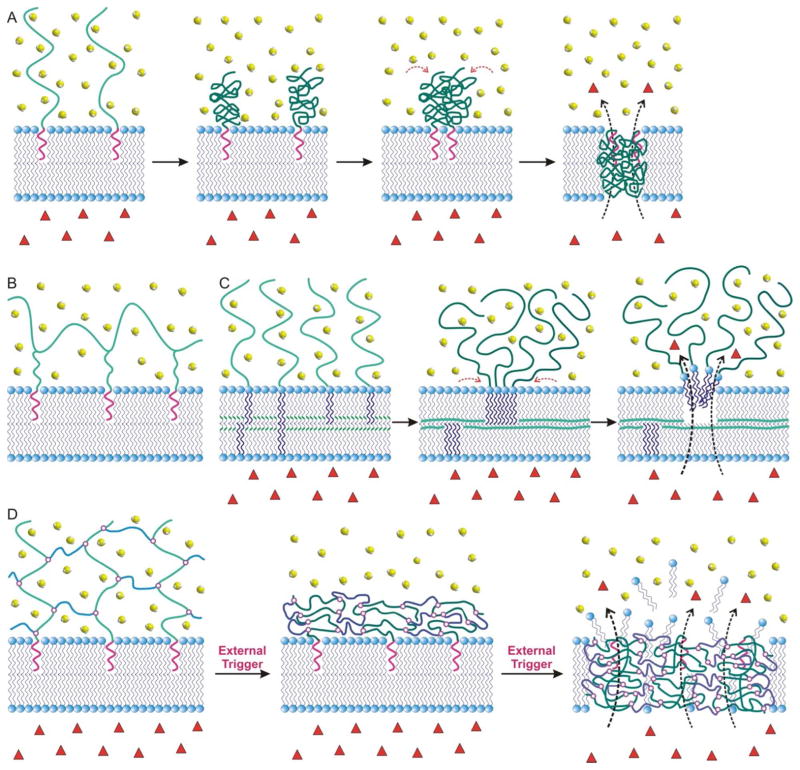
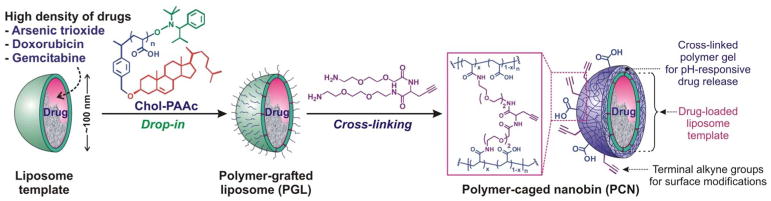
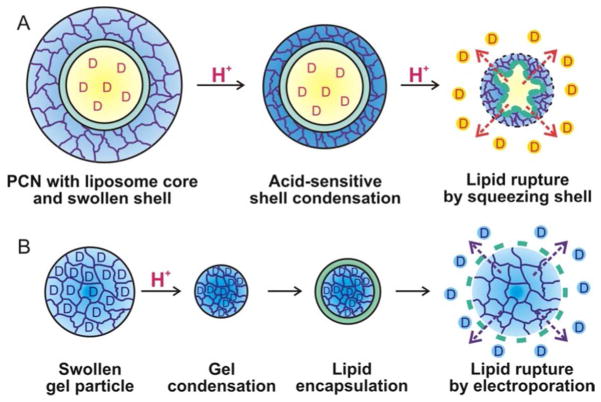
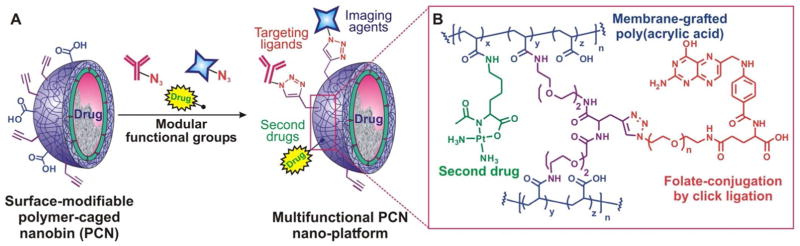
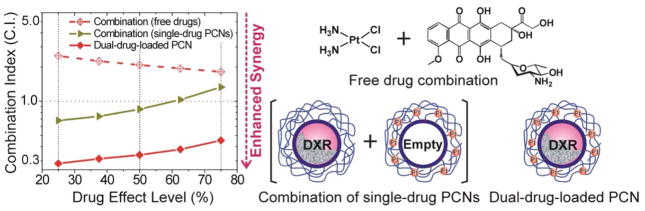
Since the 1960's, stimuli-responsive polymers have been utilized as functional soft materials for biological applications such as the triggered-release delivery of biologically active cargos. Over the same period, liposomes have been explored as an alternative drug delivery system with potentials to decrease the toxic side effects often associated with conventional small-molecule drugs. However, the lack of drug-release triggers and the instability of bare liposomes often limit their practical applications, causing short circulation time and low therapeutic efficacy. This perspective article highlights recent work in integrating these two materials together to achieve a targetable, triggerable nanoscale platform that fulfills all the characteristics of a near-ideal drug delivery system. Through a , post-synthesis modification strategy, a network of stimuli-responsive polymers can be integrated onto the surface of liposomes to form polymer-caged nanobins, a multifunctional nanoscale delivery platform that allows for multi-drug loading, targeted delivery, triggered drug-release, and theranostic capabilities.
自20世纪60年代以来,刺激响应性聚合物已被用作生物应用的功能性软材料,如生物活性货物的触发释放递送。同一时期,脂质体作为一种替代药物递送系统被探索,具有降低通常与传统小分子药物相关的毒副作用的潜力。然而,缺乏药物释放触发因素以及裸脂质体的不稳定性常常限制其实际应用,导致循环时间短和治疗效果低。这篇观点文章重点介绍了将这两种材料整合在一起以实现一个可靶向、可触发的纳米级平台的最新工作,该平台具备近乎理想的药物递送系统的所有特性。通过一种合成后修饰策略,刺激响应性聚合物网络可以整合到脂质体表面,形成聚合物包裹的纳米盒,这是一种多功能纳米级递送平台,允许多药负载、靶向递送、触发药物释放以及治疗诊断能力。