Calin Violeta L, Mihailescu Mona, Scarlat Eugen I, Baluta Alexandra V, Calin Daniel, Kovacs Eugenia, Savopol Tudor, Moisescu Mihaela G
Biophysics and Cellular Biotechnology Department Faculty of Medicine Carol Davila University of Medicine and Pharmacy Bucharest Romania.
Physics Department Faculty of Applied Sciences Politehnica University of Bucharest Romania.
FEBS Open Bio. 2017 Sep 2;7(10):1527-1538. doi: 10.1002/2211-5463.12282. eCollection 2017 Oct.
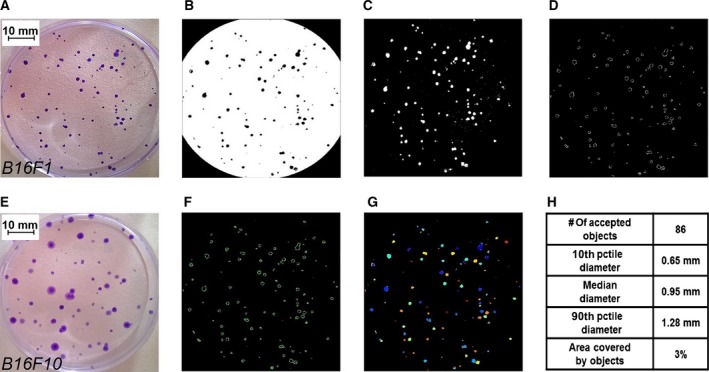
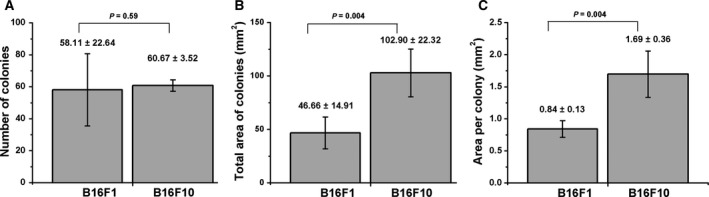
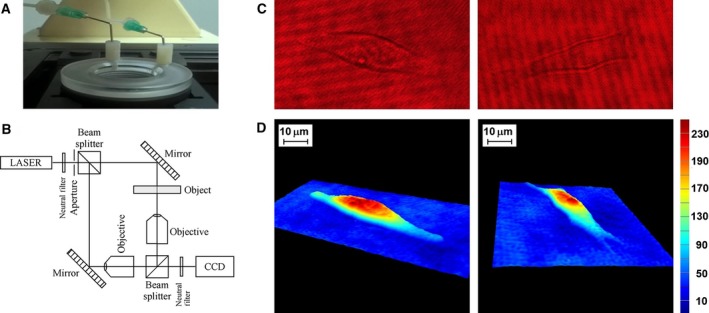
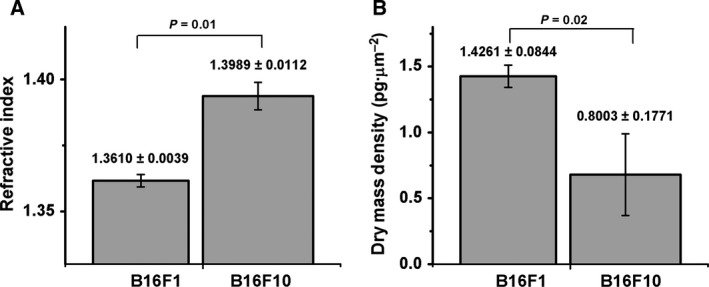
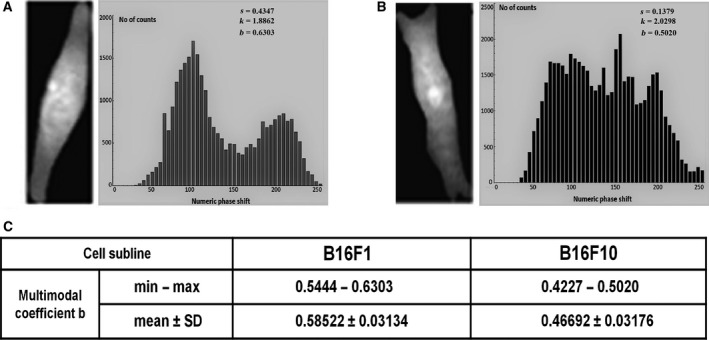
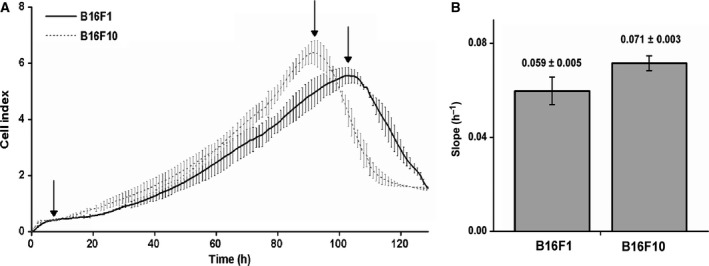
The cell refractive index has been proposed as a putative cancer biomarker of great potential, being correlated with cell content and morphology, cell division rate and membrane permeability. We used digital holographic microscopy to compare the refractive index and dry mass density of two B16 murine melanoma sublines of different metastatic potential. Using statistical methods, the distribution of phase shifts within the reconstructed quantitative phase images was analyzed by the method of bimodality coefficients. The observed correlation of refractive index, dry mass density and bimodality profile with the metastatic potential of the cells was validated by real time impedance-based assay and clonogenic tests. We suggest that the refractive index and bimodality analysis of quantitative phase image histograms could be developed as optical biomarkers useful in label-free detection and quantitative evaluation of cell metastatic potential.
细胞折射率已被认为是一种极具潜力的假定癌症生物标志物,它与细胞内容物和形态、细胞分裂速率及膜通透性相关。我们使用数字全息显微镜比较了两种具有不同转移潜能的B16小鼠黑色素瘤亚系的折射率和干质量密度。通过统计方法,采用双峰系数法分析了重建的定量相位图像内的相移分布。通过基于实时阻抗的检测和克隆形成试验验证了所观察到的折射率、干质量密度和双峰分布与细胞转移潜能之间的相关性。我们认为,定量相位图像直方图的折射率和双峰分析可发展成为用于无标记检测和细胞转移潜能定量评估的光学生物标志物。