Vrijsen Janna N, Tendolkar Indira, Onnink Marten, Hoogman Martine, Schene Aart H, Fernández Guillén, van Oostrom Iris, Franke Barbara
Department of Psychiatry, Radboud University Medical Center, Donders Institute for Brain, Cognition and Behaviour, PO Box 9101, 6500 HB, Nijmegen, The Netherlands.
Pro Persona Mental Health Care, Depression Expertise Center, Nijmegen, The Netherlands.
Atten Defic Hyperact Disord. 2018 Jun;10(2):151-160. doi: 10.1007/s12402-017-0241-x. Epub 2017 Oct 28.
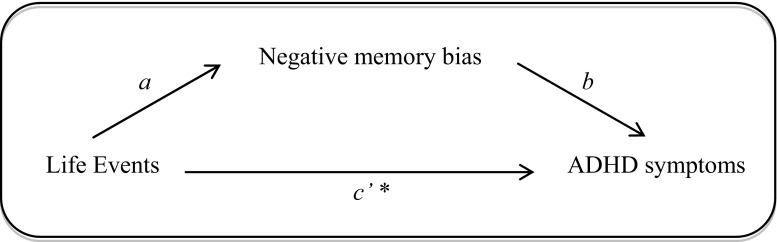
Stressful life events, especially Childhood Trauma, predict ADHD symptoms. Childhood Trauma and negatively biased memory are risk factors for affective disorders. The association of life events and bias with ADHD symptoms may inform about the etiology of ADHD. Memory bias was tested using a computer task in N = 675 healthy adults. Life events and ADHD symptoms were assessed using questionnaires. The mediation of the association between life events and ADHD symptoms by memory bias was examined. We explored the roles of different types of life events and of ADHD symptom clusters. Life events and memory bias were associated with overall ADHD symptoms as well as inattention and hyperactivity/impulsivity symptom clusters. Memory bias mediated the association of Lifetime Life Events, specifically Childhood Trauma, with ADHD symptoms. Negatively biased memory may be a cognitive marker of the effects of Childhood Trauma on the development and/or persistence of ADHD symptoms.
压力性生活事件,尤其是童年创伤,可预测注意缺陷多动障碍(ADHD)症状。童年创伤和负性偏向记忆是情感障碍的危险因素。生活事件和偏向与ADHD症状之间的关联可能有助于了解ADHD的病因。在N = 675名健康成年人中,使用计算机任务测试了记忆偏向。使用问卷评估生活事件和ADHD症状。检验了记忆偏向对生活事件与ADHD症状之间关联的中介作用。我们探讨了不同类型生活事件和ADHD症状簇的作用。生活事件和记忆偏向与总体ADHD症状以及注意力不集中和多动/冲动症状簇相关。记忆偏向介导了终生生活事件,特别是童年创伤,与ADHD症状之间的关联。负性偏向记忆可能是童年创伤对ADHD症状发展和/或持续影响的一种认知标志。