Remali Juwairiah, Sarmin Nurul 'Izzah Mohd, Ng Chyan Leong, Tiong John J L, Aizat Wan M, Keong Loke Kok, Zin Noraziah Mohamad
School of Diagnostic and Applied Health Sciences, Faculty of Health Sciences, Universiti Kebangsaan Malaysia, Kuala Lumpur, Malaysia.
Centre of PreClinical Science Studies, Faculty of Dentistry, Universiti Teknologi MARA Sungai Buloh Campus, Sungai Buloh, Selangor, Malaysia.
PeerJ. 2017 Nov 29;5:e3738. doi: 10.7717/peerj.3738. eCollection 2017.
are well known for their capability to produce many bioactive secondary metabolites with medical and industrial importance. Here we report a novel bioactive phenazine compound, 6-((2-hydroxy-4-methoxyphenoxy) carbonyl) phenazine-1-carboxylic acid (HCPCA) extracted from , an endophyte isolated from the ethnomedicinal
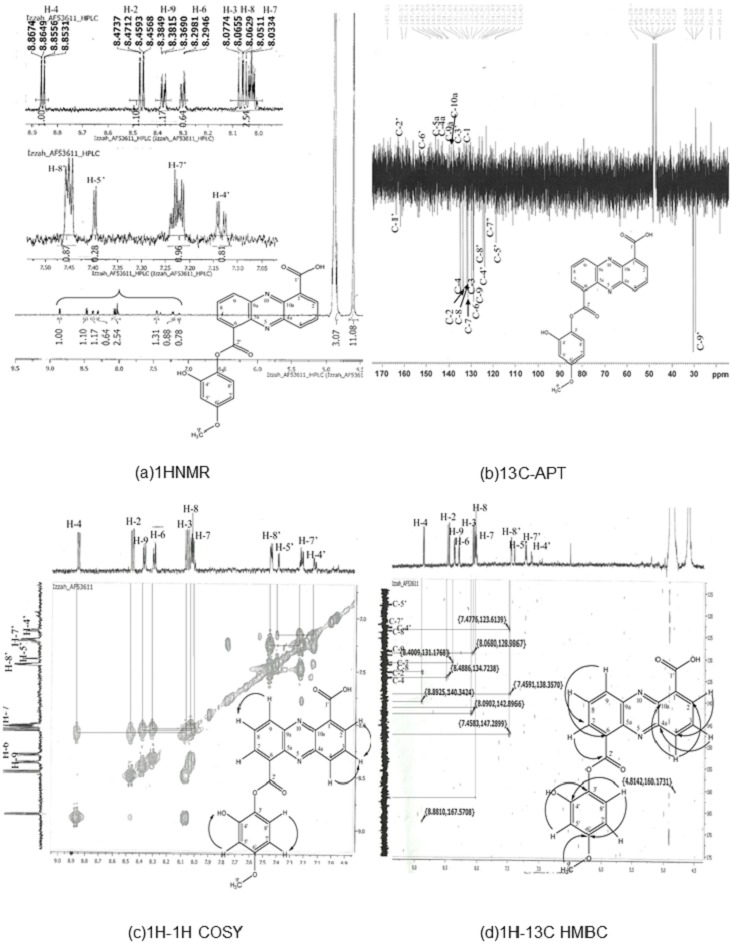
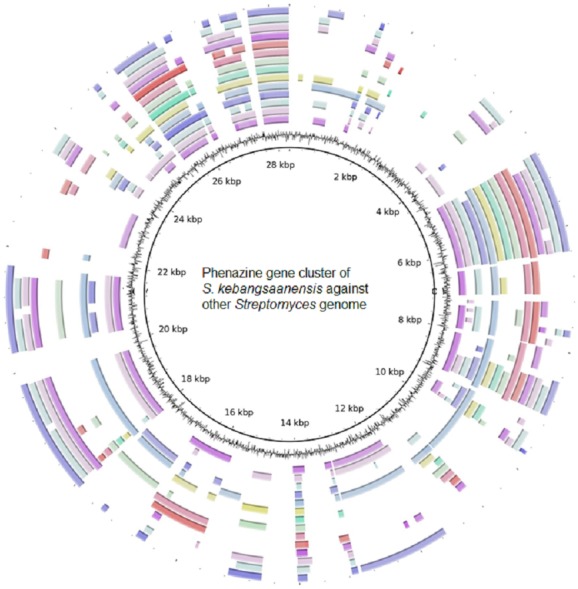
The HCPCA chemical structure was determined using nuclear magnetic resonance spectroscopy. We conducted whole genome sequencing for the identification of the gene cluster(s) believed to be responsible for phenazine biosynthesis in order to map its corresponding pathway, in addition to bioinformatics analysis to assess the potential of in producing other useful secondary metabolites.
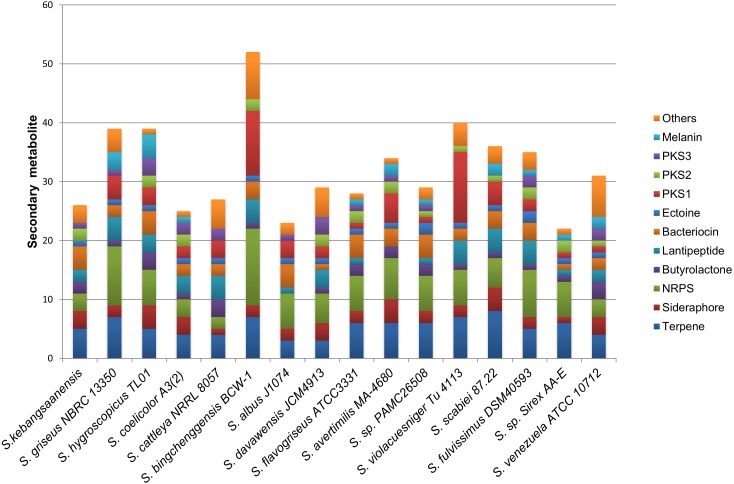
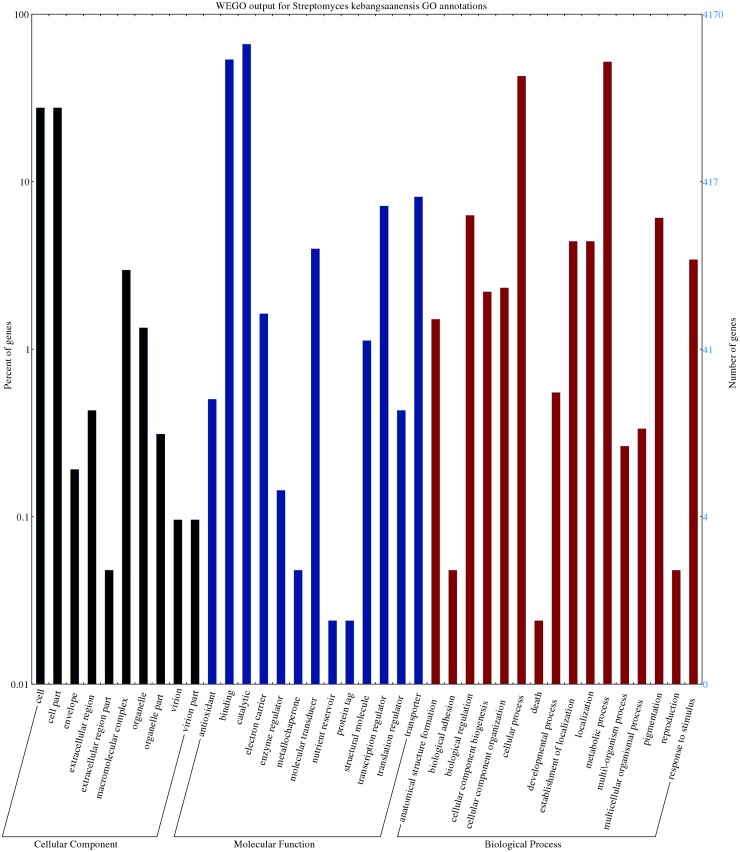
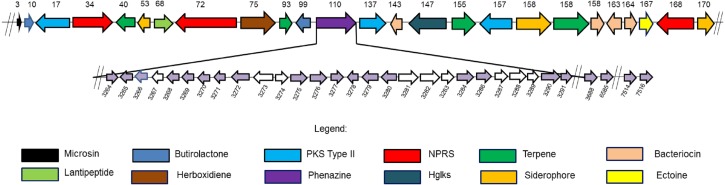
The genome comprises an 8,328,719 bp linear chromosome with high GC content (71.35%) consisting of 12 rRNA operons, 81 tRNA, and 7,558 protein coding genes. We identified 24 gene clusters involved in polyketide, nonribosomal peptide, terpene, bacteriocin, and siderophore biosynthesis, as well as a gene cluster predicted to be responsible for phenazine biosynthesis.
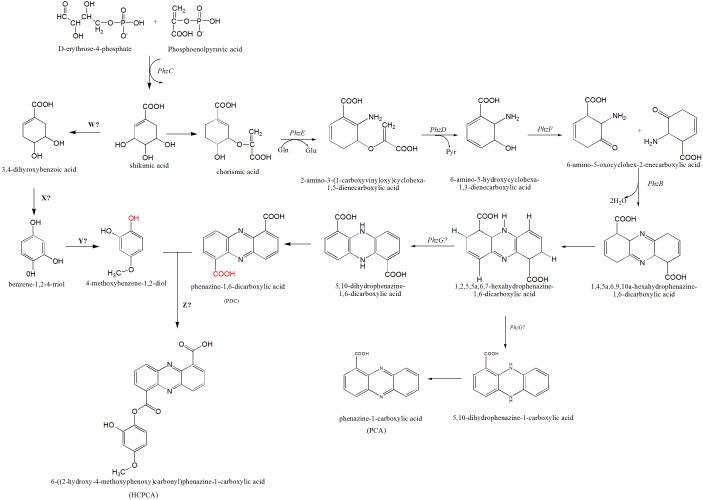
The HCPCA phenazine structure was hypothesized to derive from the combination of two biosynthetic pathways, phenazine-1,6-dicarboxylic acid and 4-methoxybenzene-1,2-diol, originated from the shikimic acid pathway. The identification of a biosynthesis pathway gene cluster for phenazine antibiotics might facilitate future genetic engineering design of new synthetic phenazine antibiotics. Additionally, these findings confirm the potential of for producing various antibiotics and secondary metabolites.
以其产生许多具有医学和工业重要性的生物活性次生代谢产物的能力而闻名。在此,我们报道了一种从一种从民族药用植物中分离出的内生菌中提取的新型生物活性吩嗪化合物,6-((2-羟基-4-甲氧基苯氧基)羰基)吩嗪-1-羧酸(HCPCA)。
使用核磁共振光谱法确定HCPCA的化学结构。我们进行了全基因组测序,以鉴定被认为负责吩嗪生物合成的基因簇,以便绘制其相应途径,此外还进行了生物信息学分析,以评估该内生菌产生其他有用次生代谢产物的潜力。
该内生菌的基因组由一条8,328,719 bp的线性染色体组成,GC含量高(71.35%),包含12个rRNA操纵子、81个tRNA和7,558个蛋白质编码基因。我们鉴定出24个参与聚酮化合物、非核糖体肽、萜类、细菌素和铁载体生物合成的基因簇,以及一个预计负责吩嗪生物合成的基因簇。
推测HCPCA吩嗪结构源自两条生物合成途径的组合,即来自莽草酸途径的吩嗪-1,6-二羧酸和4-甲氧基苯-1,2-二醇。吩嗪抗生素生物合成途径基因簇的鉴定可能有助于未来新型合成吩嗪抗生素的基因工程设计。此外,这些发现证实了该内生菌产生各种抗生素和次生代谢产物的潜力。