Ayeka Peter Amwoga, Bian YuHong, Githaiga Peter Mwitari, Zhao Ying
International College of Chinese Materia Medica, Tianjin University of Traditional Chinese Medicine, 88 Yuquan Road, 312 Anshan Western Road, Nankai District, Tianjin, 300193, People's Republic of China.
Department of Biological Sciences, Faculty of Science, Egerton University, PO BOX 536-20115, Egerton, Kenya.
BMC Complement Altern Med. 2017 Dec 15;17(1):536. doi: 10.1186/s12906-017-2030-7.
The increasing use of complementary and alternative medicine (CAM) has kindled the need for scientific evaluation of the mechanism of action of CAMs. Although, licorice, a common ingredient in many Traditional Chinese medicine (TCM) has attracted great attention for its antitumor and immunomodulatory activities, the mechanism of action of its polysaccharides is still unclear. Here we report the immunomodulatory activity of licorice polysaccharides in vivo.
The differential anticancer activities of licorice polysaccharides by tumorigenesis and immunomodulation was evaluated in vivo. Six weeks old, 120 CT-26 tumor bearing BALB/c mice, weighing 20 ± 2 g were used. They were randomly divided into six groups, three groups receiving high molecular weight (fraction A), low molecular weight (fraction B) polysaccharides and crude extract (fraction C); positive, negative and normal groups receiving cytoxin, saline and normal diet respectively. Weight of mice and tumors was determined and tumorigenicity assay calculated to determine the anticancer effects. Immunomodulatory potential was determined by immune organ indices, immune cell population and serum cytokine levels using immune organ weight and index, flow cytometry and cytokine/chemokine bead panel kit respectively.
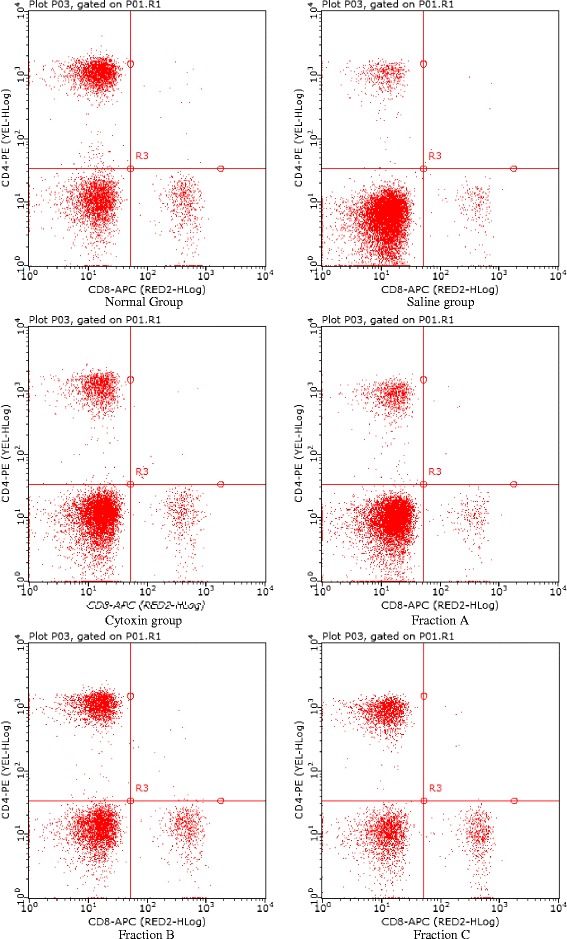
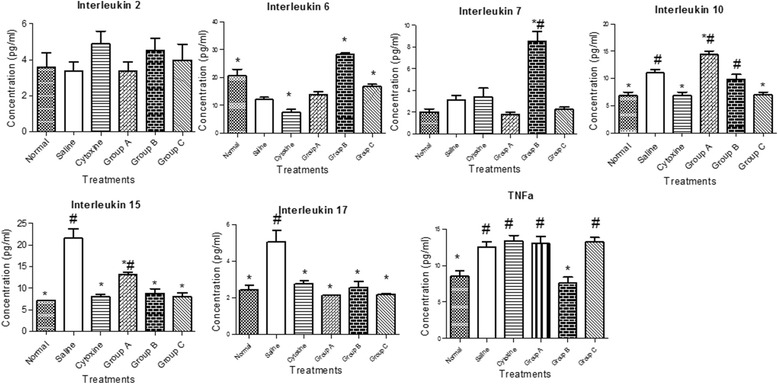
Licorice polysaccharides exhibited immunomodulatory activities in CT 26 tumor bearing BALB/c mice. The polysaccharides significantly suppressed tumor growth and increased immune organ index. Furthermore, the immunomodulatory effect was evident with activation of CD4 and CD8 immune cells population. The polysaccharides also affected the production of various cytokines, by increasing IL 2, IL 6, IL 7 levels and a decreasing TNFα levels.
In summary, licorice polysaccharide especially of low molecular weight exhibit anticancer and immunomodulatory activities by suppressing tumor growth and improving general health of mice. They also augment the thymus/spleen index and population of T lymphocytes. Furthermore, the polysaccharides enhance the levels of serum antitumor cytokines, IL 2, IL 6 and IL 7 while decreasing pro-tumor cytokine TNFα.
补充和替代医学(CAM)的使用日益增加,引发了对CAM作用机制进行科学评估的需求。尽管甘草作为许多中药中的常见成分,因其抗肿瘤和免疫调节活性而备受关注,但其多糖的作用机制仍不清楚。在此,我们报告甘草多糖在体内的免疫调节活性。
在体内评估甘草多糖通过肿瘤发生和免疫调节的差异抗癌活性。使用六周龄、体重20±2 g的120只携带CT-26肿瘤的BALB/c小鼠。将它们随机分为六组,三组分别接受高分子量(组分A)、低分子量(组分B)多糖和粗提物(组分C);阳性、阴性和正常组分别接受细胞毒素、生理盐水和正常饮食。测定小鼠和肿瘤的重量,并计算肿瘤发生试验以确定抗癌效果。分别使用免疫器官重量和指数、流式细胞术以及细胞因子/趋化因子磁珠板试剂盒,通过免疫器官指数、免疫细胞群体和血清细胞因子水平来确定免疫调节潜力。
甘草多糖在携带CT-26肿瘤的BALB/c小鼠中表现出免疫调节活性。多糖显著抑制肿瘤生长并增加免疫器官指数。此外,随着CD4和CD8免疫细胞群体的激活,免疫调节作用明显。多糖还通过增加IL-2、IL-6、IL-7水平和降低TNFα水平影响各种细胞因子的产生。
总之,甘草多糖尤其是低分子量的甘草多糖通过抑制肿瘤生长和改善小鼠的整体健康状况,表现出抗癌和免疫调节活性。它们还增加胸腺/脾脏指数和T淋巴细胞群体。此外,多糖提高血清抗肿瘤细胞因子IL-2、IL-6和IL-7的水平,同时降低促肿瘤细胞因子TNFα的水平。