Fernandez Renae C, Moore Vivienne M, Van Ryswyk Emer M, Varcoe Tamara J, Rodgers Raymond J, March Wendy A, Moran Lisa J, Avery Jodie C, McEvoy R Doug, Davies Michael J
The University of Adelaide, Robinson Research Institute, Adelaide, SA, Australia.
The University of Adelaide, Adelaide Medical School, Adelaide, SA, Australia.
Nat Sci Sleep. 2018 Feb 1;10:45-64. doi: 10.2147/NSS.S127475. eCollection 2018.
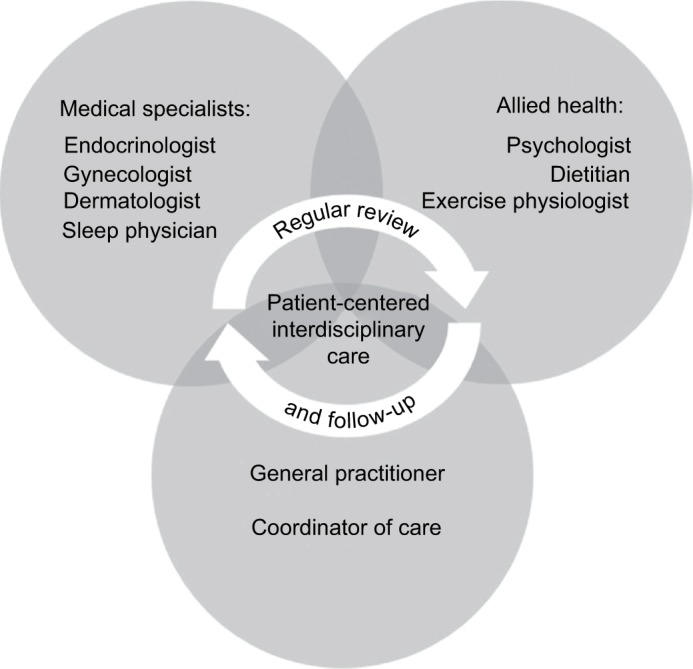
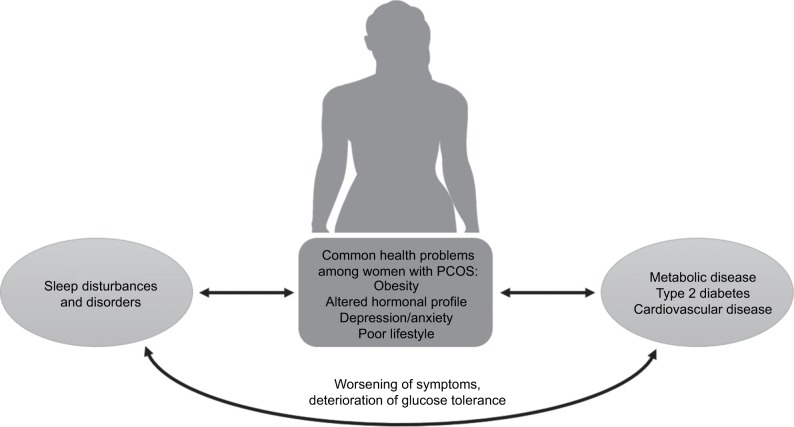
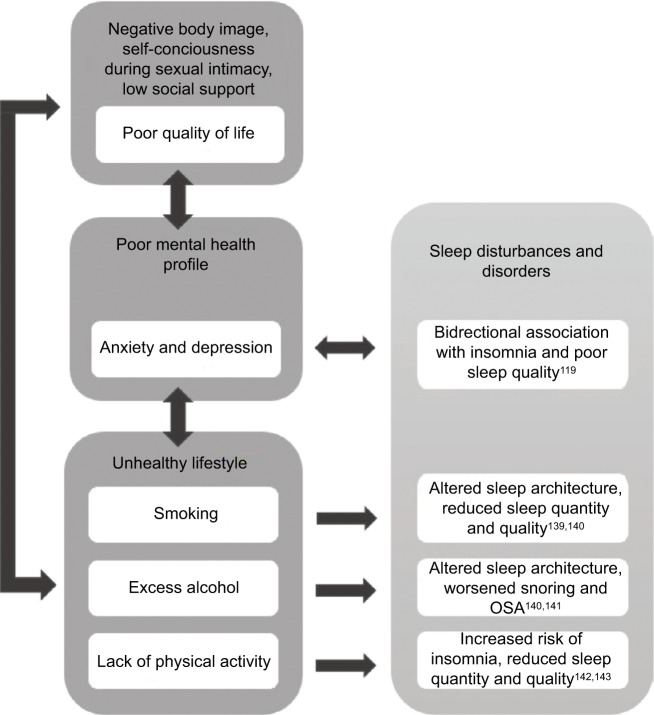
Polycystic ovary syndrome (PCOS) is a complex endocrine disorder affecting the reproductive, metabolic and psychological health of women. Clinic-based studies indicate that sleep disturbances and disorders including obstructive sleep apnea and excessive daytime sleepiness occur more frequently among women with PCOS compared to comparison groups without the syndrome. Evidence from the few available population-based studies is supportive. Women with PCOS tend to be overweight/obese, but this only partly accounts for their sleep problems as associations are generally upheld after adjustment for body mass index; sleep problems also occur in women with PCOS of normal weight. There are several, possibly bidirectional, pathways through which PCOS is associated with sleep disturbances. The pathophysiology of PCOS involves hyperandrogenemia, a form of insulin resistance unique to affected women, and possible changes in cortisol and melatonin secretion, arguably reflecting altered hypothalamic-pituitary-adrenal function. Psychological and behavioral pathways are also likely to play a role, as anxiety and depression, smoking, alcohol use and lack of physical activity are also common among women with PCOS, partly in response to the distressing symptoms they experience. The specific impact of sleep disturbances on the health of women with PCOS is not yet clear; however, both PCOS and sleep disturbances are associated with deterioration in cardiometabolic health in the longer term and increased risk of type 2 diabetes. Both immediate quality of life and longer-term health of women with PCOS are likely to benefit from diagnosis and management of sleep disorders as part of interdisciplinary health care.
多囊卵巢综合征(PCOS)是一种复杂的内分泌紊乱疾病,会影响女性的生殖、代谢和心理健康。基于临床的研究表明,与无该综合征的对照组相比,患有PCOS的女性中睡眠障碍更为常见,包括阻塞性睡眠呼吸暂停和日间过度嗜睡。少数基于人群的研究证据也支持这一点。患有PCOS的女性往往超重/肥胖,但这只是其睡眠问题的部分原因,因为在调整体重指数后,两者的关联通常仍然存在;体重正常的PCOS女性也会出现睡眠问题。PCOS与睡眠障碍之间存在多种可能双向的关联途径。PCOS的病理生理学涉及高雄激素血症,这是受影响女性特有的一种胰岛素抵抗形式,以及皮质醇和褪黑素分泌可能发生的变化,这可以说是下丘脑-垂体-肾上腺功能改变的反映。心理和行为途径也可能起作用,因为焦虑、抑郁、吸烟、饮酒和缺乏体育活动在患有PCOS的女性中也很常见,部分原因是她们对所经历的痛苦症状做出的反应。睡眠障碍对患有PCOS的女性健康的具体影响尚不清楚;然而,从长远来看,PCOS和睡眠障碍都与心脏代谢健康恶化以及2型糖尿病风险增加有关。作为跨学科医疗保健的一部分,对睡眠障碍进行诊断和管理可能会使患有PCOS的女性的即时生活质量和长期健康受益。