Bridges Kristina M, Diaz Francisco J, Wang Zhiwen, Ahmed Ishfaq, Sullivan Debra K, Umar Shahid, Buckles Daniel C, Greiner K Allen, Hester Christina M
Department of Family Medicine Research Division, University of Kansas Medical Center, Kansas City, KS 66160, USA.
Department of Biostatistics, University of Kansas Medical Center, Kansas City, KS 66160, USA.
Genes (Basel). 2018 Feb 26;9(3):119. doi: 10.3390/genes9030119.
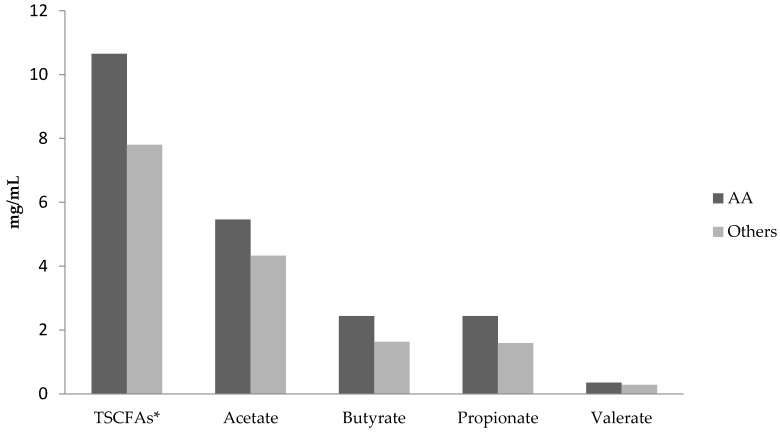
Colorectal cancer (CRC) is the third leading cause of cancer death for both men and women in the United States, yet it is treatable and preventable. African Americans have higher incidence of CRC than other racial/ethnic groups, however, it is unclear whether this disparity is primarily due to environmental or biological factors. Short chain fatty acids (SCFAs) are metabolites produced by bacteria in the colon and are known to be inversely related to CRC progression. The aim of this study is to investigate how stool SCFA levels, markers of inflammation in stool and dietary intake relate to colonoscopy findings in a diverse patient population. Stool samples from forty-eight participants were analyzed for SCFA levels and inflammatory markers (lysozyme, secretory IgA, lactoferrin). Additionally, participants completed the National Cancer Institute's Diet History Questionnaire II (DHQ II) to report dietary intake over the past year. Subsequently, the majority of participants underwent screening colonoscopy. Our results showed that African Americans had higher total levels of SCFAs in stool than other racial/ethnic groups, significantly lower intake of non-starchy vegetables and similar inflammatory marker expression and colonoscopy outcomes, compared to others. This work is an initial exploration into the biological and clinical factors that may ultimately inform personalized screening approaches and clinical decision-making to improve colorectal cancer disparities for African Americans.
结直肠癌(CRC)是美国男性和女性癌症死亡的第三大主要原因,但它是可治疗和可预防的。非裔美国人患CRC的发病率高于其他种族/族裔群体,然而,尚不清楚这种差异主要是由于环境因素还是生物学因素。短链脂肪酸(SCFAs)是结肠中细菌产生的代谢产物,已知与CRC进展呈负相关。本研究的目的是调查粪便SCFA水平、粪便炎症标志物和饮食摄入量与不同患者群体的结肠镜检查结果之间的关系。对48名参与者的粪便样本进行了SCFA水平和炎症标志物(溶菌酶、分泌型IgA、乳铁蛋白)分析。此外,参与者完成了美国国立癌症研究所的饮食历史问卷II(DHQ II),以报告过去一年的饮食摄入量。随后,大多数参与者接受了筛查结肠镜检查。我们的结果表明,与其他种族/族裔群体相比,非裔美国人粪便中SCFAs的总水平更高,非淀粉类蔬菜的摄入量显著更低,炎症标志物表达和结肠镜检查结果相似。这项工作是对生物学和临床因素的初步探索,这些因素最终可能为个性化筛查方法和临床决策提供依据,以改善非裔美国人的结直肠癌差异。