National Socio-Environmental Synthesis Center, University of Maryland, Annapolis, MD, 21401, USA.
Department of Biology, Georgetown University, Washington, DC, 20057, USA.
Sci Rep. 2018 Mar 21;8(1):4921. doi: 10.1038/s41598-018-22989-0.
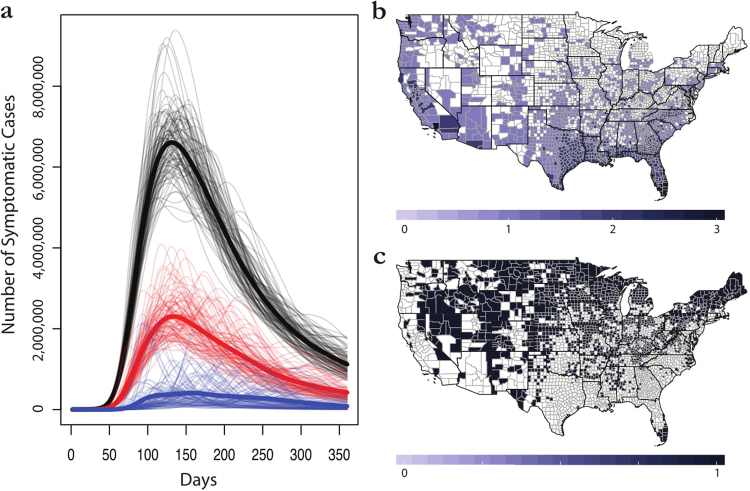
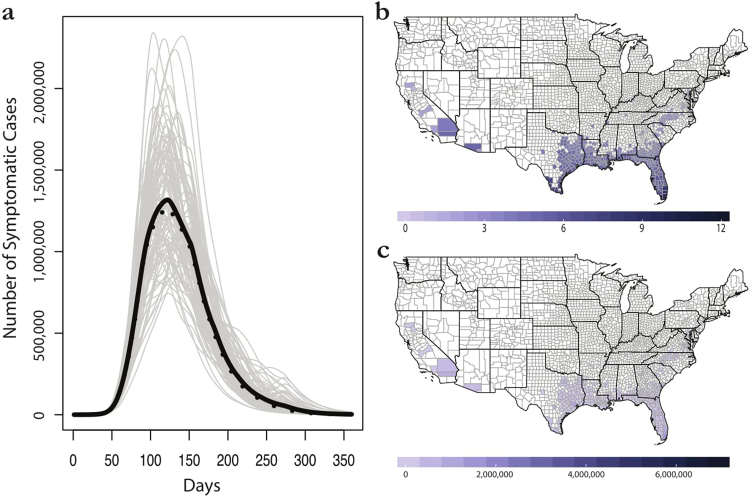
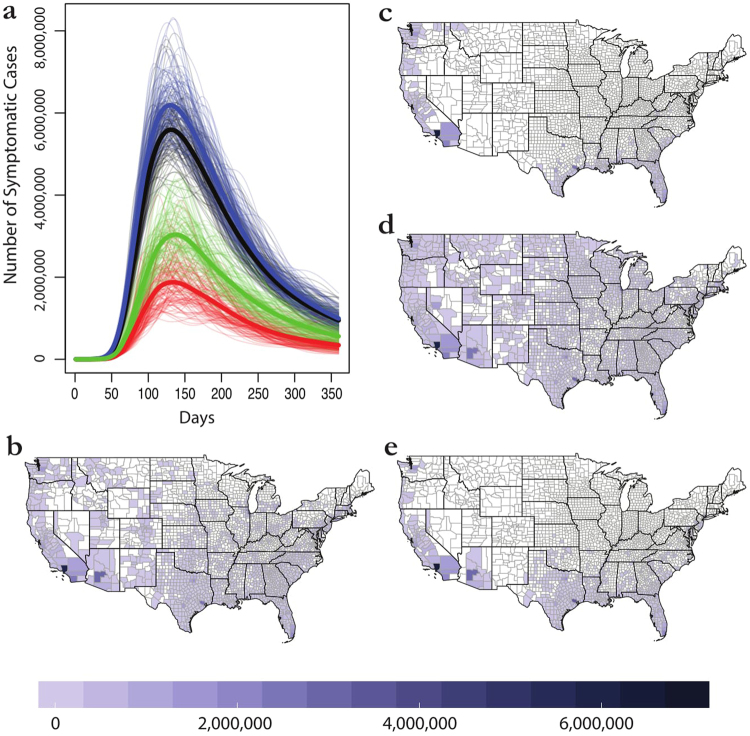
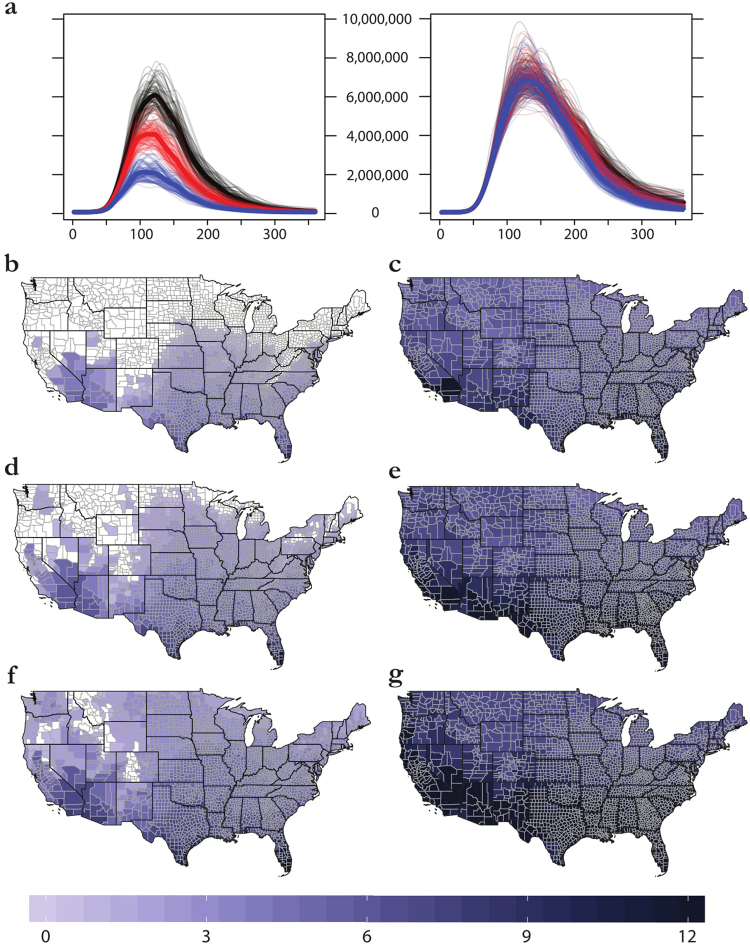
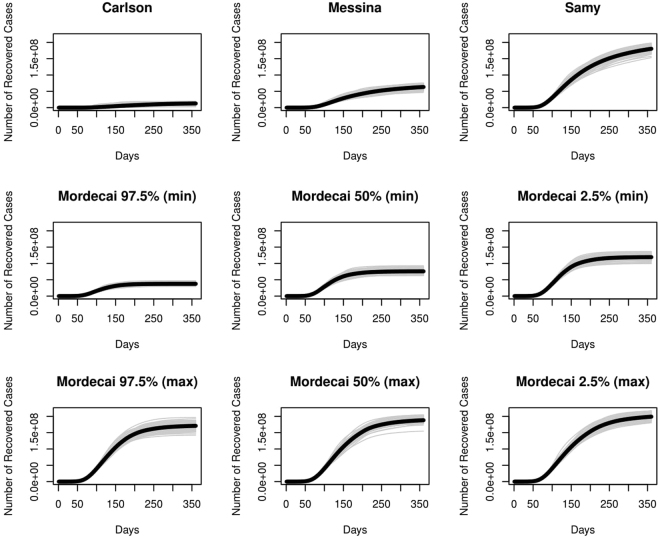
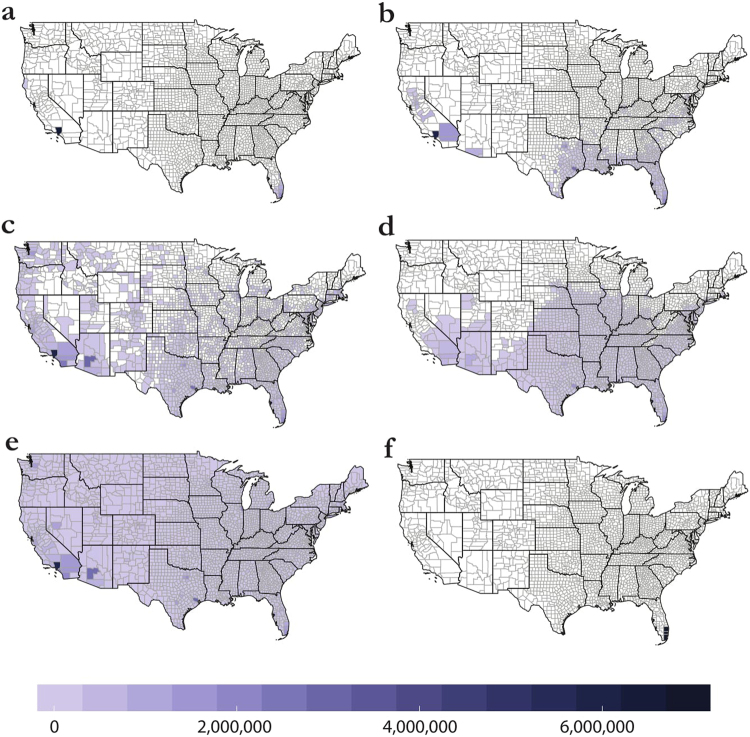
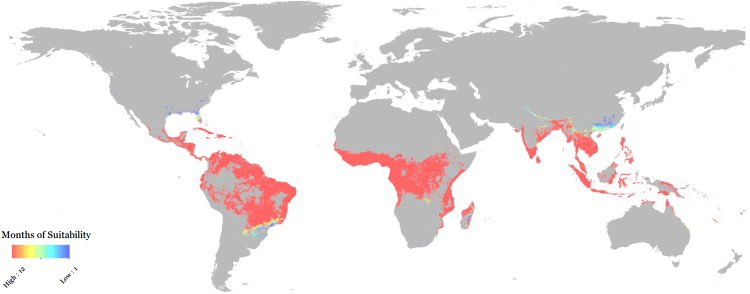
Ecologists are increasingly involved in the pandemic prediction process. In the course of the Zika outbreak in the Americas, several ecological models were developed to forecast the potential global distribution of the disease. Conflicting results produced by alternative methods are unresolved, hindering the development of appropriate public health forecasts. We compare ecological niche models and experimentally-driven mechanistic forecasts for Zika transmission in the continental United States. We use generic and uninformed stochastic county-level simulations to demonstrate the downstream epidemiological consequences of conflict among ecological models, and show how assumptions and parameterization in the ecological and epidemiological models propagate uncertainty and produce downstream model conflict. We conclude by proposing a basic consensus method that could resolve conflicting models of potential outbreak geography and seasonality. Our results illustrate the usually-undocumented margin of uncertainty that could emerge from using any one of these predictions without reservation or qualification. In the short term, ecologists face the task of developing better post hoc consensus that accurately forecasts spatial patterns of Zika virus outbreaks. Ultimately, methods are needed that bridge the gap between ecological and epidemiological approaches to predicting transmission and realistically capture both outbreak size and geography.
生态学家越来越多地参与到疫情预测过程中。在美洲的寨卡疫情爆发过程中,开发了几种生态模型来预测该疾病在全球的潜在分布。替代方法产生的相互冲突的结果尚未得到解决,这阻碍了适当的公共卫生预测的制定。我们比较了生态位模型和基于实验的机械预测方法,以预测寨卡病毒在美国大陆的传播。我们使用通用且无信息的随机县级模拟来演示生态模型之间冲突的下游流行病学后果,并展示生态和流行病学模型中的假设和参数化如何传播不确定性并产生下游模型冲突。最后,我们提出了一种基本的共识方法,可以解决潜在爆发地理和季节性的生态模型冲突。我们的研究结果说明了在没有保留或限定地使用这些预测中的任何一种情况下,通常未记录的不确定性幅度可能会出现。短期内,生态学家面临的任务是制定更好的事后共识,以准确预测寨卡病毒爆发的空间模式。最终,需要有方法来弥合预测传播的生态和流行病学方法之间的差距,并真实地捕捉到疫情的规模和地理范围。