School of Computing, Electronics and Mathematics, University of Plymouth, Plymouth, United Kingdom.
School of Biological Sciences, University of Bristol, Bristol, United Kingdom.
Elife. 2018 Mar 28;7:e33281. doi: 10.7554/eLife.33281.
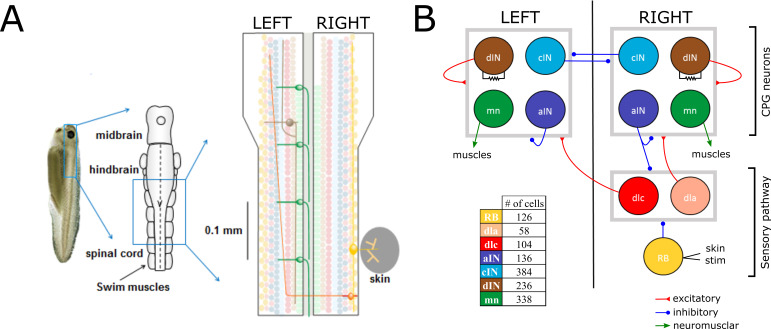
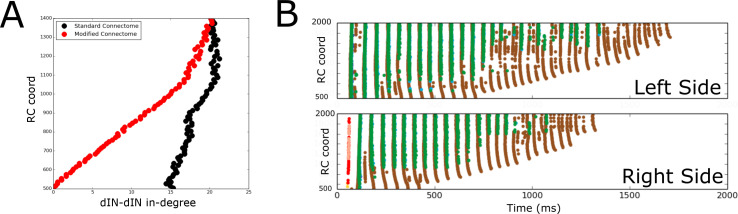
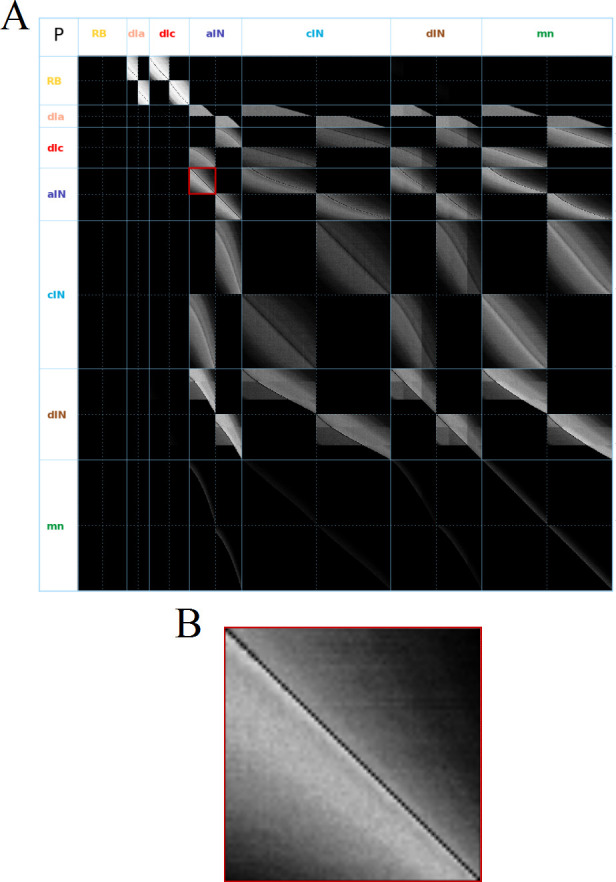
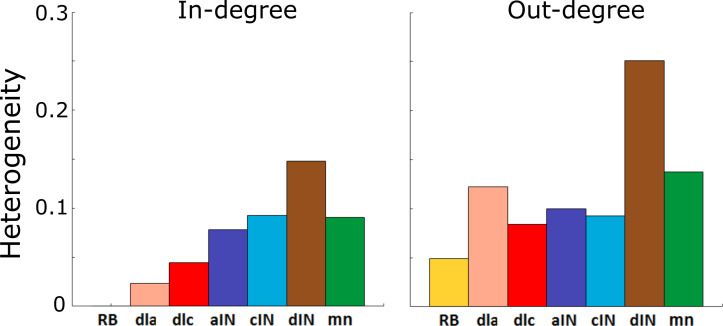
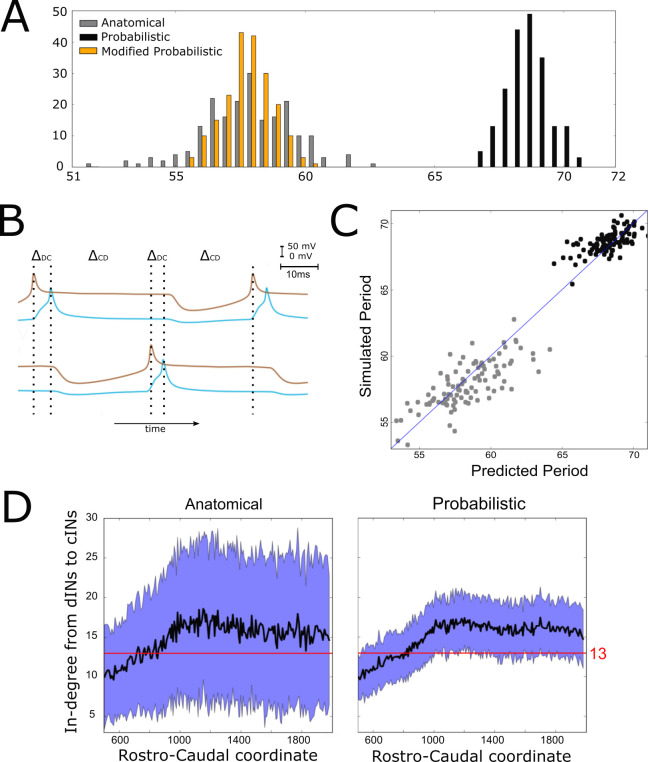
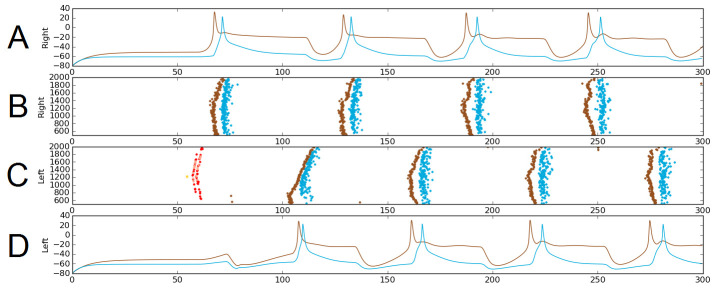
Although, in most animals, brain connectivity varies between individuals, behaviour is often similar across a species. What fundamental structural properties are shared across individual networks that define this behaviour? We describe a probabilistic model of connectivity in the hatchling Xenopus tadpole spinal cord which, when combined with a spiking model, reliably produces rhythmic activity corresponding to swimming. The probabilistic model allows calculation of structural characteristics that reflect common network properties, independent of individual network realisations. We use the structural characteristics to study examples of neuronal dynamics, in the complete network and various sub-networks, and this allows us to explain the basis for key experimental findings, and make predictions for experiments. We also study how structural and functional features differ between detailed anatomical connectomes and those generated by our new, simpler, model (meta-model).
尽管在大多数动物中,大脑连接在个体之间存在差异,但行为在物种间通常相似。哪些基本的结构属性在个体网络中共享,从而定义了这种行为?我们描述了一种孵化后的非洲爪蟾幼体脊髓连接的概率模型,当与尖峰模型结合使用时,该模型可以可靠地产生与游泳相对应的节律性活动。概率模型允许计算反映常见网络属性的结构特征,而不依赖于个体网络的实现。我们使用结构特征来研究完整网络和各种子网络中神经元动力学的示例,这使我们能够解释关键实验结果的基础,并对实验进行预测。我们还研究了详细的解剖连接组和我们新的更简单模型(元模型)生成的连接组之间的结构和功能特征有何不同。