Brotherton Carolyn A, Medema Marnix H, Greenberg E Peter
Department of Microbiology, University of Washington, Seattle, Washington, USA.
Bioinformatics Group, Wageningen University, Wageningen, The Netherlands.
mSystems. 2018 Mar 27;3(3). doi: 10.1128/mSystems.00208-17. eCollection 2018 May-Jun.
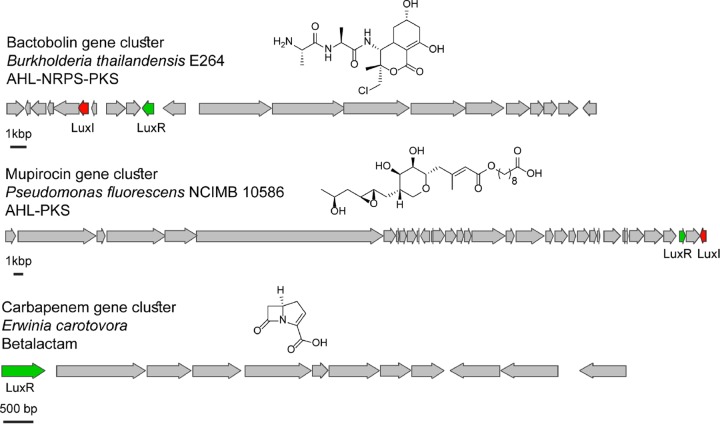
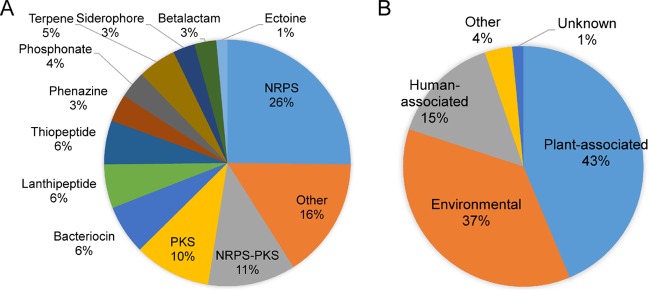
Microbes are a major source of antibiotics, pharmaceuticals, and other bioactive compounds. The production of many specialized microbial metabolites is encoded in biosynthetic gene clusters (BGCs). A challenge associated with natural product discovery is that many BGCs are not expressed under laboratory growth conditions. Here we report a genome-mining approach to discover BGCs with -type quorum sensing (QS) genes, which code for regulatory proteins that control gene expression. Our results show that BGCs linked to genes coding for LuxR-like proteins are widespread in . In addition, we show that associations between homolog genes and BGCs have evolved independently many times, with functionally diverse gene clusters. Overall, these clusters may provide a source of new natural products for which there is some understanding about how to elicit production. Bacteria biosynthesize specialized metabolites with a variety of ecological functions, including defense against other microbes. Genes that code for specialized metabolite biosynthetic enzymes are frequently clustered together. These BGCs are often regulated by a transcription factor encoded within the cluster itself. These pathway-specific regulators respond to a signal or indirectly through other means of environmental sensing. Many specialized metabolites are not produced under laboratory growth conditions, and one reason for this issue is that laboratory growth media lack environmental cues necessary for BGC expression. Here, we report a bioinformatics study that reveals that BGCs are frequently linked to genes coding for LuxR family QS-responsive transcription factors in the phylum . The products of these homolog-associated gene clusters may serve as a practical source of bioactive metabolites.
微生物是抗生素、药物和其他生物活性化合物的主要来源。许多特殊微生物代谢产物的产生由生物合成基因簇(BGCs)编码。与天然产物发现相关的一个挑战是,许多BGCs在实验室生长条件下不表达。在此,我们报告一种基因组挖掘方法,用于发现带有型群体感应(QS)基因的BGCs,这些基因编码控制基因表达的调控蛋白。我们的结果表明,与编码类LuxR蛋白的基因相关的BGCs在中广泛存在。此外,我们表明同源基因与BGCs之间的关联已经独立进化了很多次,形成了功能多样的基因簇。总体而言,这些基因簇可能提供新天然产物的来源,对于如何诱导其产生我们有一定的了解。细菌生物合成具有多种生态功能的特殊代谢产物,包括抵御其他微生物。编码特殊代谢产物生物合成酶的基因经常聚集在一起。这些BGCs通常由簇内编码的转录因子调控。这些途径特异性调节因子对信号作出反应,或通过其他环境感知方式间接作出反应。许多特殊代谢产物在实验室生长条件下不产生,这个问题的一个原因是实验室生长培养基缺乏BGC表达所需的环境线索。在此,我们报告一项生物信息学研究,揭示在门中BGCs经常与编码LuxR家族QS响应转录因子的基因相关联。这些与同源物相关的基因簇的产物可能是生物活性代谢产物的一个实际来源。