Wang Yuan, Feng Kewei, Yang Haihua, Zhang Zhiwei, Yuan Yahong, Yue Tianli
College of Food Science and Engineering, Northwest University, Xi'an, China.
College of Food Science and Engineering, Northwest A&F University, Yangling, China.
Front Microbiol. 2018 Mar 29;9:597. doi: 10.3389/fmicb.2018.00597. eCollection 2018.
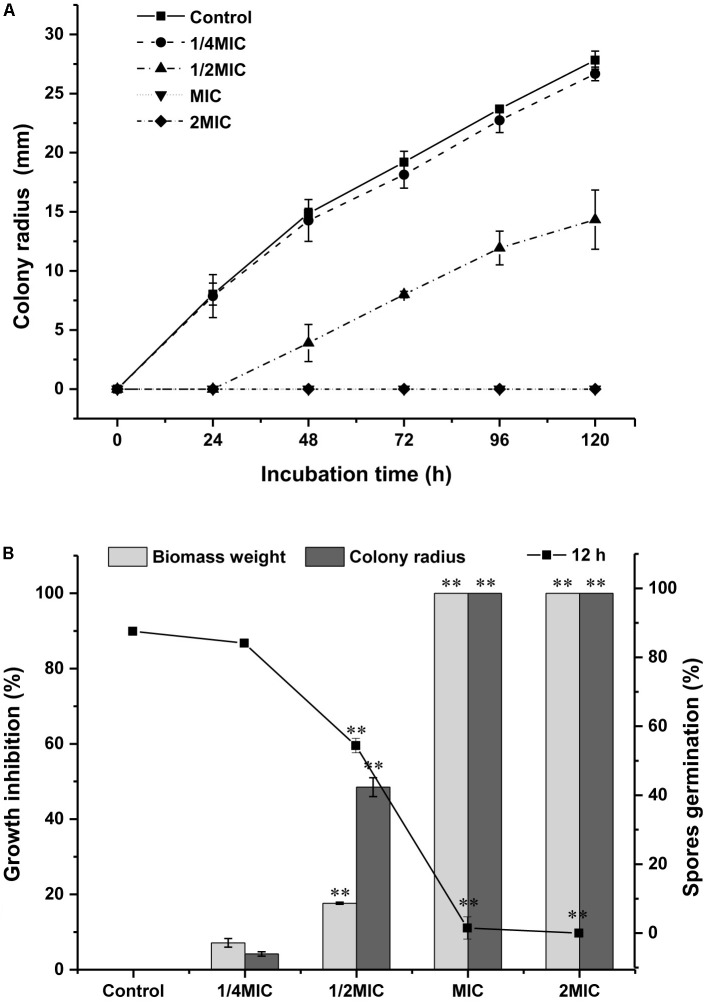
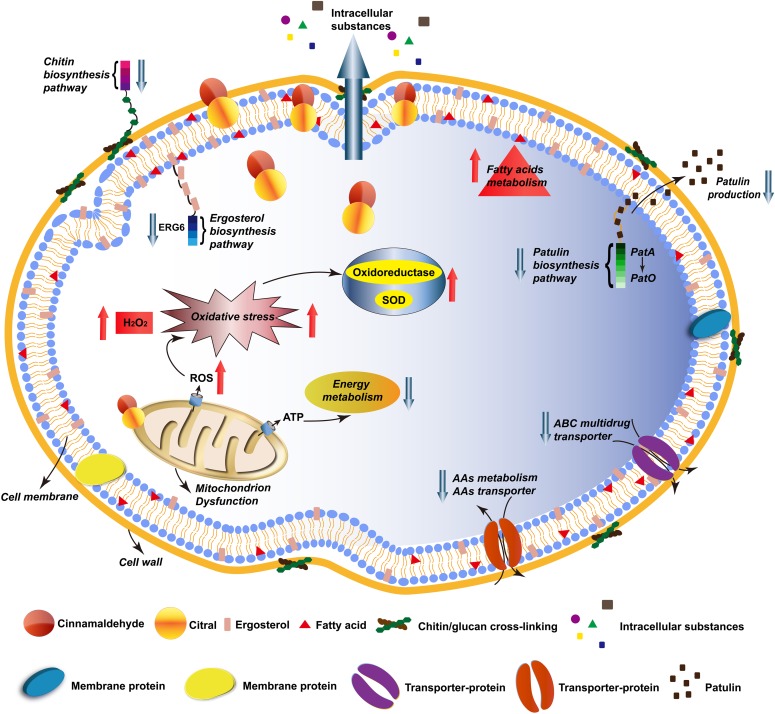
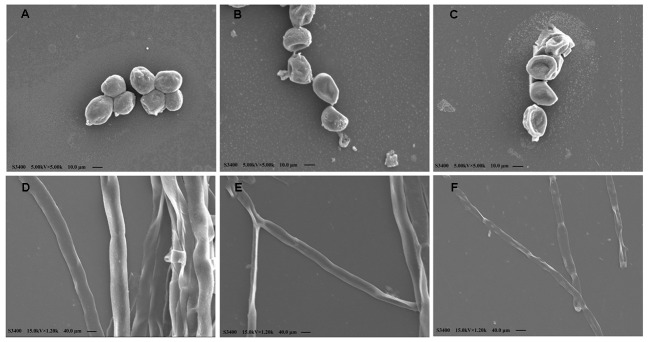
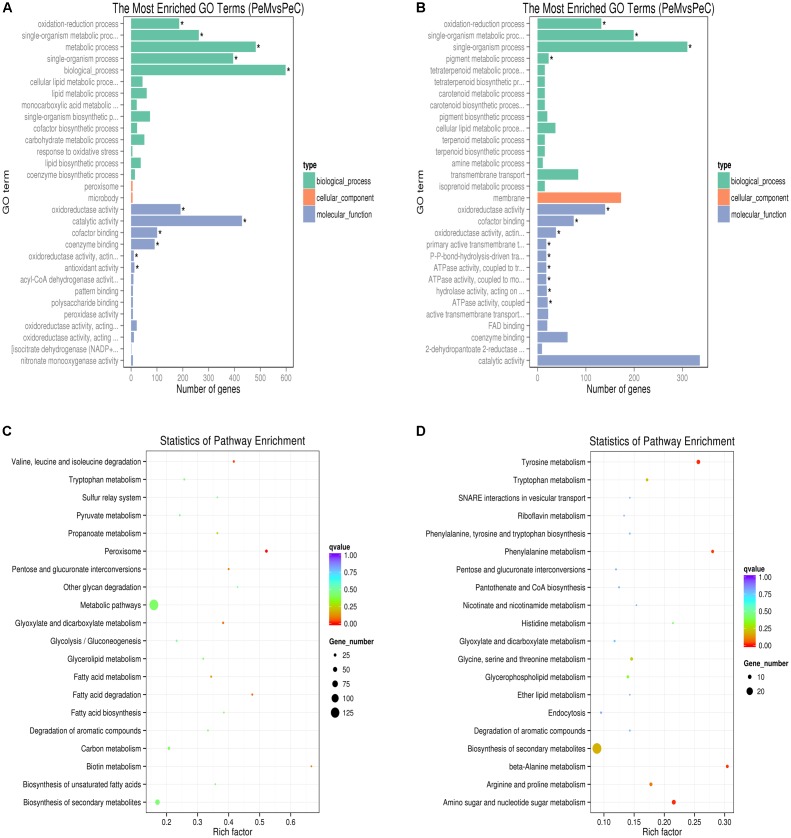
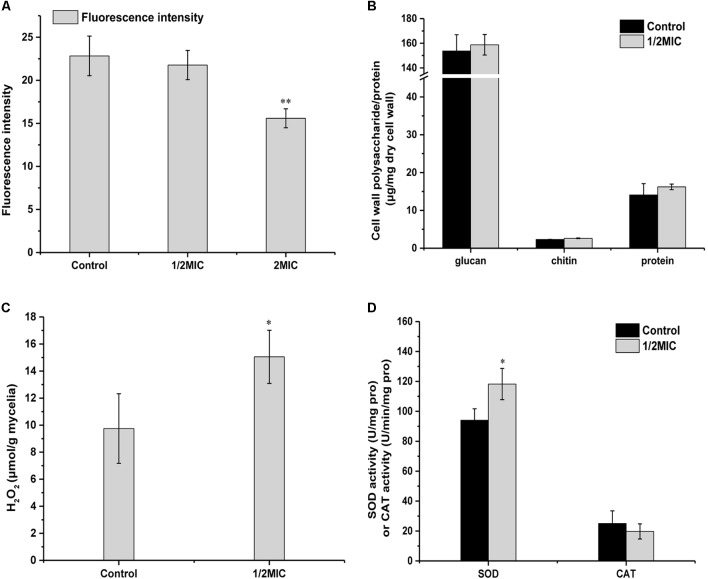
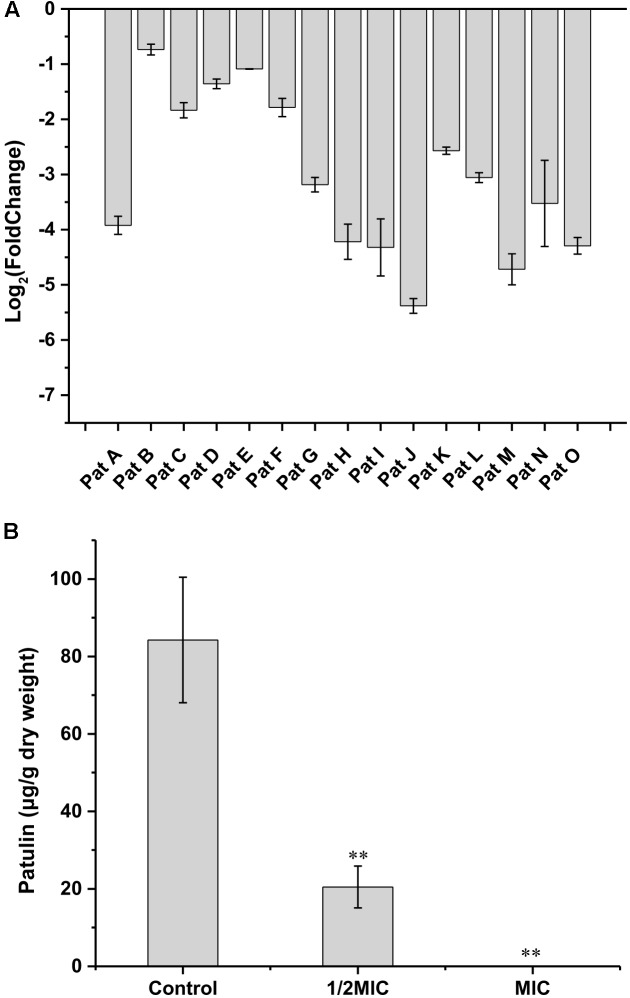
, as a main postharvest pathogen of fruits, can secrete patulin (PAT), causing fruit decay and health problems. In this study, the antifungal test, SEM (scanning electron microscope) observation, transcriptional profile, PAT biosynthesis, and physiological characters of exposed to cinnamaldehyde and citral combination (Cin/Cit) were evaluated. Cin/Cit could inhibit the mycelial growth and spore germination of in a dose-dependent manner. Besides, Cin/Cit caused spores and mycelia wrinkled and depressed by SEM observation. Gene expression profiles of were conducted by RNA sequencing (RNA-seq) in the presence or absence of Cin/Cit treatment. A total of 1713 differentially expressed genes (DEGs) were obtained, including 793 down-regulated and 920 up-regulated genes. Most of the DEGs participated in the biosynthesis of secondary metabolites, amino acid metabolism, and oxidation-reduction process, etc. Cin/Cit induced the dysfunction of the mitochondrial membrane, causing the potential influence on energy metabolism and reactive oxidative species production. The changes of superoxide dismutase (SOD) and catalase (CAT) activities combing with the increase of hydrogen peroxide content indicated the oxidative stress on induced by Cin/Cit, which corresponded well with the transcriptional results. Moreover, both the RNA-seq data and the qRT-PCR showed the remarkable down-regulation of genes included in the PAT biosynthetic pathway under the Cin/Cit treatment. These findings provided more useful information about the antifungal mechanism of Cin/Cit against at molecular and gene levels and suggested that Cin/Cit is a potential candidate to control .
作为水果采后的主要病原菌,可分泌展青霉素(PAT),导致水果腐烂并引发健康问题。在本研究中,评估了暴露于肉桂醛和柠檬醛组合(Cin/Cit)下的[病原菌名称未给出]的抗真菌试验、扫描电子显微镜(SEM)观察、转录谱、PAT生物合成及生理特性。Cin/Cit能以剂量依赖方式抑制[病原菌名称未给出]的菌丝生长和孢子萌发。此外,通过SEM观察发现,Cin/Cit使孢子和菌丝出现褶皱和凹陷。在有或无Cin/Cit处理的情况下,通过RNA测序(RNA-seq)对[病原菌名称未给出]的基因表达谱进行了分析。共获得1713个差异表达基因(DEG),其中793个下调基因和920个上调基因。大多数DEG参与次生代谢物生物合成、氨基酸代谢和氧化还原过程等。Cin/Cit诱导线粒体膜功能障碍,对能量代谢和活性氧产生潜在影响。超氧化物歧化酶(SOD)和过氧化氢酶(CAT)活性的变化以及过氧化氢含量的增加表明Cin/Cit对[病原菌名称未给出]诱导了氧化应激,这与转录结果高度吻合。此外,RNA-seq数据和qRT-PCR均显示在Cin/Cit处理下,PAT生物合成途径中的基因显著下调。这些发现为Cin/Cit对[病原菌名称未给出]的抗真菌机制在分子和基因水平上提供了更多有用信息,并表明Cin/Cit是控制[病原菌名称未给出]的潜在候选物。