Siwek M, Slawinska A, Stadnicka K, Bogucka J, Dunislawska A, Bednarczyk M
Department of Animal Biotechnology and Genetics, UTP University of Science and Technology, Mazowiecka, 28 85-084, Bydgoszcz, Poland.
Department of Animal Physiology, Physiotherapy and Nutrition, UTP University of Science and Technology, Mazowiecka, 28 85-084, Bydgoszcz, Poland.
BMC Vet Res. 2018 Dec 17;14(1):402. doi: 10.1186/s12917-018-1738-z.
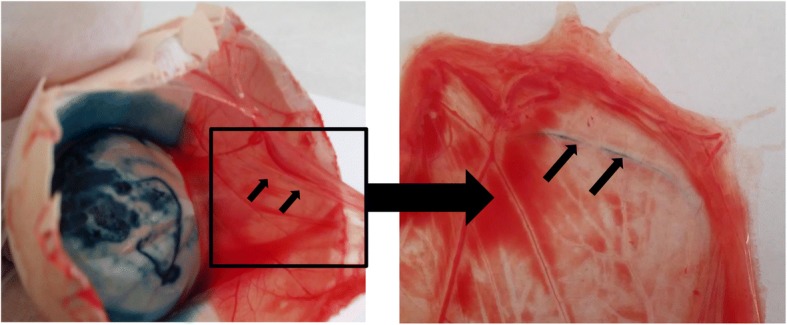
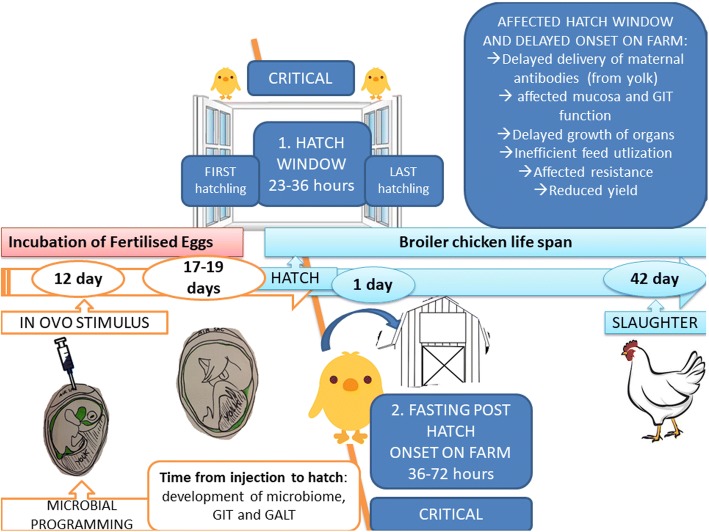
Commercially produced chickens have become key food-producing animals in the global food system. The scale of production in industrial settings has changed management systems to a point now very far from traditional methods. During the perinatal period, newly hatched chicks undergo processing, vaccination and transportation, which introduces a gap in access to feed and water. This gap, referred to as the hatching window, dampens the potential for microflora inoculation and as such, prevents proper microbiome, gastrointestinal system and innate immunity development. As a consequence, the industrial production of chickens with a poor microbial profile leads to enteric microbial infestation and infectious disease outbreaks, which became even more prevalent after the withdrawal of antibiotic growth promoters on many world markets (e.g., the EU).This review presents the rationale, methodology and life-long effects of in ovo stimulation of chicken microflora. In ovo stimulation provides efficient embryonic microbiome colonization with commensal microflora during the perinatal period. A carefully selected bioactive formulation (prebiotics, probiotics alone or combined into synbiotics) is delivered into the air cell of the egg on day 12 of egg incubation. The prebiotic penetrates the outer and inner egg membranes and stimulates development on the innate microflora in the embryonic guts. Probiotics are available after the mechanical breakage of the shell membranes by the chick's beak at the beginning of hatching (day 19). The intestinal microflora after in ovo stimulation is potent enough for competitive exclusion and programs the lifespan condition. We present the effects of different combinations of prebiotic and probiotic delivered in ovo on day 12 of egg incubation on microflora, growth traits, feed efficiency, intestinal morphology, meat microstructure and quality, immune system development, physiological characteristics and the transcriptome of the broiler chickens.We discuss the differences between in ovo stimulation (day 12 of egg incubation) and in ovo feeding (days 17-18 of egg incubation) and speculate about possible future developments in this field. In summary, decades of research on in ovo stimulation and the lifelong effects support this method as efficient programming of lifespan conditions in commercially raised chickens.
商业化生产的鸡已成为全球食品系统中的关键产粮动物。工业化养殖的生产规模使管理系统发生了变化,如今已与传统方法大相径庭。在围产期,新孵化的雏鸡要经历加工、接种疫苗和运输等过程,这导致其获取饲料和水的机会出现缺口。这个缺口被称为孵化窗口,它抑制了微生物接种的可能性,从而阻碍了正常的微生物群、胃肠道系统和先天免疫的发育。因此,微生物状况不佳的工业化养殖鸡会导致肠道微生物感染和传染病爆发,在许多世界市场(如欧盟)停用抗生素生长促进剂后,这种情况变得更加普遍。
本综述介绍了对鸡微生物群进行卵内刺激的基本原理、方法及其终身影响。卵内刺激可在围产期使有益微生物群有效地在胚胎微生物群中定殖。在孵化第12天,将精心挑选的生物活性制剂(益生元、益生菌单独使用或组合成合生元)注入鸡蛋的气室。益生元穿透鸡蛋的内外膜,刺激胚胎肠道中固有微生物群的发育。在孵化开始时(第19天),雏鸡用喙机械性破坏壳膜后,益生菌开始发挥作用。卵内刺激后的肠道微生物群具有足够的竞争力进行排斥,并对鸡的寿命状况进行编程。我们展示了在孵化第12天进行卵内注射时,不同组合的益生元和益生菌对微生物群、生长性状、饲料效率、肠道形态、肉的微观结构和品质、免疫系统发育、生理特征以及肉鸡转录组的影响。我们讨论了卵内刺激(孵化第12天)和卵内饲喂(孵化第17 - 18天)之间的差异,并推测了该领域未来可能的发展。总之,数十年来对卵内刺激及其终身影响的研究支持了这种方法,即它是对商业化养殖鸡的寿命状况进行有效编程的方法。