Ayyanna Repally, Ankaiah Dasari, Arul Venkatesan
Department of Biotechnology, School of Life Sciences, Pondicherry University, Pondicherry, India.
Front Microbiol. 2018 Dec 14;9:3063. doi: 10.3389/fmicb.2018.03063. eCollection 2018.
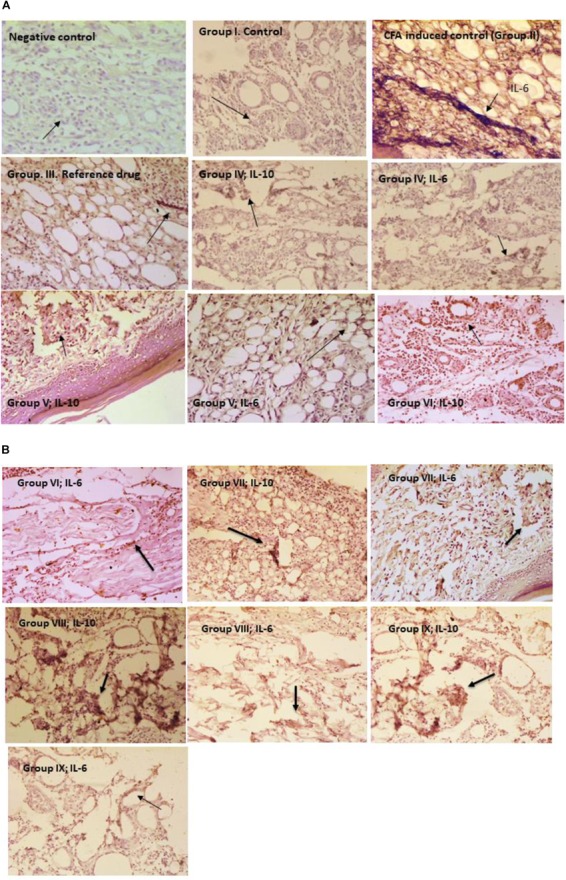
The potent antioxidant probiotic strains AN1 and SNR1 were assessed for anti-inflammatory properties in carrageenan (acute) and complete Freund's adjuvant-induced inflammation (chronic) models in the present study. The two probiotic strains were administered orally along with feed to the Wistar albino male rats as whole cell as well as microencapsulated form. The following experiments were performed to evaluate the anti-inflammatory properties of probiotic strains and the results were observed that the encapsulated and unencapsulated probiotic strains have exhibited statistically significant decrease in paw thickness. Percentage of inhibition in paw thickness of microencapsulated probiotic bacteria (Group VIII), unencapsulated strains (Group IX) were revealed 85 ± 13% and 77 ± 25%, respectively. In Hematoxylin and Eosin staining, results were revealed that the probiotic strains were exhibited anti-inflammatory effects on inflammation-induced paw tissues. qRT-PCR studies revealed upregulation of anti-inflammatory cytokine genes and down-regulation pro-inflammatory cytokine genes in probiotic-treated rat paw tissues. Further, the expression of anti-inflammatory and pro-inflammatory cytokines were examined using immunohistochemistry and ELISA methods. The probiotic administered rat paw tissue in different groups have exhibited the low level of lipid peroxides formation and higher anti-oxidant activities when compared to the control and inflammation control tissues.
在本研究中,评估了强效抗氧化益生菌菌株AN1和SNR1在角叉菜胶(急性)和弗氏完全佐剂诱导的炎症(慢性)模型中的抗炎特性。将这两种益生菌菌株以全细胞以及微囊化形式与饲料一起口服给予Wistar白化雄性大鼠。进行了以下实验以评估益生菌菌株的抗炎特性,结果观察到,包封和未包封的益生菌菌株均使爪厚度出现统计学上显著的降低。微囊化益生菌(第八组)、未包封菌株(第九组)的爪厚度抑制百分比分别为85±13%和77±25%。苏木精和伊红染色结果显示,益生菌菌株对炎症诱导的爪组织具有抗炎作用。qRT-PCR研究显示,在益生菌处理的大鼠爪组织中,抗炎细胞因子基因上调,促炎细胞因子基因下调。此外,使用免疫组织化学和ELISA方法检测了抗炎和促炎细胞因子的表达。与对照和炎症对照组织相比,不同组中给予益生菌的大鼠爪组织显示出较低水平的脂质过氧化物形成和较高的抗氧化活性。