Hingley S T, Hastie A T, Kueppers F, Higgins M L, Weinbaum G, Shryock T
Infect Immun. 1986 Jan;51(1):254-62. doi: 10.1128/iai.51.1.254-262.1986.
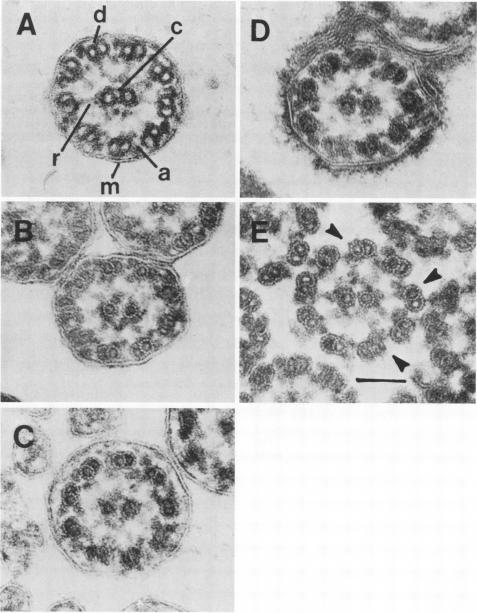
Heat-stable factors released by Pseudomonas aeruginosa in culture supernatants inhibit functional cilia of rabbit tracheal epithelium. Chloroform extraction removed heat-stable factors from stationary-phase culture supernatants. The extracts contained at least seven components separable by thin-layer chromatography (TLC). Cilioinhibitory components were identified as a phenazine derivative, pyo compounds (2-alkyl-4-hydroxyquinolines), and a rhamnolipid, also known as a hemolysin. Fluorescence and absorption spectra, relative migration on TLC, staining characteristics, and gas chromatography were the basis for identification. Inhibitory concentrations of each active component were established by quantitative measures of percent motility and beat frequency. Corresponding damage to ciliary ultrastructure was examined by electron microscopy. The pyo compounds produced ciliostasis at concentrations of 50 micrograms/ml, but without obvious ultrastructural lesions. The phenazine derivative also inhibited ciliary motility and caused some membrane disruption, although at substantially greater concentrations of 400 micrograms/ml. Limited exposure of tracheal explants to the rhamnolipid resulted in ciliostasis which was associated with altered ciliary membranes. More extensive exposure to rhamnolipid was associated with removal of dynein arms from axonemes. Pyocyanin at a concentration of 0.5 mg/ml did not inhibit ciliary beating under our conditions. The data suggest that the pyo compounds are the most effective per weight ciliostatic factors released by P. aeruginosa and rhamnolipid is the most destructive of cilia ultrastructure. By interfering with normal ciliary function, these ciliostatic factors may enable P. aeruginosa to more easily colonize the respiratory tract.
铜绿假单胞菌在培养上清液中释放的热稳定因子会抑制兔气管上皮的功能性纤毛。氯仿萃取可去除稳定期培养上清液中的热稳定因子。提取物中至少含有七种可通过薄层色谱法(TLC)分离的成分。纤毛抑制成分被鉴定为一种吩嗪衍生物、脓菌素化合物(2-烷基-4-羟基喹啉)和一种鼠李糖脂,后者也被称为溶血素。荧光光谱和吸收光谱、在TLC上的相对迁移率、染色特性以及气相色谱法是鉴定的依据。通过对运动百分比和摆动频率的定量测量确定了每种活性成分的抑制浓度。通过电子显微镜检查了对纤毛超微结构的相应损伤。脓菌素化合物在浓度为50微克/毫升时会导致纤毛运动停滞,但没有明显的超微结构损伤。吩嗪衍生物也会抑制纤毛运动并导致一些膜破坏,尽管其浓度要高得多,为400微克/毫升。气管外植体有限暴露于鼠李糖脂会导致纤毛运动停滞,这与纤毛膜的改变有关。更广泛地暴露于鼠李糖脂与轴丝上动力蛋白臂的去除有关。在我们的实验条件下,浓度为0.5毫克/毫升的绿脓菌素不会抑制纤毛摆动。数据表明,脓菌素化合物是铜绿假单胞菌释放的每重量最有效的纤毛运动抑制因子,而鼠李糖脂对纤毛超微结构的破坏最大。通过干扰正常的纤毛功能,这些纤毛运动抑制因子可能使铜绿假单胞菌更容易在呼吸道定植。