Division of Nephrology, Hypertension and Renal Transplantation, Department of Medicine, University of Florida, Gainesville, FL, United States of America.
Precision and Intelligent Systems in Medicine (PrismaP), University of Florida, Gainesville, FL, United States of America.
PLoS One. 2019 Apr 4;14(4):e0214904. doi: 10.1371/journal.pone.0214904. eCollection 2019.
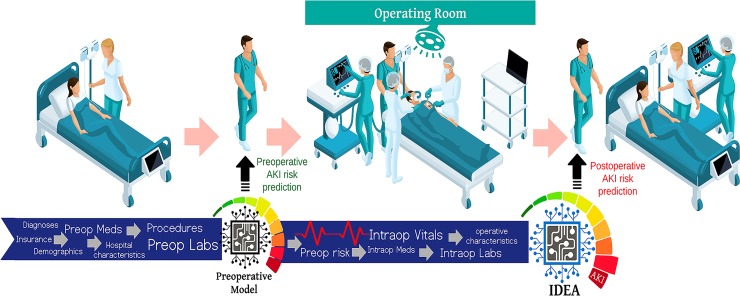
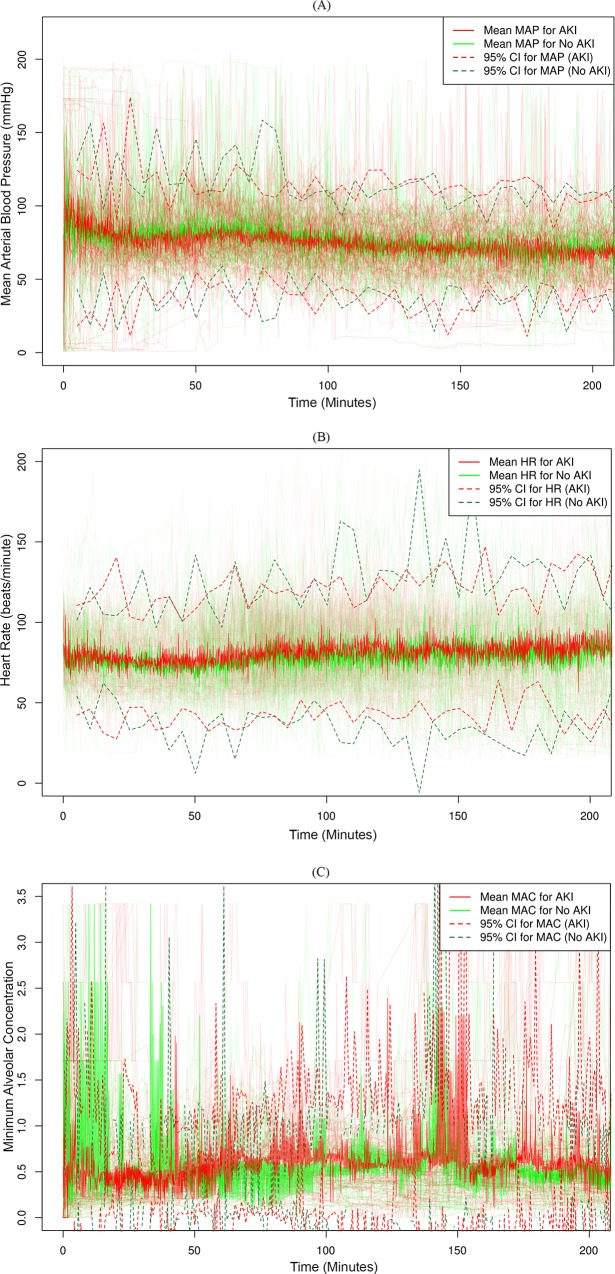
Acute kidney injury (AKI) is a common complication after surgery that is associated with increased morbidity and mortality. The majority of existing perioperative AKI risk prediction models are limited in their generalizability and do not fully utilize intraoperative physiological time-series data. Thus, there is a need for intelligent, accurate, and robust systems to leverage new information as it becomes available to predict the risk of developing postoperative AKI.
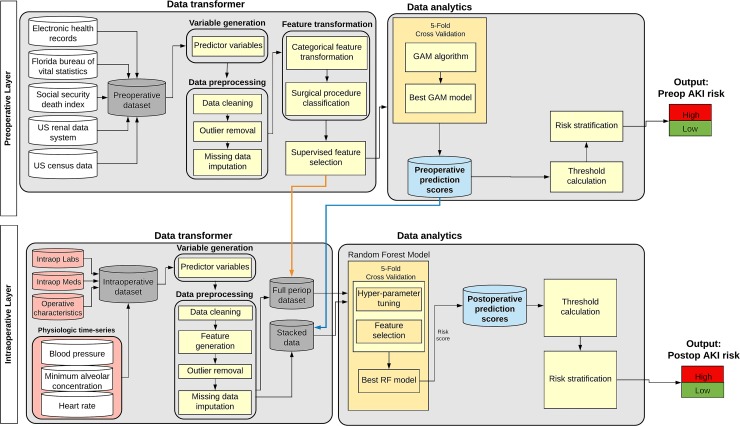
A retrospective single-center cohort of 2,911 adults who underwent surgery at the University of Florida Health between 2000 and 2010 was utilized for this study. Machine learning and statistical analysis techniques were used to develop perioperative models to predict the risk of developing AKI during the first three days after surgery, first seven days after surgery, and overall (after surgery during the index hospitalization). The improvement in risk prediction was examined by incorporating intraoperative physiological time-series variables. Our proposed model enriched a preoperative model that produced a probabilistic AKI risk score by integrating intraoperative statistical features through a machine learning stacking approach inside a random forest classifier. Model performance was evaluated using the area under the receiver operating characteristic curve (AUC), accuracy, and Net Reclassification Improvement (NRI).
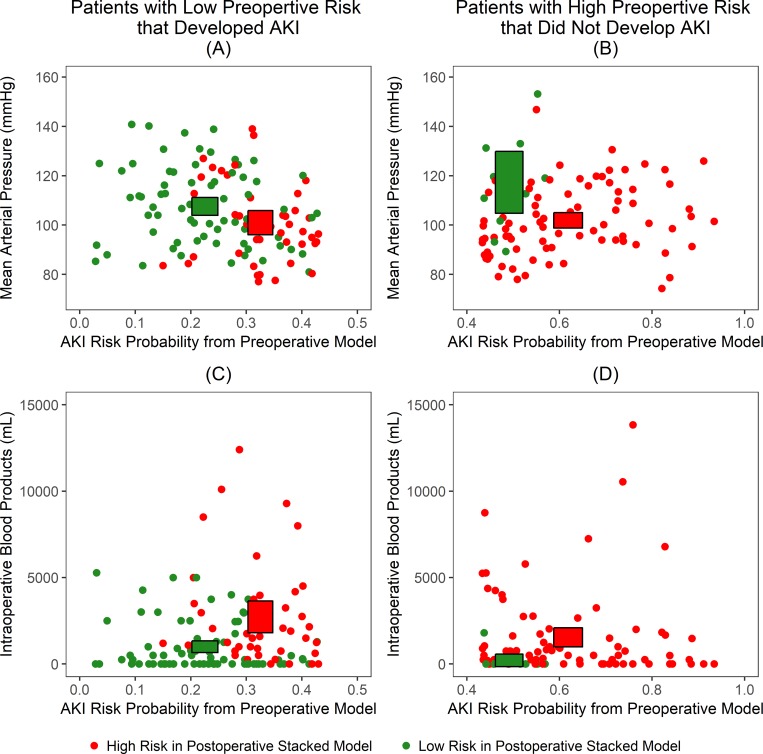
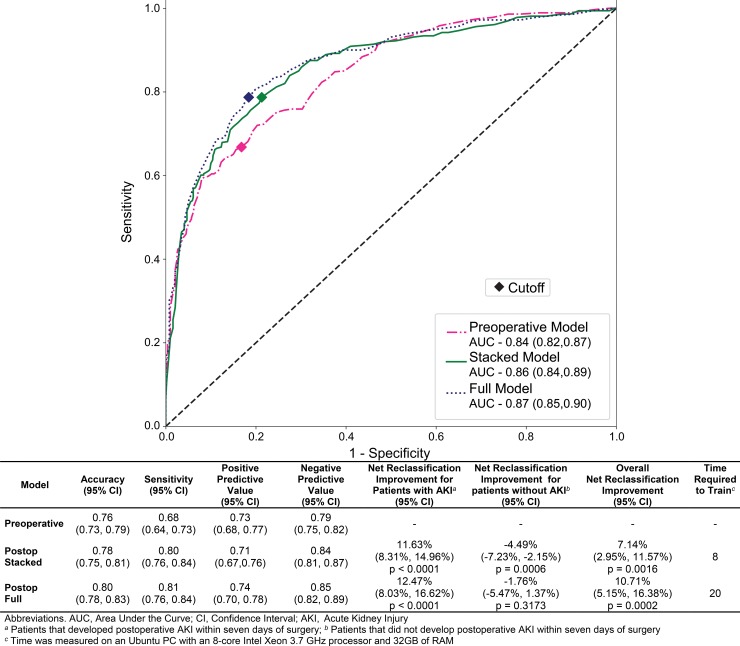
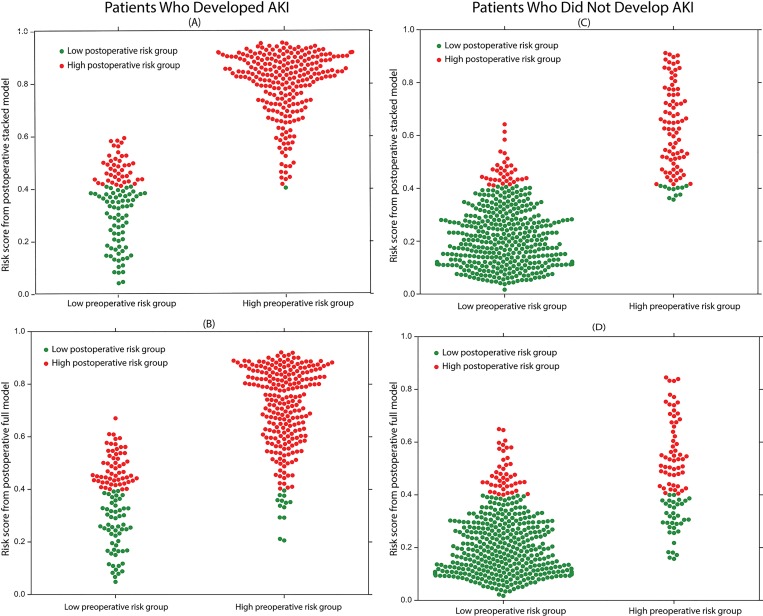
The predictive performance of the proposed model is better than the preoperative data only model. The proposed model had an AUC of 0.86 (accuracy of 0.78) for the seven-day AKI outcome, while the preoperative model had an AUC of 0.84 (accuracy of 0.76). Furthermore, by integrating intraoperative features, the algorithm was able to reclassify 40% of the false negative patients from the preoperative model. The NRI for each outcome was AKI at three days (8%), seven days (7%), and overall (4%).
Postoperative AKI prediction was improved with high sensitivity and specificity through a machine learning approach that dynamically incorporated intraoperative data.
急性肾损伤(AKI)是手术后常见的并发症,与发病率和死亡率增加有关。大多数现有的围手术期 AKI 风险预测模型的通用性有限,并且不能充分利用术中生理时间序列数据。因此,需要智能、准确和强大的系统,以便在新信息可用时利用新信息来预测术后 AKI 的风险。
本研究利用了 2000 年至 2010 年期间在佛罗里达大学健康中心接受手术的 2911 名成年人的回顾性单中心队列。使用机器学习和统计分析技术来开发围手术期模型,以预测手术后前三天、手术后前七天和总体(在索引住院期间手术后)发生 AKI 的风险。通过纳入术中生理时间序列变量来检查风险预测的改进。我们提出的模型通过机器学习堆叠方法在随机森林分类器中集成术中统计特征,丰富了术前模型,通过该方法生成 AKI 风险概率评分。通过使用接收器操作特征曲线下面积(AUC)、准确性和净重新分类改善(NRI)来评估模型性能。
提出的模型的预测性能优于仅术前数据模型。提出的模型对 7 天 AKI 结果的 AUC 为 0.86(准确性为 0.78),而术前模型的 AUC 为 0.84(准确性为 0.76)。此外,通过整合术中特征,该算法能够重新分类术前模型中 40%的假阴性患者。每个结果的 NRI 为 3 天 AKI(8%)、7 天 AKI(7%)和总体 AKI(4%)。
通过一种机器学习方法,动态地纳入术中数据,提高了术后 AKI 的预测敏感性和特异性。