Costa Marcos Túlio Silva, Vieira Lanna Pinheiro, Barbosa Elizabete de Oliveira, Mendes Oliveira Luciana, Maillot Pauline, Ottero Vaghetti César Augusto, Giovani Carta Mauro, Machado Sérgio, Gatica-Rojas Valeska, Monteiro-Junior Renato Sobral
Department of Internal Medicine, Faculty of Medicine, State University of Montes Claros, Montes Claros, Brazil.
Department of Physical Education, State University of Montes Claros, Montes Claros, Brazil.
Clin Pract Epidemiol Ment Health. 2019 Jan 31;15:15-20. doi: 10.2174/1745017901915010015. eCollection 2019.
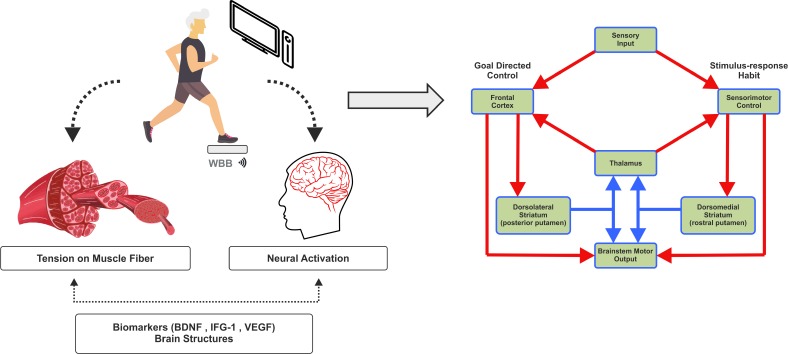
There is enough evidence that, nowadays, the sedentary lifestyle is one of the major health problems worldwide, linked to many chronic diseases, including mental comorbidities, systemic hypertension, metabolic dysregulation, and cancer. Although health societies recommend engagement to physical activities, there is an overwhelming number of people remaining sedentary, even knowing the health benefits of regular exercises. One of the main factors that justifies this scenario is the lack of motivation, which is a barrier to people intended to start new habits for health. Considering this previous information, new alternatives for exercises may help people engage in a healthier lifestyle. Technology has contributed to this with devices that allow movements based on virtual reality approaches, including the exergames. These are games available even in commercial devices, as video-games, that allow people to work with different physical components. Furthermore, exergames add cognitive gain through its dual-task characteristic. Moreover, due to the combination of these benefits, they are feasible to acquire, and easy to use. Exergames are not only a potential strategy to reduce sedentary lifestyle but also a good method to improve health gains and rehabilitation in different populations and pathological conditions: older adults, stroke survivors, and Parkinson's disease. In this review, we aim to demonstrate some conditions that literature supports the intervention with exergames due to its physical and cognitive benefits. Furthermore, at the end of this review, we also explore the neurobiological mechanisms behind virtual-reality based exercises.
有足够的证据表明,如今久坐不动的生活方式是全球主要的健康问题之一,与许多慢性疾病相关,包括精神共病、系统性高血压、代谢失调和癌症。尽管健康协会建议人们参与体育活动,但仍有大量的人久坐不动,即使他们知道定期锻炼对健康有益。导致这种情况的主要因素之一是缺乏动力,这是人们想要养成健康新习惯的一个障碍。考虑到上述信息,新的锻炼方式可能有助于人们养成更健康的生活方式。科技为此做出了贡献,出现了基于虚拟现实方法的运动设备,包括健身游戏。这些游戏甚至在商业设备中也有,比如电子游戏,它们能让人们锻炼不同的身体部位。此外,健身游戏通过其双重任务特性增加了认知收益。而且,由于这些好处的结合,它们很容易获得且使用方便。健身游戏不仅是减少久坐生活方式的潜在策略,也是改善不同人群和病理状况(老年人、中风幸存者和帕金森病患者)健康收益和康复的好方法。在这篇综述中,我们旨在展示一些文献支持因健身游戏具有身体和认知益处而对其进行干预的情况。此外,在本综述的结尾,我们还将探讨基于虚拟现实的锻炼背后的神经生物学机制。