Department of Electrical and Computer Engineering, The Johns Hopkins University, 105 Barton Hall, 3400 N. Charles St., Baltimore, MD 21218, USA; Kirby Center for Functional Brain Imaging Research, Kennedy Krieger Institute, Baltimore, MD, USA.
Department of Electrical and Computer Engineering, The Johns Hopkins University, 105 Barton Hall, 3400 N. Charles St., Baltimore, MD 21218, USA.
Magn Reson Imaging. 2019 Dec;64:160-170. doi: 10.1016/j.mri.2019.05.041. Epub 2019 Jul 10.
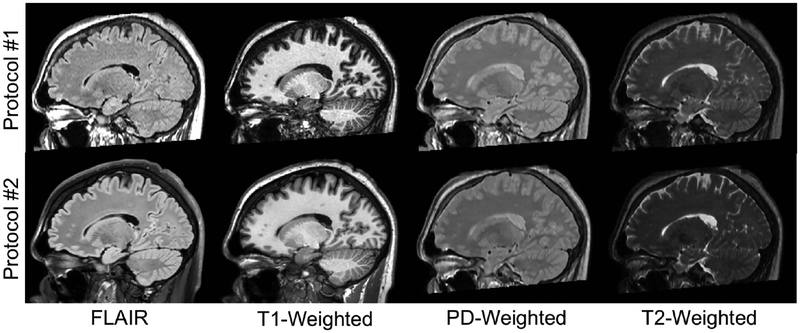
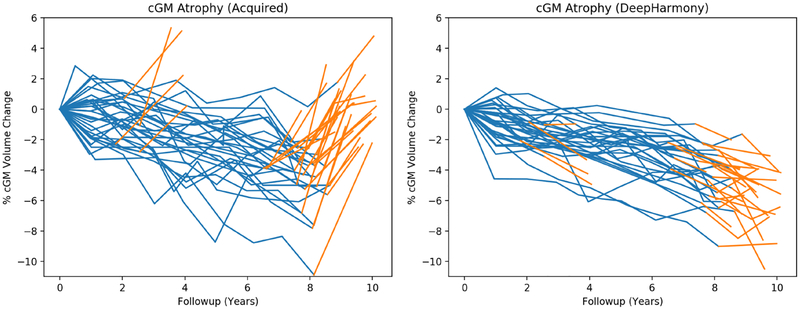
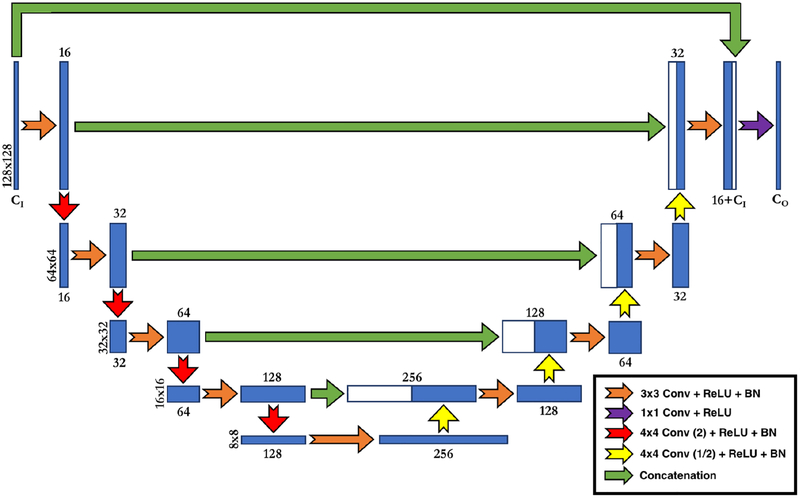
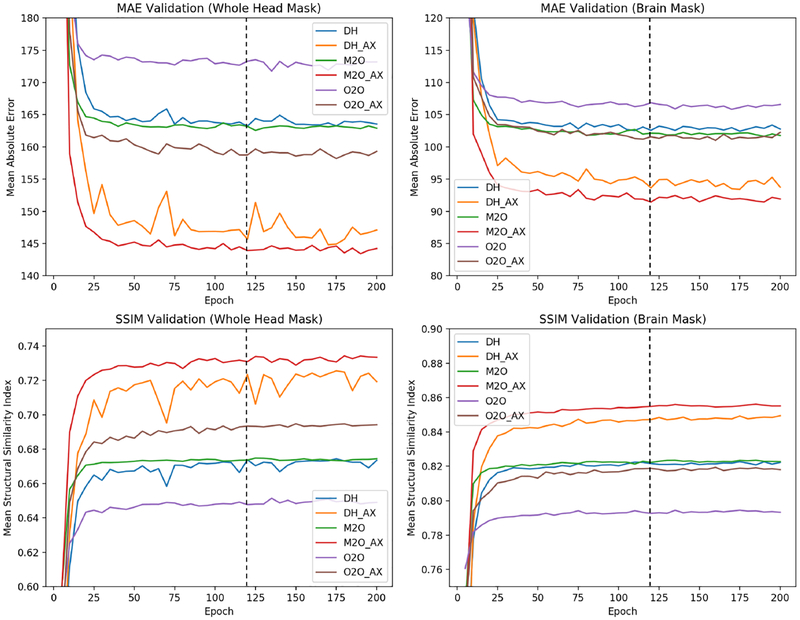
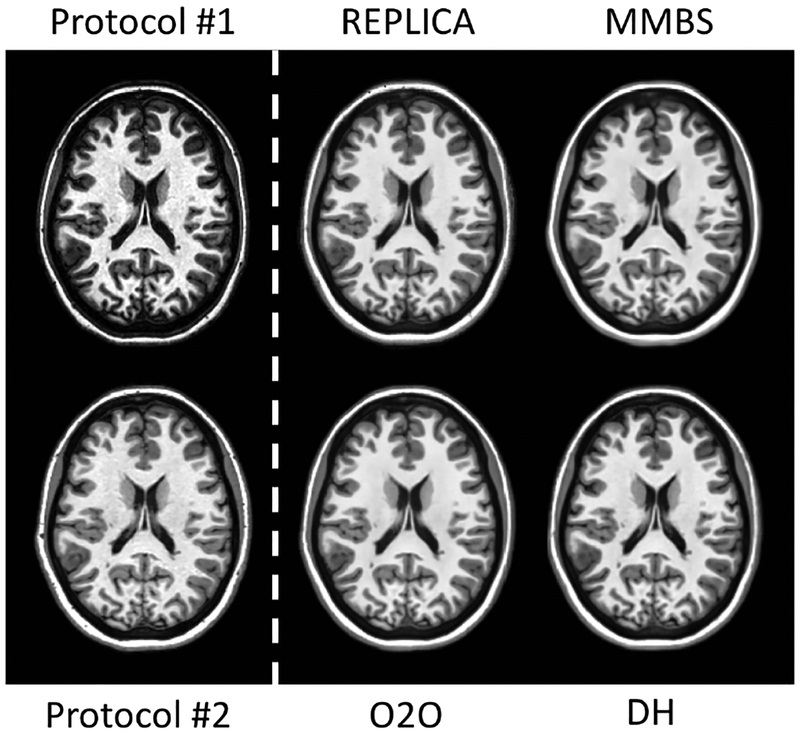
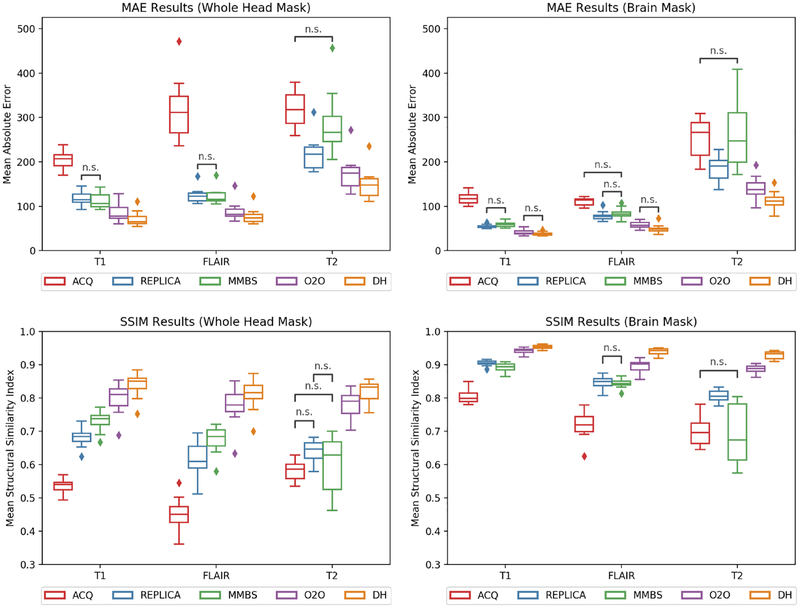
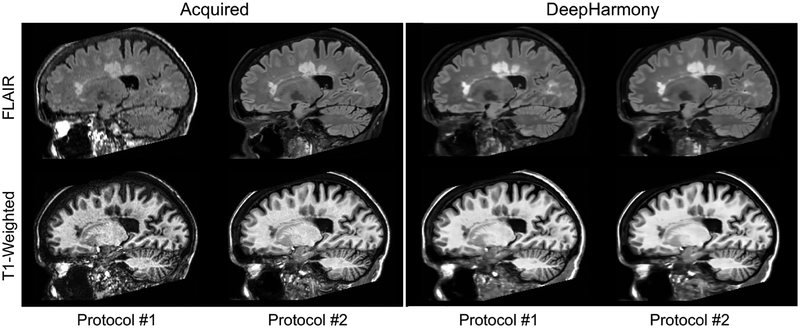
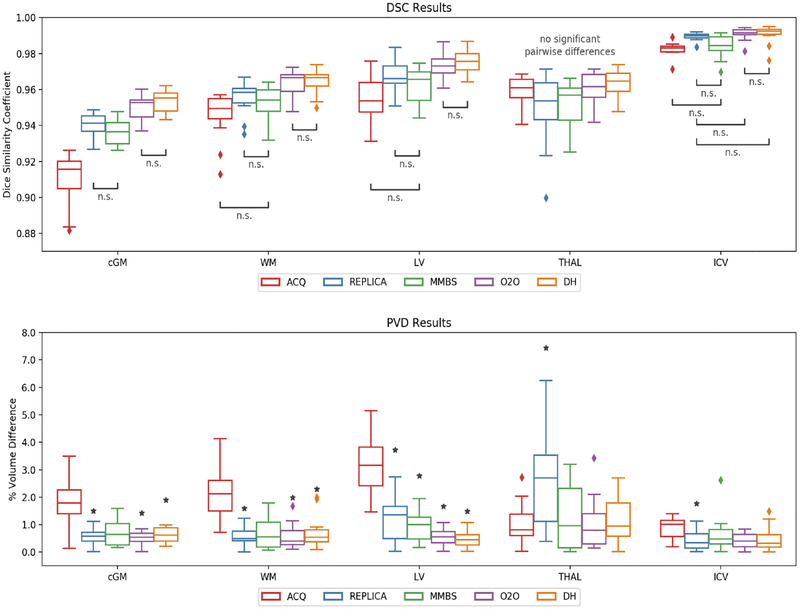
Magnetic resonance imaging (MRI) is a flexible medical imaging modality that often lacks reproducibility between protocols and scanners. It has been shown that even when care is taken to standardize acquisitions, any changes in hardware, software, or protocol design can lead to differences in quantitative results. This greatly impacts the quantitative utility of MRI in multi-site or long-term studies, where consistency is often valued over image quality. We propose a method of contrast harmonization, called DeepHarmony, which uses a U-Net-based deep learning architecture to produce images with consistent contrast. To provide training data, a small overlap cohort (n = 8) was scanned using two different protocols. Images harmonized with DeepHarmony showed significant improvement in consistency of volume quantification between scanning protocols. A longitudinal MRI dataset of patients with multiple sclerosis was also used to evaluate the effect of a protocol change on atrophy calculations in a clinical research setting. The results show that atrophy calculations were substantially and significantly affected by protocol change, whereas such changes have a less significant effect and substantially reduced overall difference when using DeepHarmony. This establishes that DeepHarmony can be used with an overlap cohort to reduce inconsistencies in segmentation caused by changes in scanner protocol, allowing for modernization of hardware and protocol design in long-term studies without invalidating previously acquired data.
磁共振成像(MRI)是一种灵活的医学成像方式,在不同协议和扫描仪之间通常缺乏可重复性。已经表明,即使在努力标准化采集时,硬件、软件或协议设计的任何变化都可能导致定量结果的差异。这极大地影响了 MRI 在多站点或长期研究中的定量应用,因为在这些研究中,一致性通常比图像质量更重要。我们提出了一种对比度协调方法,称为 DeepHarmony,它使用基于 U-Net 的深度学习架构来生成具有一致对比度的图像。为了提供训练数据,使用两个不同的协议对一个小重叠队列(n=8)进行了扫描。与 DeepHarmony 协调的图像在扫描协议之间的体积量化一致性方面显示出显著的改善。还使用多发性硬化症患者的纵向 MRI 数据集来评估协议更改对临床研究环境中萎缩计算的影响。结果表明,协议更改会严重且显著地影响萎缩计算,而使用 DeepHarmony 时,这种更改的影响较小,且整体差异明显减小。这表明 DeepHarmony 可以与重叠队列一起使用,以减少由于扫描仪协议更改而导致的分割不一致,从而在长期研究中实现硬件和协议设计的现代化,而不会使以前获得的数据无效。