Bengalli Rossella, Ortelli Simona, Blosi Magda, Costa Anna, Mantecca Paride, Fiandra Luisa
POLARIS Research Centre, Department of Earth and Environmental Sciences, University of Milano-Bicocca, Piazza della Scienza 1, 20126 Milano, MI, Italy.
Institute of Science and Technology for Ceramics (CNR-ISTEC), National Research Council of Italy, Via Granarolo 64, 48018 Faenza, RA, Italy.
Nanomaterials (Basel). 2019 Jul 21;9(7):1041. doi: 10.3390/nano9071041.
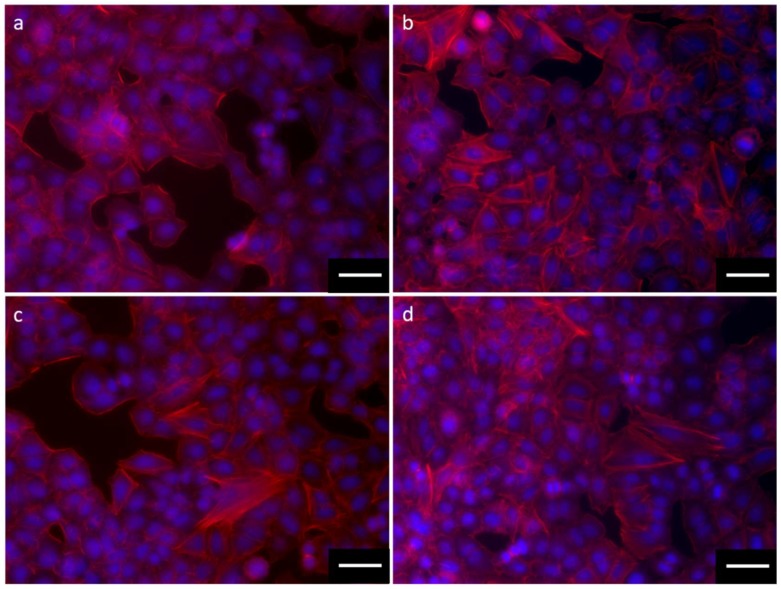
The enormous technological relevance of titanium dioxide (TiO) nanoparticles (NPs) and the consequent concerns regarding potentially hazardous effects that exposure during production, use, and disposal can generate, encourage material scientists to develop and validate intrinsically safe design solution (safe-by-design). Under this perspective, the encapsulation in a silica dioxide (SiO) matrix could be an effective strategy to improve TiO NPs safety, preserving photocatalytic and antibacterial properties. In this work, A549 cells were used to investigate the toxic effects of silica-encapsulated TiO having different ratios of TiO and SiO (1:1, 1:3, and 3:1). NPs were characterized by electron microscopy and dynamic light scattering, and cell viability, oxidative stress, morphological changes, and cell cycle alteration were evaluated. Resulting data demonstrated that NPs with lower content of SiO are able to induce cytotoxic effects, triggered by oxidative stress and resulting in cell necrosis and cell cycle alteration. The physicochemical properties of NPs are responsible for their toxicity. Particles with small size and high stability interact with pulmonary cells more effectively, and the different ratio among silica and titania plays a crucial role in the induced cytotoxicity. These results strengthen the need to take into account a safe(r)-by-design approach in the development of new nanomaterials for research and manufacturing.
二氧化钛(TiO)纳米颗粒(NPs)具有巨大的技术相关性,以及在生产、使用和处置过程中暴露可能产生潜在有害影响所引发的担忧,促使材料科学家开发和验证本质安全设计解决方案(设计即安全)。从这个角度来看,封装在二氧化硅(SiO)基质中可能是提高TiO NPs安全性、保留光催化和抗菌性能的有效策略。在这项工作中,使用A549细胞研究了具有不同TiO与SiO比例(1:1、1:3和3:1)的二氧化硅包裹的TiO的毒性作用。通过电子显微镜和动态光散射对纳米颗粒进行了表征,并评估了细胞活力、氧化应激、形态变化和细胞周期改变。所得数据表明,SiO含量较低的纳米颗粒能够诱导细胞毒性作用,由氧化应激引发,导致细胞坏死和细胞周期改变。纳米颗粒的物理化学性质决定了它们的毒性。尺寸小且稳定性高的颗粒与肺细胞的相互作用更有效,二氧化硅和二氧化钛之间的不同比例在诱导的细胞毒性中起着关键作用。这些结果强化了在开发用于研究和制造的新型纳米材料时需要考虑更安全的设计方法的必要性。