Department of Cell and Molecular Biology, Faculty of Biotechnology and Biomolecular Sciences, Universiti Putra Malaysia, 43400 Serdang, Selangor, Malaysia.
Department of Microbiology, Faculty of Biotechnology and Biomolecular Sciences, Universiti Putra Malaysia, 43400 Serdang, Selangor, Malaysia.
Molecules. 2019 Jul 19;24(14):2631. doi: 10.3390/molecules24142631.
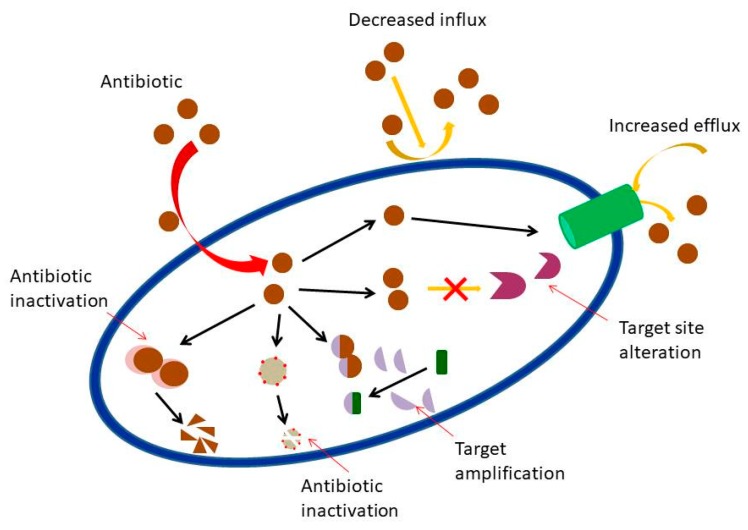
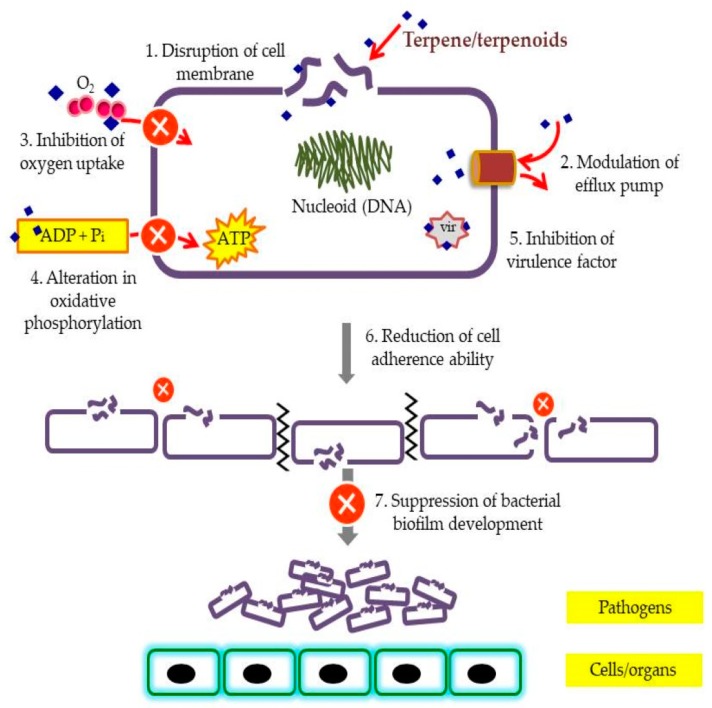
The evolution of antimicrobial resistance (AMR) in pathogens has prompted extensive research to find alternative therapeutics. Plants rich with natural secondary metabolites are one of the go-to reservoirs for discovery of potential resources to alleviate this problem. Terpenes and their derivatives comprising of hydrocarbons, are usually found in essential oils (EOs). They have been reported to have potent antimicrobial activity, exhibiting bacteriostatic and bactericidal effects against tested pathogens. This brief review discusses the activity of terpenes and derivatives against pathogenic bacteria, describing the potential of the activity against AMR followed by the possible mechanism exerted by each terpene class. Finally, ongoing research and possible improvisation to the usage of terpenes and terpenoids in therapeutic practice against AMR are discussed.
抗菌药物耐药性(AMR)在病原体中的演变促使人们广泛研究寻找替代疗法。富含天然次生代谢产物的植物是发现潜在资源以缓解这一问题的首选资源库之一。萜类化合物及其衍生物由碳氢化合物组成,通常存在于精油(EOs)中。据报道,它们具有很强的抗菌活性,对测试的病原体表现出抑菌和杀菌作用。本文简要综述了萜类化合物及其衍生物对病原菌的活性,描述了其对 AMR 的潜在活性,以及每种萜类化合物发挥的可能作用机制。最后,讨论了萜类化合物和类萜在治疗 AMR 方面的应用的研究进展和可能的改进。