Emmett Interdisciplinary Program in Environment and Resources, Stanford University, Stanford, CA 94305, USA.
Department of Biology, Stanford University, Stanford, CA 94305, USA.
Philos Trans R Soc Lond B Biol Sci. 2019 Sep 30;374(1782):20180335. doi: 10.1098/rstb.2018.0335. Epub 2019 Aug 12.
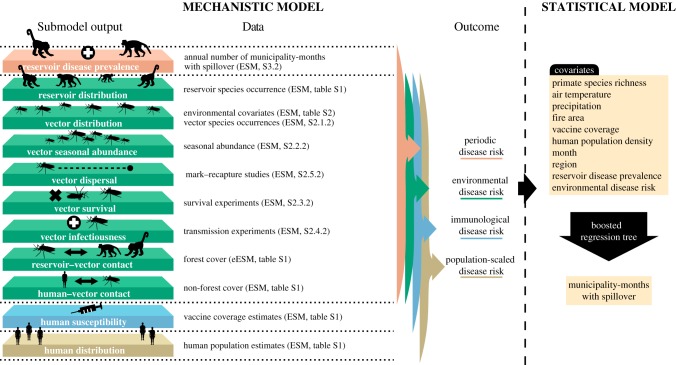
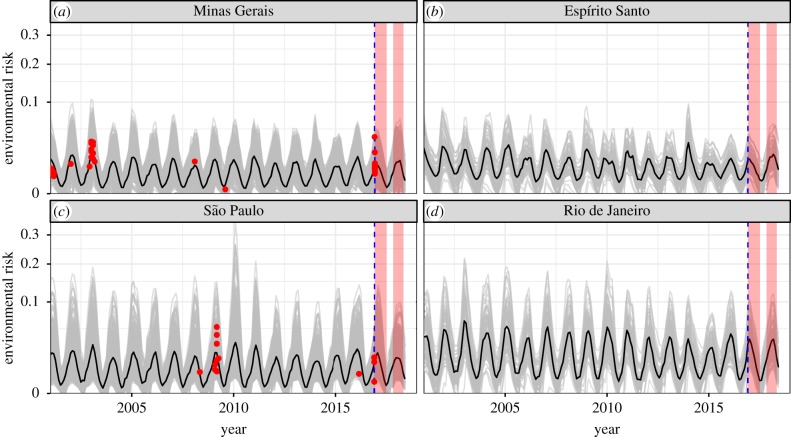
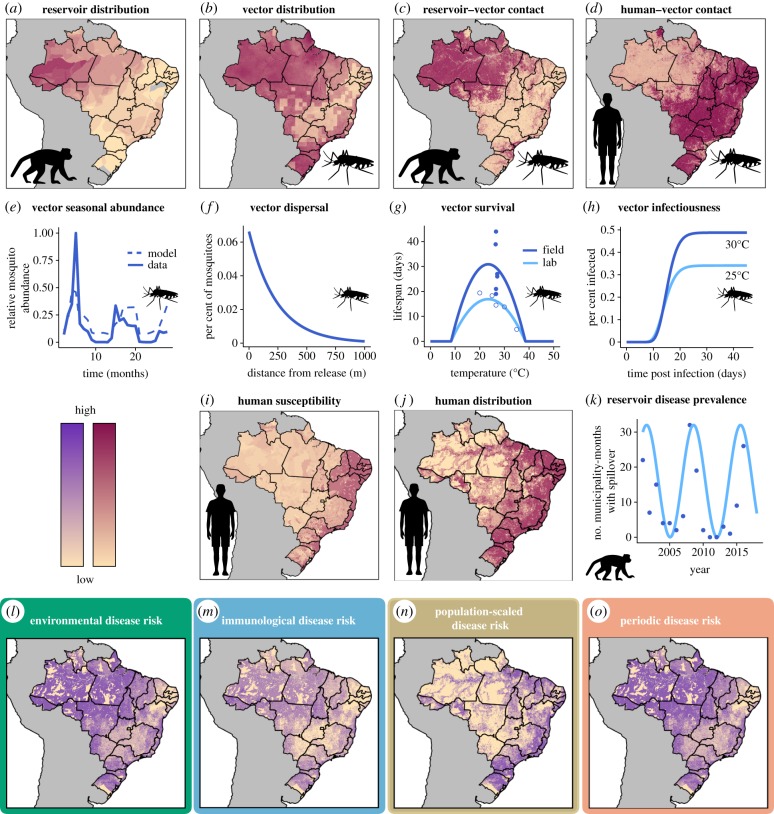
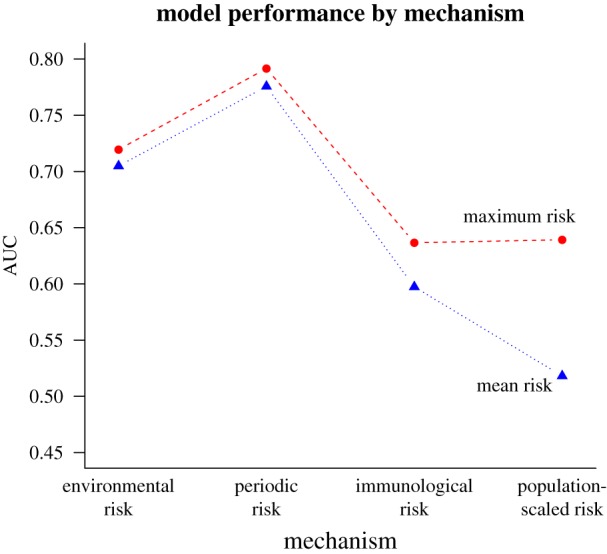
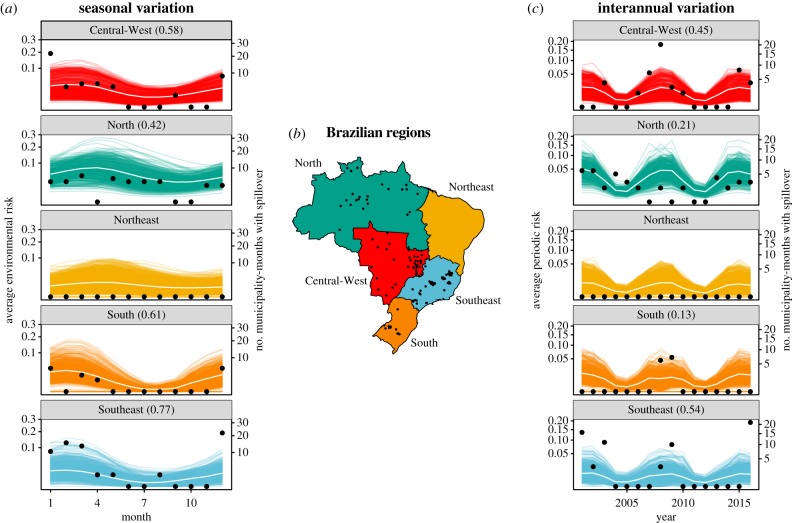
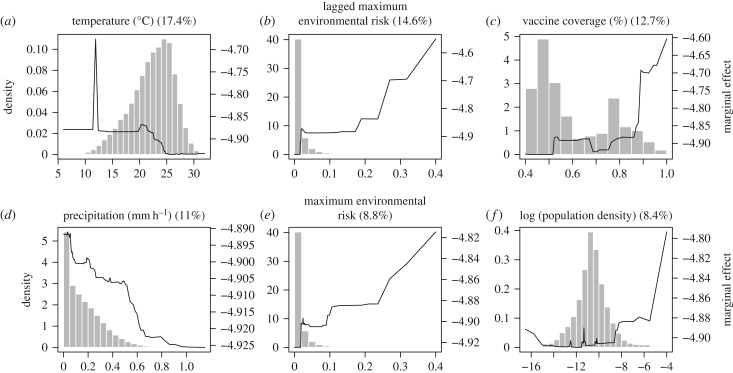
Many (re)emerging infectious diseases in humans arise from pathogen spillover from wildlife or livestock, and accurately predicting pathogen spillover is an important public health goal. In the Americas, yellow fever in humans primarily occurs following spillover from non-human primates via mosquitoes. Predicting yellow fever spillover can improve public health responses through vector control and mass vaccination. Here, we develop and test a mechanistic model of pathogen spillover to predict human risk for yellow fever in Brazil. This environmental risk model, based on the ecology of mosquito vectors and non-human primate hosts, distinguished municipality-months with yellow fever spillover from 2001 to 2016 with high accuracy (AUC = 0.72). Incorporating hypothesized cyclical dynamics of infected primates improved accuracy (AUC = 0.79). Using boosted regression trees to identify gaps in the mechanistic model, we found that important predictors include current and one-month lagged environmental risk, vaccine coverage, population density, temperature and precipitation. More broadly, we show that for a widespread human viral pathogen, the ecological interactions between environment, vectors, reservoir hosts and humans can predict spillover with surprising accuracy, suggesting the potential to improve preventive action to reduce yellow fever spillover and avert onward epidemics in humans. This article is part of the theme issue 'Dynamic and integrative approaches to understanding pathogen spillover'.
许多(再)出现的人类传染病源自病原体从野生动物或牲畜溢出,准确预测病原体溢出是一个重要的公共卫生目标。在美洲,人类的黄热病主要是通过蚊子从非人类灵长类动物溢出引起的。预测黄热病溢出可以通过控制病媒和大规模接种疫苗来改善公共卫生应对措施。在这里,我们开发并测试了一种病原体溢出的机制模型,以预测巴西的人类黄热病风险。这个基于蚊子媒介和非人类灵长类宿主生态学的环境风险模型,能够准确地区分 2001 年至 2016 年有黄热病溢出的市/月(AUC = 0.72)。假设感染灵长类动物的周期性动态可提高准确性(AUC = 0.79)。使用提升回归树来确定机制模型中的差距,我们发现重要的预测因素包括当前和一个月前的环境风险、疫苗覆盖率、人口密度、温度和降水。更广泛地说,我们表明,对于一种广泛存在的人类病毒病原体,环境、媒介、储存宿主和人类之间的生态相互作用可以以惊人的准确性预测溢出,这表明有可能改进预防措施,以减少黄热病溢出,并避免人类的进一步流行。本文是主题为“理解病原体溢出的动态和综合方法”的一部分。