Naeem Muhammd, Li Hongju, Yan Li, Raza Muhammad Ali, Gong Guoshu, Chen Huabao, Yang Chunping, Zhang Min, Shang Jing, Liu Taiguo, Chen Wanquan, Faheem Abbas Muhammad, Irshad Gulshan, I Khaskheli Muhammed, Yang Wenyu, Chang Xiaoli
College of Agronomy, Sichuan Agricultural University, Chengdu 611130, China.
State Key Laboratory for Biology of Plant Diseases and Insect Pests, Institute of Plant Protection, Chinese Academy of Agricultural Sciences, Beijing 100193, China.
Pathogens. 2019 Nov 19;8(4):245. doi: 10.3390/pathogens8040245.
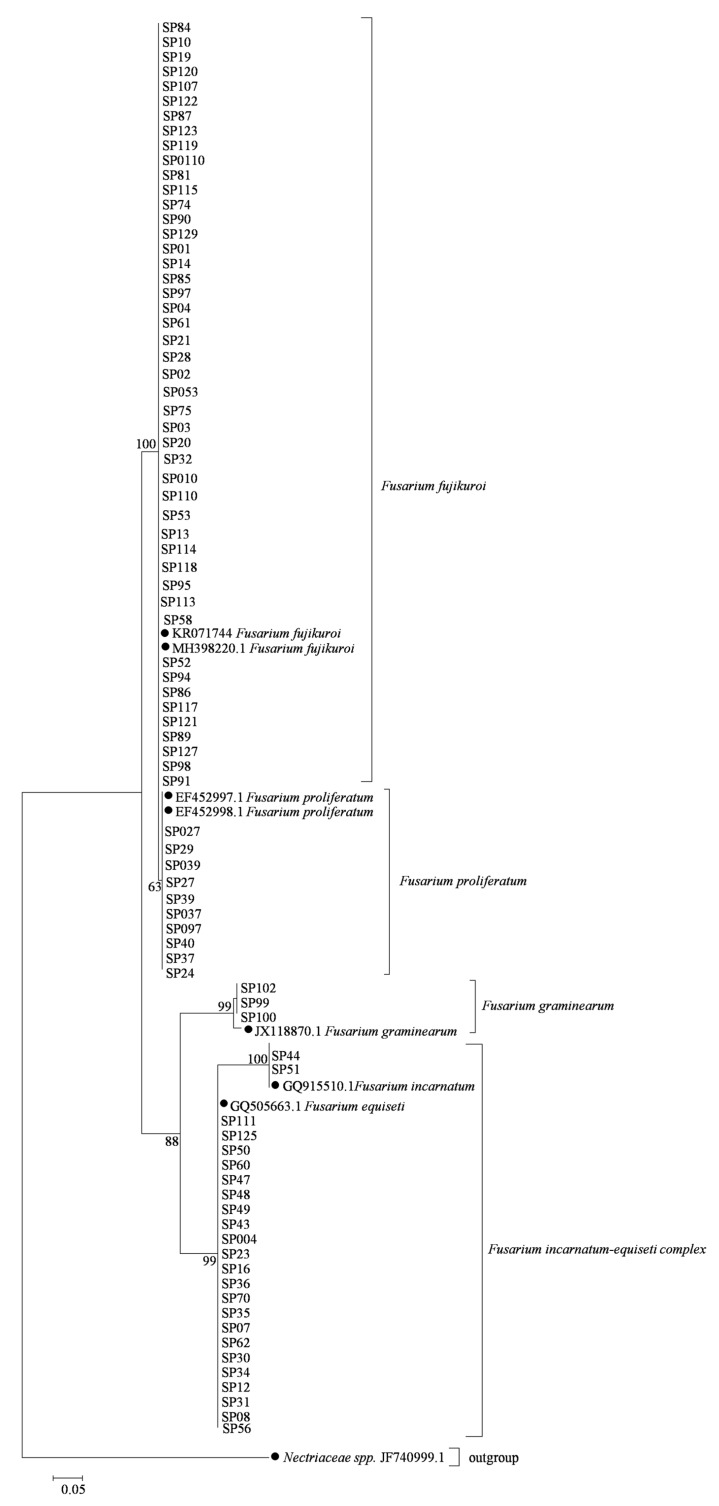
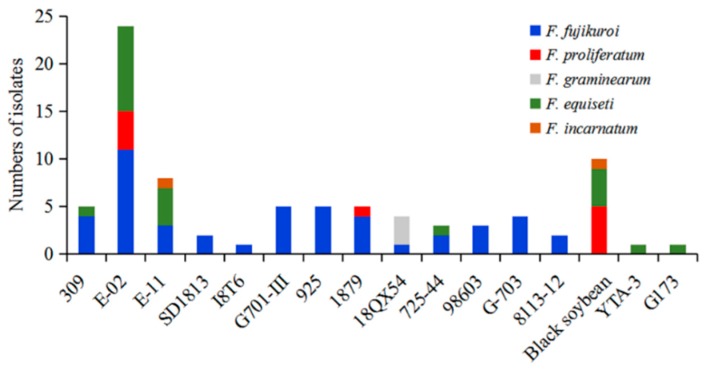
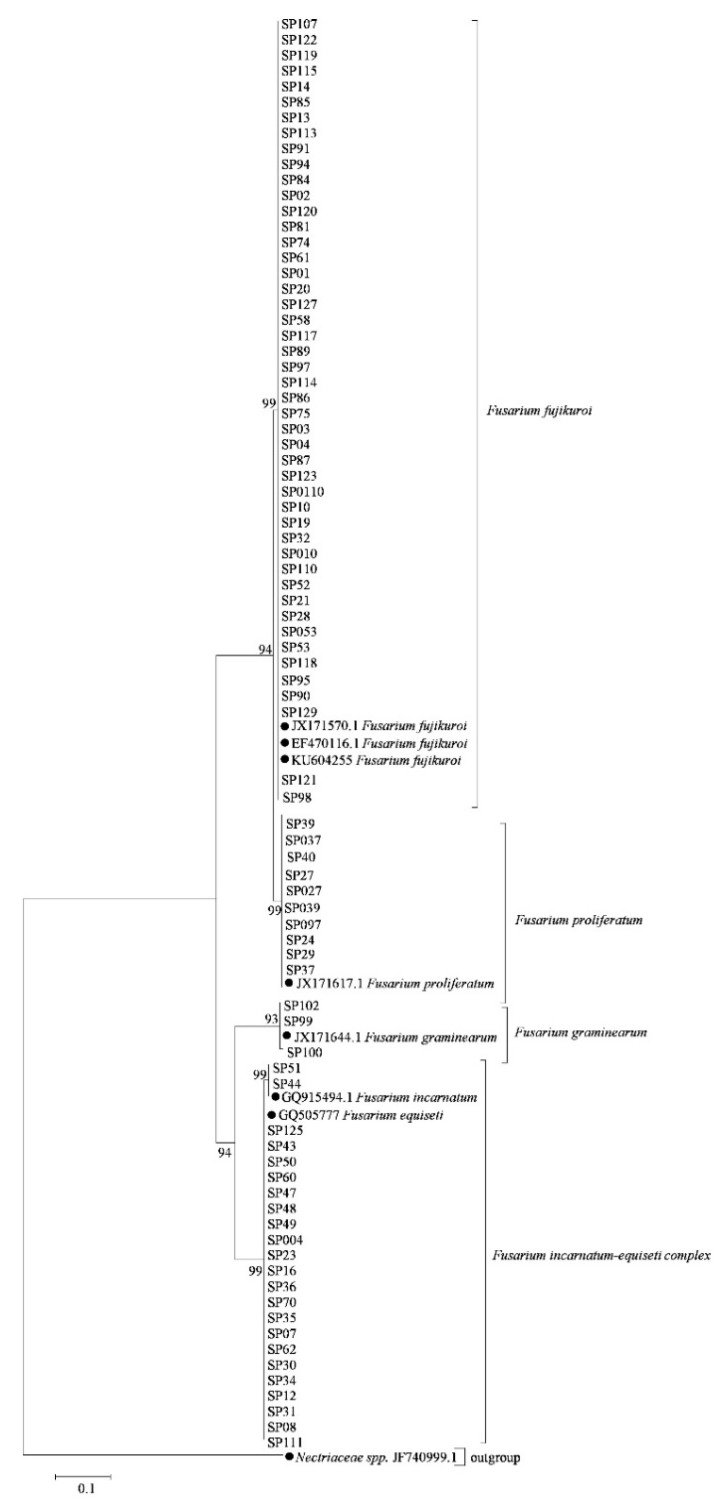
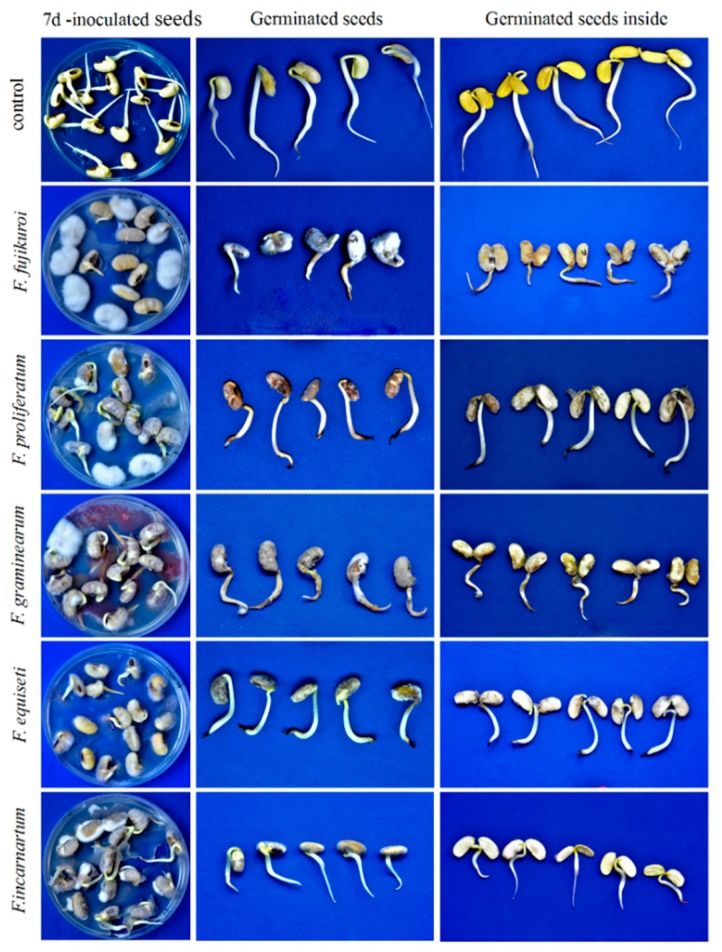
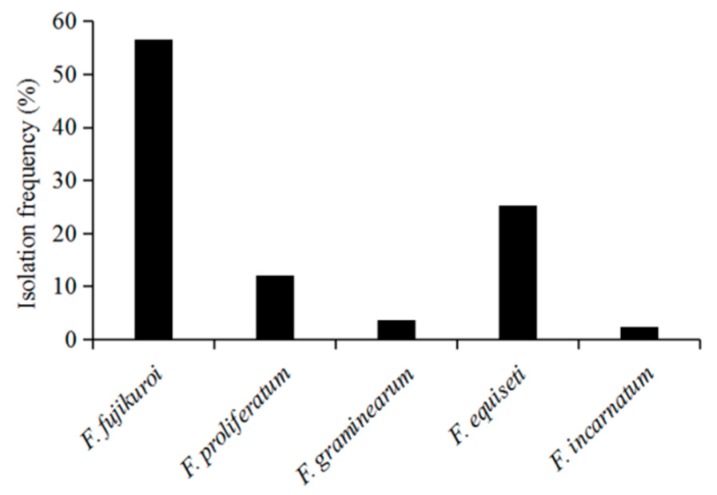
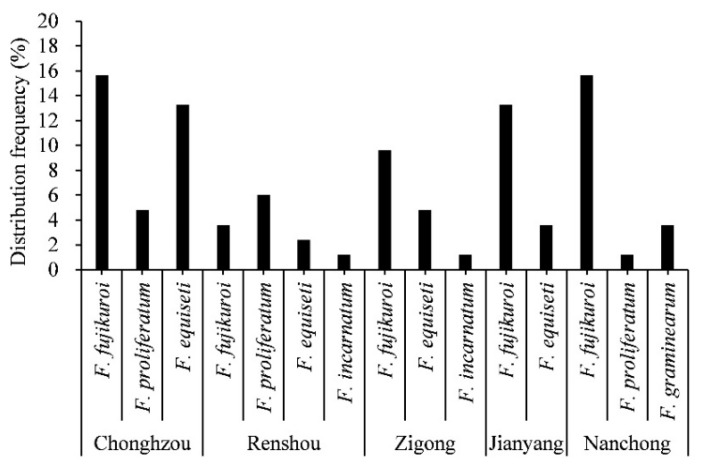
Intercropping has been considered as a kind of a sustainable agricultural cropping system. In southwest China, maize/soybean strip intercropping has commonly been practised under local limited agricultural land resources. However, heavy rainfall in combination with high humidity and low temperatures cause severe pod and seed deterioration in the maturity and pre-harvesting stages of intercropped soybean. Numerous species have been reported as the dominant pathogens of soybean root rot, seedling blight, as well as pod field mold in this area. However, the diversity and pathogenicity of species on soybean pods remain unclear. In the current study, diseased soybean pods were collected during the cropping season of 2018 from five different intercropped soybean producing areas. A total of 83 F isolates were isolated and identified as . f , and equiseti species complex based on morphological characteristics and phylogenetic analysis of the nucleotide sequence of EF1-α and PB2 genes. Pathogenicity tests demonstrated that all F species were pathogenic to seeds of the intercropped soybean cultivar Nandou12. usarium had the maximum disease severity, with a significant reduction of seed germination rate, root length, and seed weight, followed by F. e, F. , F. and F. incarnatum. Additionally, the diversity of Fusarium species on soybean pods was also considerably distinct according to the geographical origin and soybean varieties. Thus, the findings of the current study will be helpful for the management and resistance breeding of soybean pod decay in the maize/soybean intercropping system.
间作被认为是一种可持续的农业种植系统。在中国西南部,玉米/大豆带状间作在当地有限的农业土地资源条件下普遍实行。然而,强降雨加上高湿度和低温导致间作大豆在成熟和收获前阶段出现严重的豆荚和种子变质。据报道,该地区有许多物种是大豆根腐病、幼苗枯萎病以及豆荚田间霉变的主要病原菌。然而,大豆豆荚上这些物种的多样性和致病性仍不清楚。在本研究中,于2018年种植季节从五个不同的间作大豆产区采集了患病大豆豆荚。基于EF1-α和PB2基因核苷酸序列的形态特征和系统发育分析,共分离出83株镰刀菌分离物,并鉴定为尖孢镰刀菌、木贼镰刀菌复合种等。致病性试验表明,所有镰刀菌物种对间作大豆品种南豆12的种子均具有致病性。尖孢镰刀菌的病害严重程度最高,种子发芽率、根长和种子重量显著降低,其次是木贼镰刀菌、层出镰刀菌、轮枝镰刀菌和粉红镰刀菌。此外,根据地理来源和大豆品种,大豆豆荚上镰刀菌物种的多样性也有很大差异。因此,本研究结果将有助于玉米/大豆间作系统中大豆豆荚腐烂的管理和抗性育种。