Cao Jian, Truong Anh Lan, Banu Sophia, Shah Asim A, Sabharwal Ashutosh, Moukaddam Nidal
Electrical and Computer Engineering Department, Rice University, Houston, TX, United States.
Menninger Department of Psychiatry, Baylor College of Medicine, Houston, TX, United States.
JMIR Ment Health. 2020 Jan 24;7(1):e14045. doi: 10.2196/14045.
Depression carries significant financial, medical, and emotional burden on modern society. Various proof-of-concept studies have highlighted how apps can link dynamic mental health status changes to fluctuations in smartphone usage in adult patients with major depressive disorder (MDD). However, the use of such apps to monitor adolescents remains a challenge.
This study aimed to investigate whether smartphone apps are useful in evaluating and monitoring depression symptoms in a clinically depressed adolescent population compared with the following gold-standard clinical psychometric instruments: Patient Health Questionnaire (PHQ-9), Hamilton Rating Scale for Depression (HAM-D), and Hamilton Anxiety Rating Scale (HAM-A).
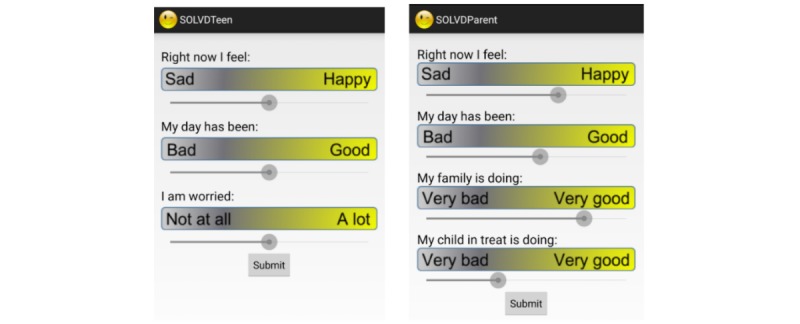
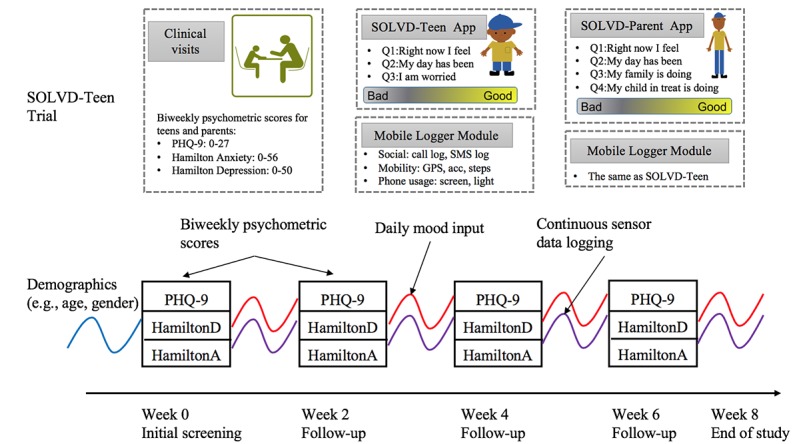
We recruited 13 families with adolescent patients diagnosed with MDD with or without comorbid anxiety disorder. Over an 8-week period, daily self-reported moods and smartphone sensor data were collected by using the Smartphone- and OnLine usage-based eValuation for Depression (SOLVD) app. The evaluations from teens' parents were also collected. Baseline depression and anxiety symptoms were measured biweekly using PHQ-9, HAM-D, and HAM-A.
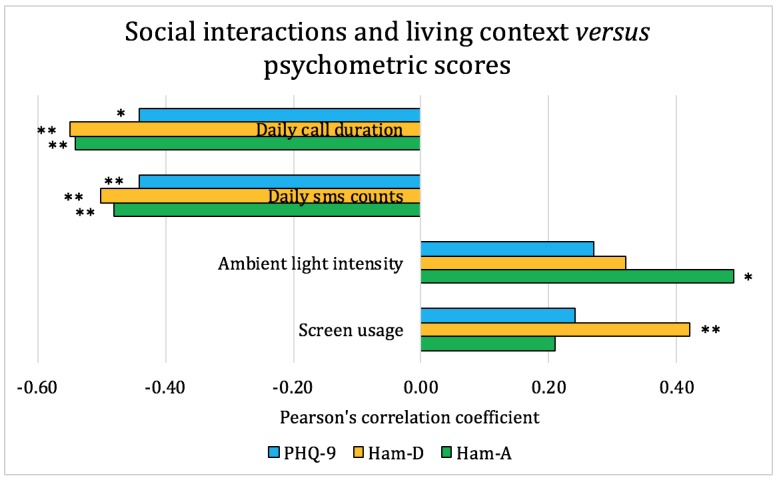
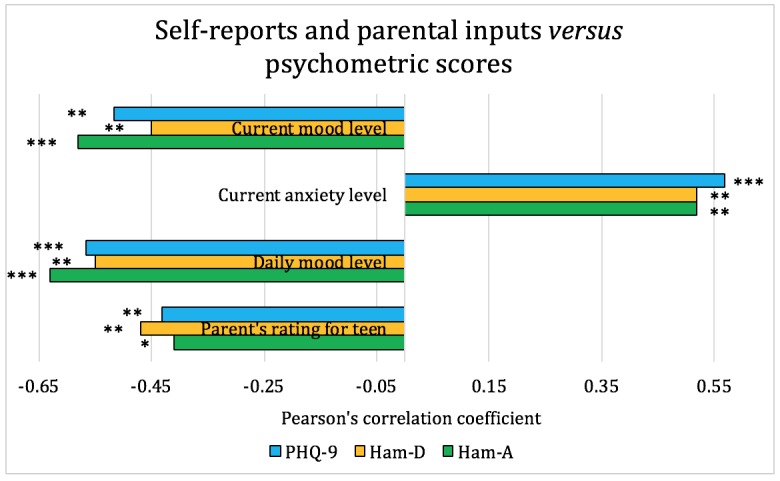
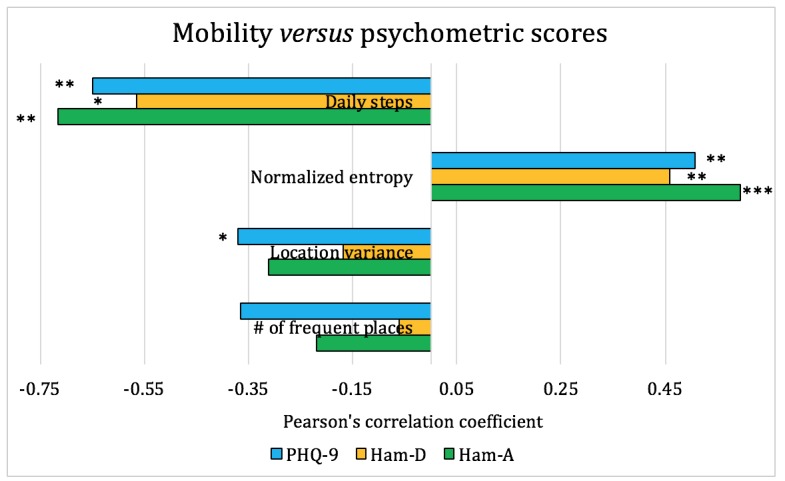
We observed a significant correlation between the self-evaluated mood averaged over a 2-week period and the biweekly psychometric scores from PHQ-9, HAM-D, and HAM-A (0.45≤|r|≤0.63; P=.009, P=.01, and P=.003, respectively). The daily steps taken, SMS frequency, and average call duration were also highly correlated with clinical scores (0.44≤|r|≤0.72; all P<.05). By combining self-evaluations and smartphone sensor data of the teens, we could predict the PHQ-9 score with an accuracy of 88% (23.77/27). When adding the evaluations from the teens' parents, the prediction accuracy was further increased to 90% (24.35/27).
Smartphone apps such as SOLVD represent a useful way to monitor depressive symptoms in clinically depressed adolescents, and these apps correlate well with current gold-standard psychometric instruments. This is a first study of its kind that was conducted on the adolescent population, and it included inputs from both teens and their parents as observers. The results are preliminary because of the small sample size, and we plan to expand the study to a larger population.
抑郁症给现代社会带来了巨大的经济、医疗和情感负担。各种概念验证研究强调了应用程序如何将成年重度抑郁症(MDD)患者动态心理健康状况的变化与智能手机使用的波动联系起来。然而,使用此类应用程序监测青少年仍然是一项挑战。
本研究旨在调查与以下金标准临床心理测量工具相比,智能手机应用程序在评估和监测临床抑郁症青少年群体的抑郁症状方面是否有用:患者健康问卷(PHQ-9)、汉密尔顿抑郁量表(HAM-D)和汉密尔顿焦虑量表(HAM-A)。
我们招募了13个有青少年患者的家庭,这些青少年被诊断患有MDD,伴有或不伴有共病焦虑症。在8周的时间里,通过使用基于智能手机和在线使用情况的抑郁症评估(SOLVD)应用程序收集每日自我报告的情绪和智能手机传感器数据。还收集了青少年父母的评估。使用PHQ-9、HAM-D和HAM-A每两周测量一次基线抑郁和焦虑症状。
我们观察到,在两周内平均自我评估的情绪与PHQ-9、HAM-D和HAM-A每两周的心理测量得分之间存在显著相关性(分别为0.45≤|r|≤0.63;P = 0.009、P = 0.01和P = 0.003)。每日步数、短信频率和平均通话时长也与临床评分高度相关(0.44≤|r|≤0.72;所有P < 0.05)。通过结合青少年的自我评估和智能手机传感器数据,我们可以以88%(23.77/27)的准确率预测PHQ-9得分。当加入青少年父母的评估时,预测准确率进一步提高到90%(24.35/27)。
诸如SOLVD之类的智能手机应用程序是监测临床抑郁症青少年抑郁症状的一种有用方式,并且这些应用程序与当前的金标准心理测量工具相关性良好。这是首次针对青少年群体进行的此类研究,并且纳入了青少年及其父母作为观察者的输入。由于样本量小,结果是初步的,我们计划将研究扩展到更大的人群。