Animal Bioscience and Biotechnology Laboratory, Beltsville Agricultural Research Center, Agricultural Research Service, USDA, Beltsville, MD 20705, USA.
Arm & Hammer Animal and Food Production, Waukesha, WI 53186, USA.
Poult Sci. 2020 Feb;99(2):725-733. doi: 10.1016/j.psj.2019.12.002. Epub 2019 Dec 31.
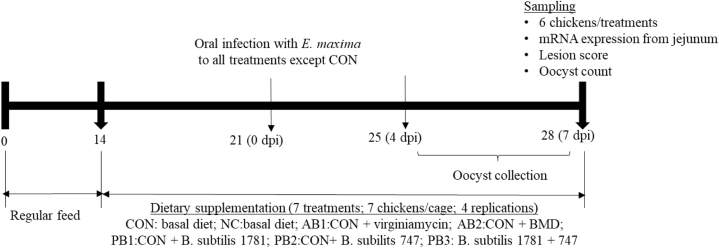
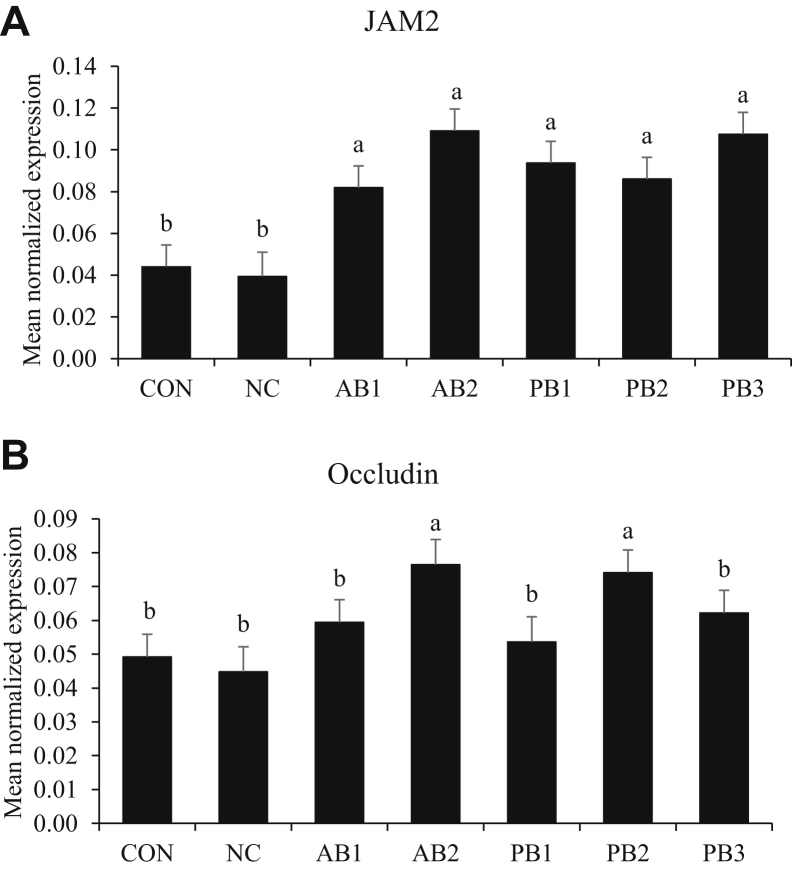
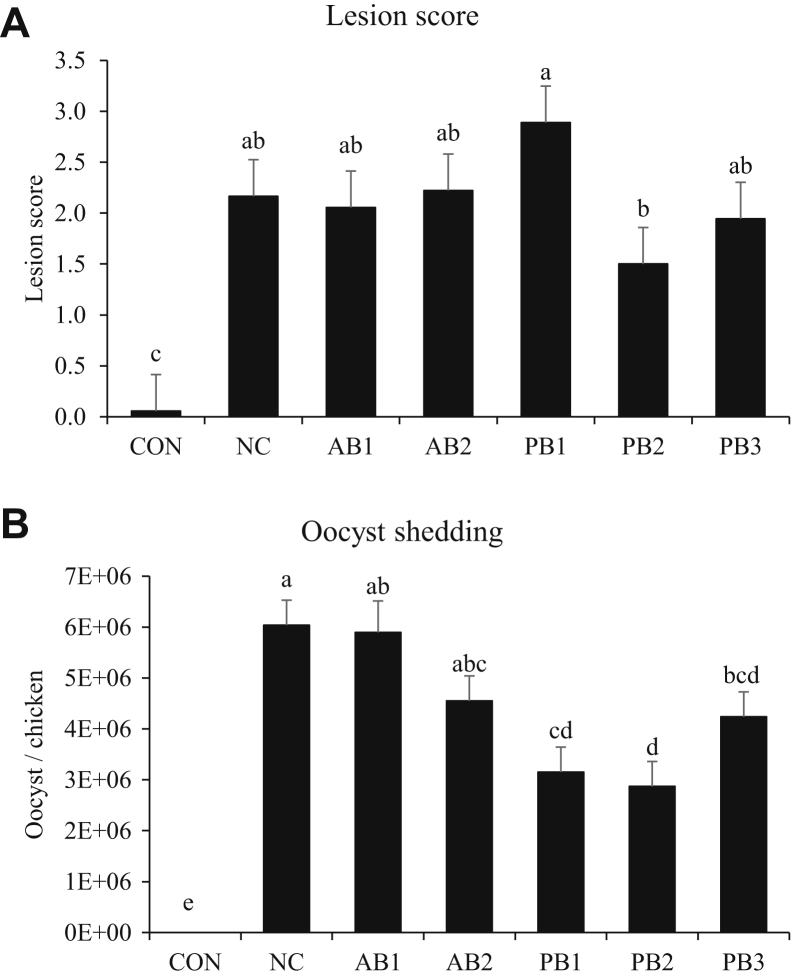
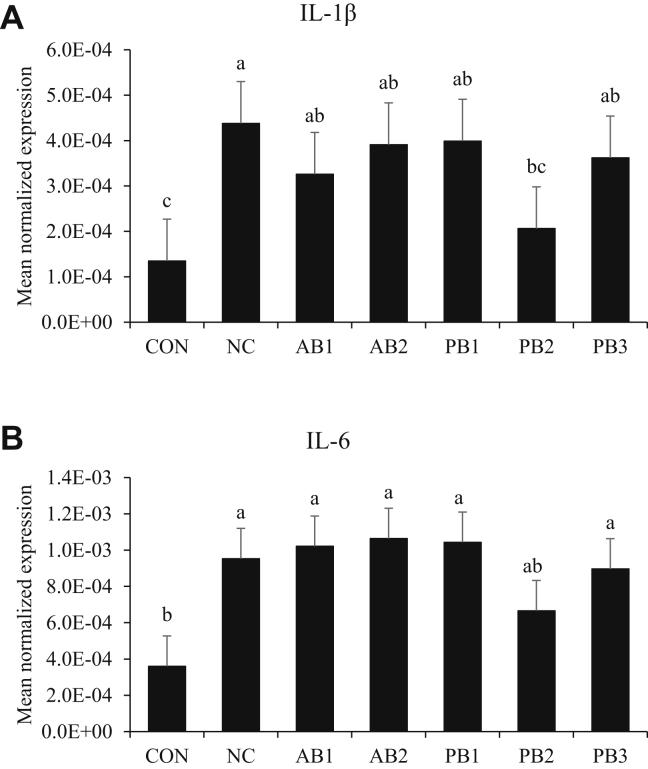
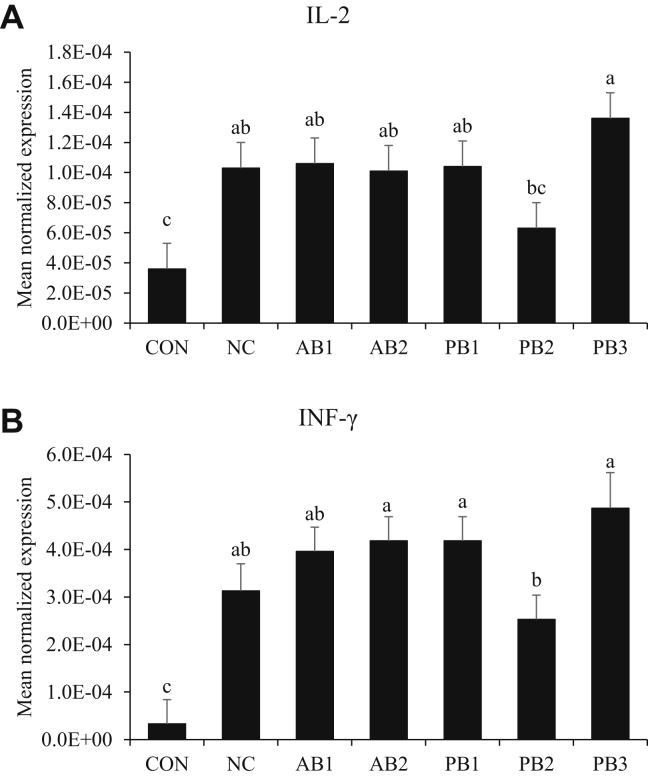
The objective of this study was to investigate the effects of dietary Bacillus subtilis supplementation on growth performance, jejunal lesion scores, oocyst shedding, and cytokine and tight junction protein expression in broiler chickens infected with Eimeria maxima. A total of 196 male day-old Ross 708 broilers were given a nonexperimental diet until 14 D of age. Then, all chickens were randomly assigned to one of seven dietary treatments: 2 basal diets (CON and NC); CON + virginiamycin (AB1); CON + bacitracin methylene disalicylate (BMD; AB2); CON + B. subtilis 1781 (PB1); CON + B. subtilis 747 (PB2); or CON + B. subtilis 1781 + 747 (PB3). At day 21, all chickens except those in the CON group were orally inoculated with E. maxima oocysts. At 7 D after E. maxima infection, the body weight gains of chickens fed PB2 and PB3 increased (P = 0.032) as much as those in chickens fed AB2. The body weight gain and feed efficiency of chickens fed PB2 were significantly increased (P < 0.001), and PB2 chickens showed (P = 0.005) the lowest lesion scores after E. maxima infection. Chickens fed PB2 showed (P < 0.05) lower mRNA expression of IL-1β in infected chicken groups. Chickens in the AB1, AB2, PB1, PB2, and PB3 groups showed (P < 0.05) greater mRNA expression of junctional adhesion molecule 2 in jejunal tissue, whereas occludin expression increased (P < 0.05) in the jejunal tissue of chickens fed AB2 or PB2. Dietary B. subtilis supplementation significantly improved the growth performance of young chickens to a level comparable with that induced by virginiamycin or BMD without E. maxima infection. After infection with E. maxima, dietary virginiamycin and BMD significantly enhanced the epithelial barrier integrity, and the dietary B. subtilis 747 showed significantly enhanced growth performance, intestinal immunity, and epithelial barrier integrity. Together our results indicated that certain strains of B. subtilis provide beneficial effects on the growth of young broiler chickens and have the potential to replace antibiotic growth promoters.
本研究旨在探讨饲粮添加枯草芽孢杆菌对感染堆型艾美耳球虫肉鸡生长性能、空肠病变评分、卵囊排放、细胞因子和紧密连接蛋白表达的影响。将 196 只 1 日龄雄性罗斯 708 肉鸡给予非实验性日粮,直至 14 日龄。然后,所有肉鸡随机分配到 7 种饲粮处理组之一:2 种基础饲粮(CON 和 NC);CON+维吉尼亚霉素(AB1);CON+杆菌肽锌(BMD;AB2);CON+枯草芽孢杆菌 1781(PB1);CON+枯草芽孢杆菌 747(PB2);或 CON+枯草芽孢杆菌 1781+747(PB3)。在 21 日龄时,除 CON 组外,所有肉鸡均经口接种堆型艾美耳球虫卵囊。在感染堆型艾美耳球虫后 7 天,饲粮 PB2 和 PB3 组肉鸡的体重增加(P=0.032)与饲粮 AB2 组肉鸡一样多。饲粮 PB2 组肉鸡的体重增重和饲料效率显著提高(P<0.001),且 PB2 组肉鸡在感染堆型艾美耳球虫后表现出(P=0.005)最低的病变评分。感染鸡群中,饲粮 PB2 组鸡的白细胞介素-1β mRNA 表达降低(P<0.05)。AB1、AB2、PB1、PB2 和 PB3 组鸡的空肠组织中 junctinal 黏附分子 2 的 mRNA 表达增加(P<0.05),而饲粮 AB2 或 PB2 组鸡的空肠组织中闭合蛋白表达增加(P<0.05)。饲粮添加枯草芽孢杆菌显著提高了未感染堆型艾美耳球虫的幼鸡的生长性能,使其达到与维吉尼亚霉素或杆菌肽锌相似的水平。感染堆型艾美耳球虫后,饲粮维吉尼亚霉素和杆菌肽锌显著增强了上皮屏障完整性,而饲粮枯草芽孢杆菌 747 显著增强了生长性能、肠道免疫和上皮屏障完整性。综上所述,某些枯草芽孢杆菌菌株对肉鸡的生长具有有益效果,有替代抗生素生长促进剂的潜力。