Cancer and Environmental Epidemiology, Carlos III Institute of Health, Madrid, Spain.
Consortium for Biomedical Research in Epidemiology and Public Health (CIBERESP), Madrid, Spain.
Clin Transl Oncol. 2020 Oct;22(10):1710-1729. doi: 10.1007/s12094-020-02312-y. Epub 2020 Feb 13.
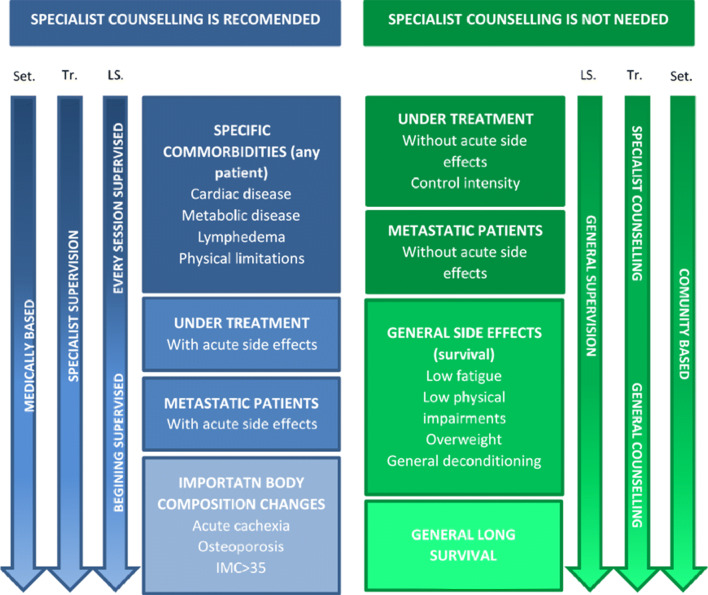
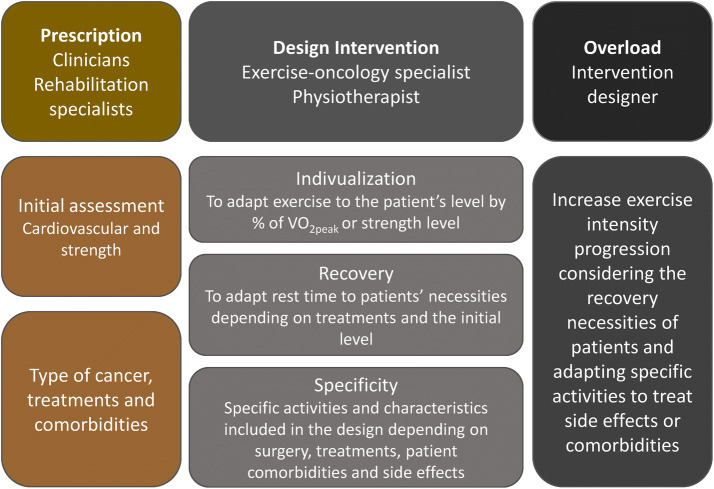
Due to improvements in the number of cancer survivors and survival time, there is a growing interest in healthy behaviors, such as physical activity (PA), and their potential impact on cancer- and non-cancer-related morbidity in individuals with cancer. Commissioned by the Spanish Society of Medical Oncology (SEOM), in this review, we sought to distill the most recent evidence on this topic, focusing on the mechanisms that underpin the effects of PA on cancer, the role of PA in cancer prevention and in the prognosis of cancer and practical recommendations for clinicians regarding PA counseling. Despite the available information, the introduction of exercise programs into the global management of cancer patients remains a challenge with several areas of uncertainty. Among others, the most effective behavioral interventions to achieve long-term changes in a patient's lifestyle and the optimal intensity and duration of PA should be defined with more precision in future studies.
由于癌症幸存者人数和生存时间的增加,人们对健康行为(如体育锻炼)越来越感兴趣,以及它们对癌症患者的癌症和非癌症相关发病率的潜在影响。应西班牙肿瘤医学学会(SEOM)的委托,在本次综述中,我们试图提炼该主题的最新证据,重点关注体育锻炼对癌症影响的作用机制、体育锻炼在癌症预防和癌症预后中的作用,以及针对临床医生的有关体育锻炼咨询的实用建议。尽管有相关信息,但将锻炼计划引入癌症患者的全球管理中仍然是一个挑战,存在着多个不确定领域。除其他外,应在未来的研究中更精确地确定最有效的行为干预措施,以实现患者生活方式的长期改变,以及体育锻炼的最佳强度和持续时间。