Laboratório de Virologia, Instituto de Ciências Biológicas, Universidade Federal do Pará, Rua Augusto Corrêa no.1, Belém, Pará, 66075-110, Brazil.
Retrovirology. 2020 Feb 14;17(1):4. doi: 10.1186/s12977-020-0512-z.
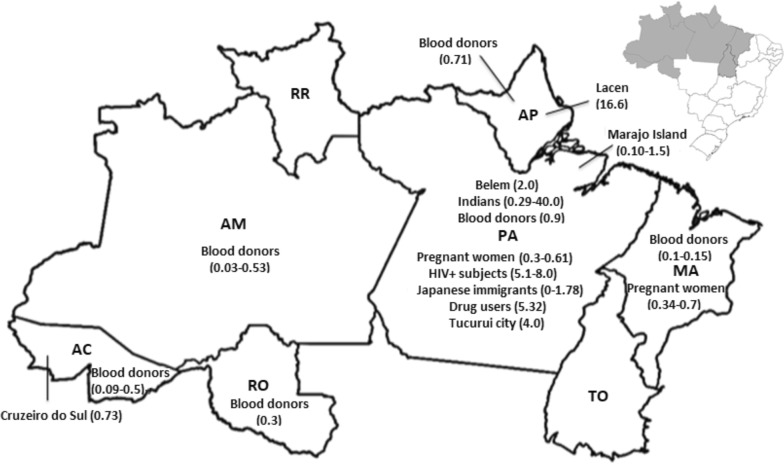
HTLV-1 was the first described human retrovirus and was soon found to be associated with severe clinical diseases, including a devastating lymphoma/leukemia and other inflammatory diseases. Although HTLV-2 is not usually pathogenic, it is widely distributed among native Indian populations in Brazil, particularly in the Amazon region of the country. Presently, HTLV spreads mainly by the sexual route and from mother to child, and virus persistence is an active biological factor aiding its transmission. Recently, the use of illicit drugs has been shown to be an additional risk factor, showing the influence of new habits on the epidemiology of HTLV in the region. Despite the detection of the virus in several different populations in the Amazon region of Brazil for almost 30 years, the exact prevalence of HTLV-1/2 is not well defined. The original biases in sampling and the selection of epidemiologically unsuitable populations were commonly repeated in most prevalence studies, generating unreliable and conflicting figures that do not represent the actual prevalence of HTLV. The improvements in clinical and laboratory facilities have resulted in the description of several clinical manifestations that were previously unknown in the region. The extent of the spread of the virus must be defined in this region, which is the largest geographical area of the country. As prophylaxis advances toward the use of vaccines against HTLV-1, it is important to determine who is at risk of being infected and developing a disease to successfully implement preventive measures, particularly as proposals are made to eradicate the virus among humans.
HTLV-1 是首例被描述的人类逆转录病毒,很快被发现与严重的临床疾病有关,包括毁灭性的淋巴瘤/白血病和其他炎症性疾病。虽然 HTLV-2 通常不具有致病性,但它在巴西的本土印第安人群中广泛分布,特别是在该国的亚马逊地区。目前,HTLV 主要通过性途径和母婴传播,病毒持续存在是促进其传播的一个积极的生物学因素。最近,非法药物的使用被证明是另一个风险因素,这表明新习惯对该地区 HTLV 的流行病学产生了影响。尽管在巴西亚马逊地区的几个不同人群中已经检测到该病毒近 30 年,但 HTLV-1/2 的确切流行率尚不清楚。最初在采样和选择不适合流行病学的人群时存在的偏差在大多数流行率研究中经常被重复,产生了不可靠和相互矛盾的数字,这些数字不能代表 HTLV 的实际流行率。临床和实验室设施的改进导致了该地区以前未知的几种临床表现的描述。必须在这个国家最大的地理区域确定病毒的传播范围。随着针对 HTLV-1 的疫苗预防措施的进展,确定谁有感染和发展疾病的风险对于成功实施预防措施非常重要,特别是在提出在人类中消灭该病毒的建议时。