McAllister Sean M, Polson Shawn W, Butterfield David A, Glazer Brian T, Sylvan Jason B, Chan Clara S
School of Marine Science and Policy, University of Delaware, Newark, Delaware, USA
Center for Bioinformatics and Computational Biology, University of Delaware, Newark, Delaware, USA.
mSystems. 2020 Feb 18;5(1):e00553-19. doi: 10.1128/mSystems.00553-19.
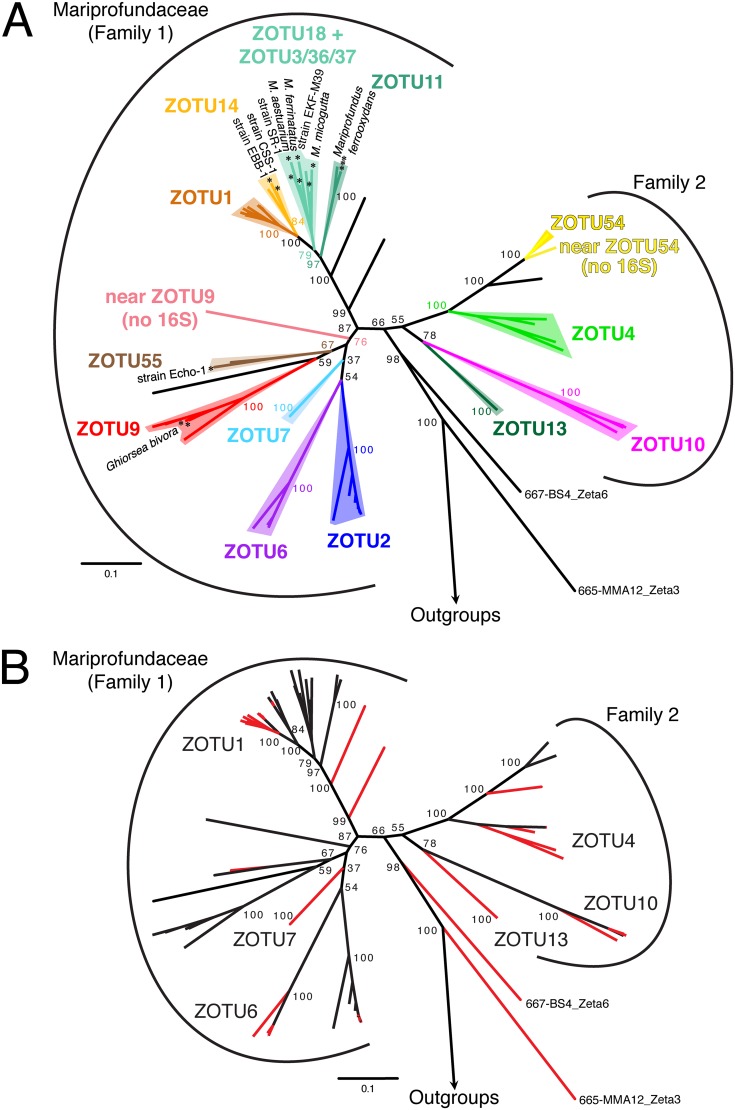
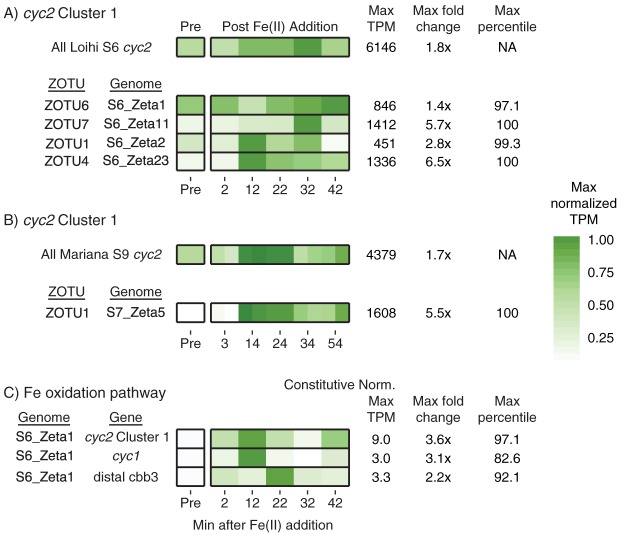
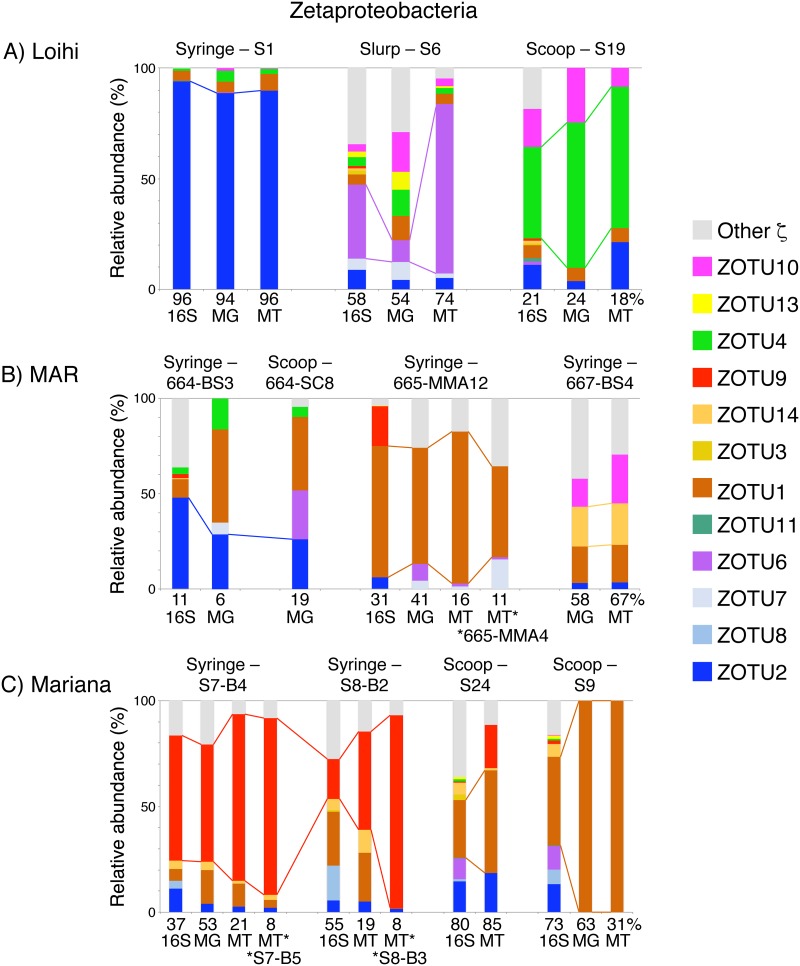
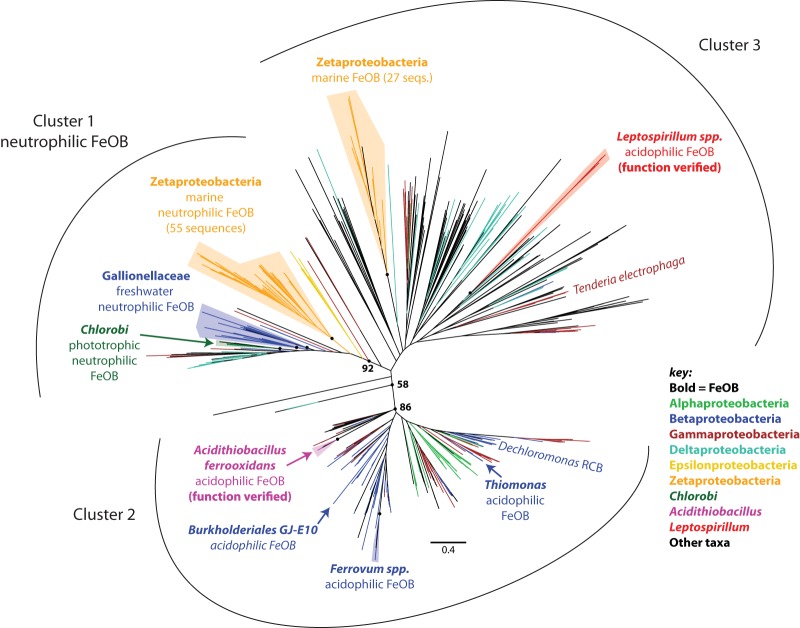
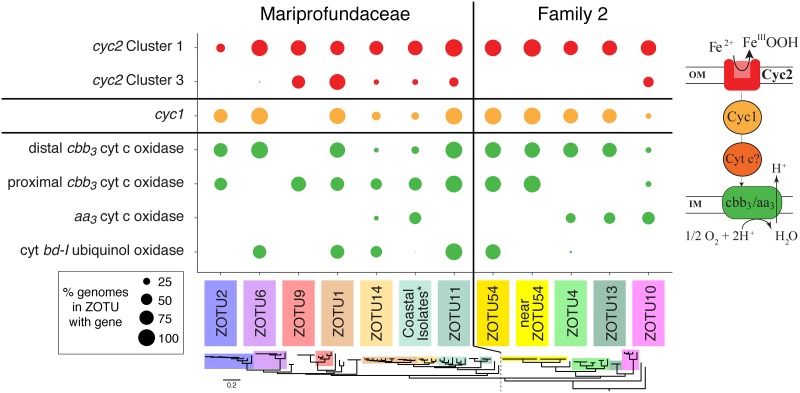
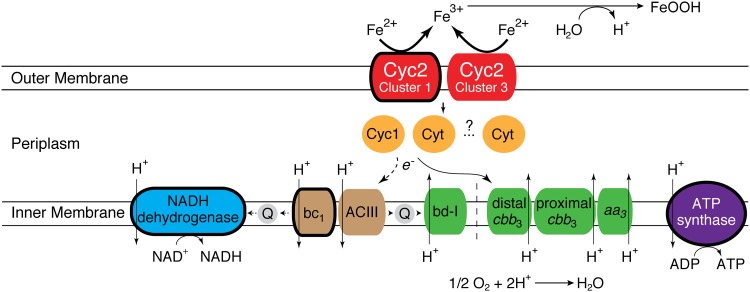
create extensive iron (Fe) oxide mats at marine hydrothermal vents, making them an ideal model for microbial Fe oxidation at circumneutral pH. Comparison of neutrophilic Fe oxidizer isolate genomes has revealed a hypothetical Fe oxidation pathway, featuring a homolog of the Fe oxidase Cyc2 from However, Cyc2 function is not well verified in neutrophilic Fe oxidizers, particularly in Fe-oxidizing environments. Toward this, we analyzed genomes and metatranscriptomes of , using 53 new high-quality metagenome-assembled genomes reconstructed from Fe mats at Mid-Atlantic Ridge, Mariana Backarc, and Loihi Seamount (Hawaii) hydrothermal vents. Phylogenetic analysis demonstrated conservation of Cyc2 sequences among most neutrophilic Fe oxidizers, suggesting a common function. We confirmed the widespread distribution of and other model Fe oxidation pathway genes across all represented lineages. High expression of these genes was observed in diverse under multiple environmental conditions and in incubations. The putative Fe oxidase gene was highly expressed , often as the top expressed gene. The gene showed increased expression in Fe(II)-amended incubations, with corresponding increases in carbon fixation and central metabolism gene expression. These results substantiate the Cyc2-based Fe oxidation pathway in neutrophiles and demonstrate its significance in marine Fe-mineralizing environments. Iron oxides are important components of our soil, water supplies, and ecosystems, as they sequester nutrients, carbon, and metals. Microorganisms can form iron oxides, but it is unclear whether this is a significant mechanism in the environment. Unlike other major microbial energy metabolisms, there is no marker gene for iron oxidation, hindering our ability to track these microbes. Here, we investigate a promising possible iron oxidation gene, , in iron-rich hydrothermal vents, where iron-oxidizing microbes dominate. We pieced together diverse genomes, compared these genomes, and analyzed expression of and other hypothetical iron oxidation genes. We show that is widespread among iron oxidizers and is highly expressed and potentially regulated, making it a good marker for the capacity for iron oxidation and potentially a marker for activity. These findings will help us understand and potentially quantify the impacts of neutrophilic iron oxidizers in a wide variety of marine and terrestrial environments.
在海洋热液喷口形成大量氧化铁垫,使其成为中性pH条件下微生物铁氧化的理想模型。嗜中性铁氧化菌分离株基因组的比较揭示了一条假设的铁氧化途径,其特征是具有来自[具体来源未提及]的铁氧化酶Cyc2的同源物。然而,Cyc2在嗜中性铁氧化菌中的功能尚未得到充分验证,特别是在铁氧化环境中。为此,我们分析了[具体研究对象未提及]的基因组和宏转录组,使用了从大西洋中脊、马里亚纳弧后和罗希海山(夏威夷)热液喷口的铁垫中重建的53个新的高质量宏基因组组装基因组。系统发育分析表明,大多数嗜中性铁氧化菌中Cyc2序列保守,表明其具有共同功能。我们证实了[具体基因未提及]和其他模型铁氧化途径基因在所有代表性[具体研究对象未提及]谱系中的广泛分布。在多种环境条件下和培养中,在不同的[具体研究对象未提及]中观察到这些基因的高表达。假定的铁氧化酶基因[具体基因未提及]高度表达,通常是表达量最高的基因。[具体基因未提及]基因在添加Fe(II)的培养中表达增加,同时碳固定和中心代谢基因表达相应增加。这些结果证实了嗜中性菌中基于Cyc2的铁氧化途径,并证明了其在海洋铁矿化环境中的重要性。氧化铁是我们土壤、水源和生态系统的重要组成部分,因为它们能螯合营养物质、碳和金属。微生物可以形成氧化铁,但尚不清楚这在环境中是否是一种重要机制。与其他主要的微生物能量代谢不同,铁氧化没有标记基因,这阻碍了我们追踪这些微生物的能力。在这里,我们在富含铁的热液喷口研究一个有前景的可能的铁氧化基因[具体基因未提及],这里铁氧化微生物占主导。我们拼接了不同的[具体研究对象未提及]基因组,比较了这些基因组,并分析了[具体基因未提及]和其他假设的铁氧化基因的表达。我们表明[具体基因未提及]在铁氧化菌中广泛存在,高度表达且可能受到调控,使其成为铁氧化能力的良好标记,也可能是活性的标记。这些发现将帮助我们理解并可能量化嗜中性铁氧化菌在各种海洋和陆地环境中的影响。