Microbiology Graduate Group, University of California, Davis, California, USA.
Genome Center, University of California, Davis, California, USA.
Appl Environ Microbiol. 2020 Jul 2;86(14). doi: 10.1128/AEM.00708-20.
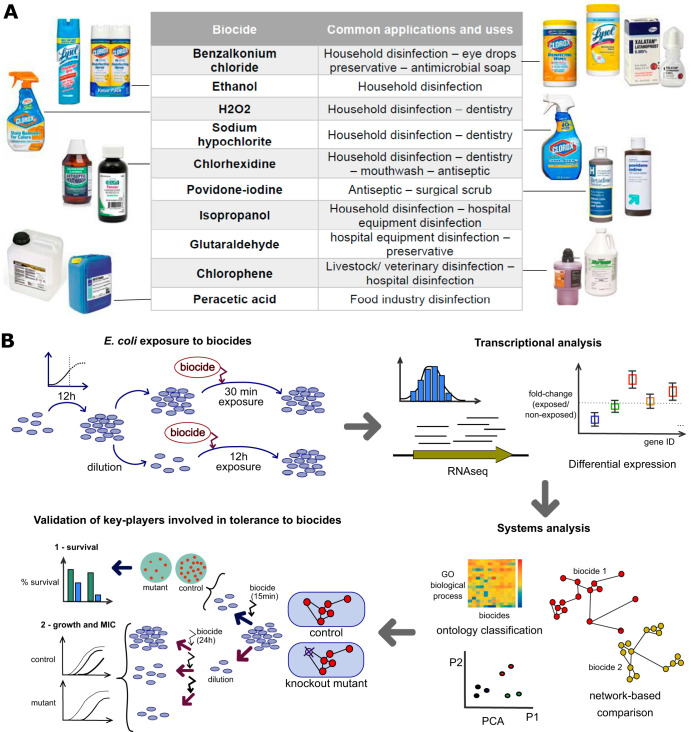
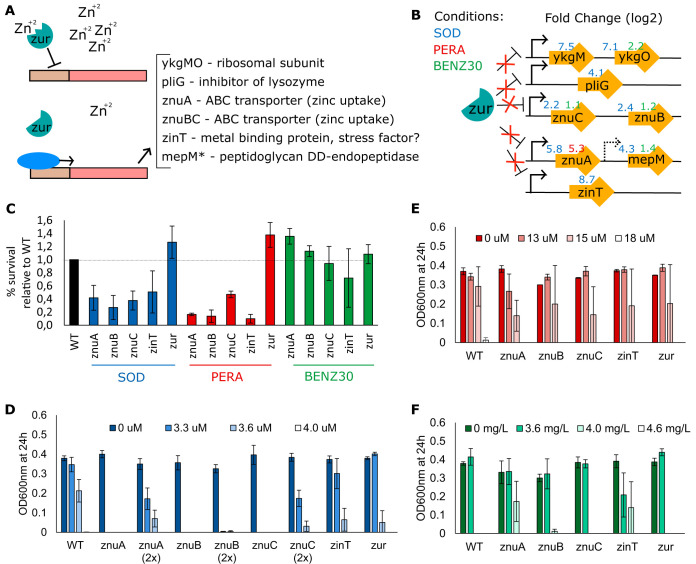
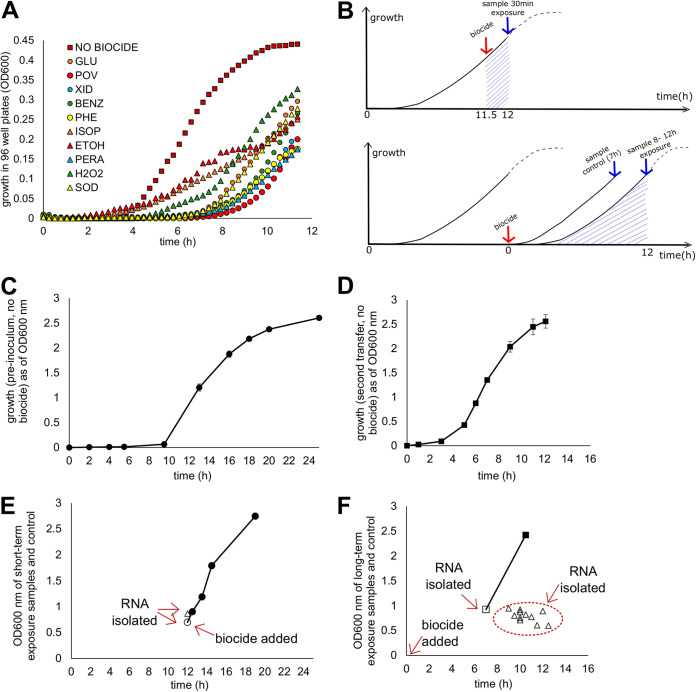
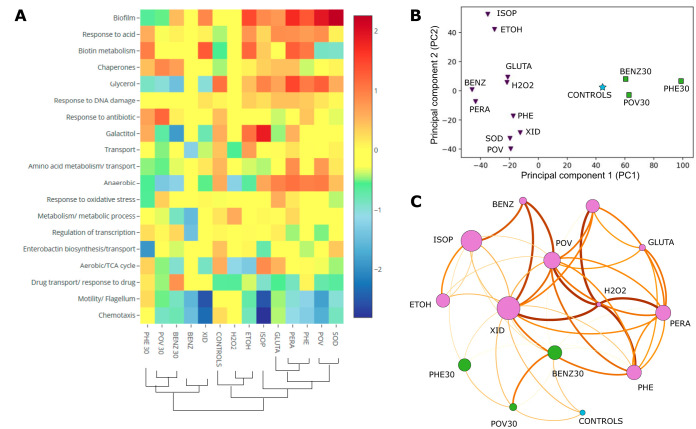
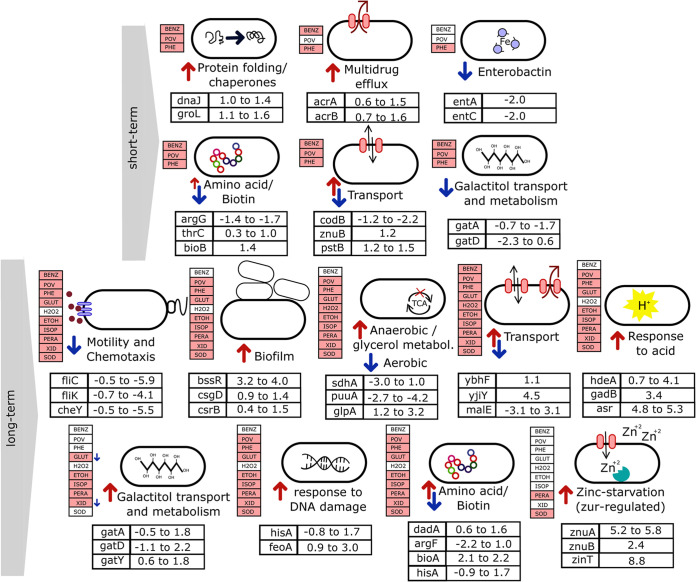
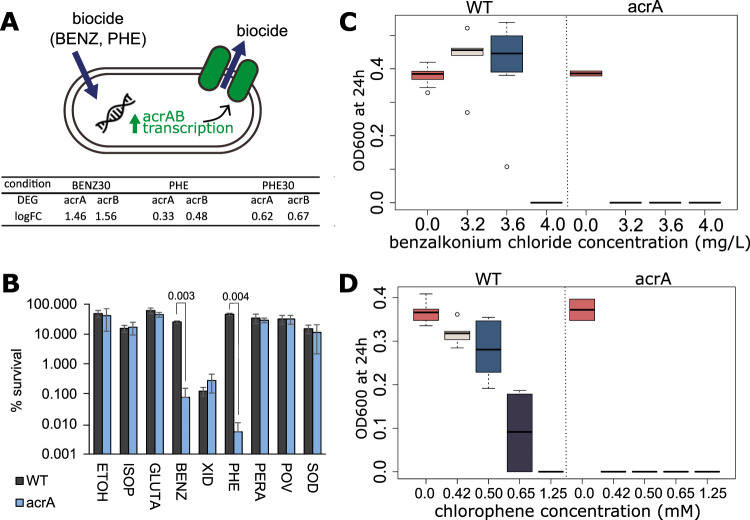
The mechanisms of the bacterial response to biocides are poorly understood, despite their broad application. To identify the genetic basis and pathways implicated in the biocide stress response, we exposed populations to 10 ubiquitous biocides. By comparing the transcriptional responses between a short-term exposure (30 min) and a long-term exposure (8 to 12 h) to biocide stress, we established the common gene and pathway clusters that are implicated in general and biocide-specific stress responses. Our analysis revealed a temporal choreography, starting from the upregulation of chaperones to the subsequent repression of motility and chemotaxis pathways and the induction of an anaerobic pool of enzymes and biofilm regulators. A systematic analysis of the transcriptional data identified a -regulated gene cluster to be highly active in the stress response against sodium hypochlorite and peracetic acid, presenting a link between the biocide stress response and zinc homeostasis. Susceptibility assays with knockout mutants further validated our findings and provide clear targets for downstream investigation of the implicated mechanisms of action. Antiseptics and disinfectant products are of great importance to control and eliminate pathogens, especially in settings such as hospitals and the food industry. Such products are widely distributed and frequently poorly regulated. Occasional outbreaks have been associated with microbes resistant to such compounds, and researchers have indicated potential cross-resistance with antibiotics. Despite that, there are many gaps in knowledge about the bacterial stress response and the mechanisms of microbial resistance to antiseptics and disinfectants. We investigated the stress response of the bacterium to 10 common disinfectant and antiseptic chemicals to shed light on the potential mechanisms of tolerance to such compounds.
尽管生物杀灭剂被广泛应用,但人们对细菌对此类物质的反应机制仍知之甚少。为了确定与生物杀灭剂应激反应相关的遗传基础和途径,我们将 种群暴露于 10 种常见的生物杀灭剂中。通过比较短期暴露(30 分钟)和长期暴露(8 至 12 小时)至生物杀灭剂应激的转录反应,我们确定了与一般和生物杀灭剂特异性应激反应相关的常见基因和途径簇。我们的分析揭示了一个时间顺序,从伴侣蛋白的上调开始,随后是运动和趋化途径的抑制以及厌氧酶池和生物膜调节剂的诱导。对转录数据的系统分析确定了一个受调控的基因簇在抵抗次氯酸钠和过氧乙酸的应激反应中高度活跃,这表明了生物杀灭剂应激反应与锌稳态之间存在联系。敲除突变体的敏感性测定进一步验证了我们的发现,并为下游机制研究提供了明确的目标。防腐剂和消毒剂产品对于控制和消除病原体非常重要,特别是在医院和食品工业等环境中。此类产品广泛分布且经常监管不力。偶尔的爆发与对这些化合物具有抗性的微生物有关,研究人员指出了与抗生素的潜在交叉耐药性。尽管如此,关于细菌应激反应和微生物对防腐剂和消毒剂的耐药机制的知识仍存在许多空白。我们研究了细菌对 10 种常见消毒剂和防腐剂化学物质的应激反应,以阐明对这些化合物的耐受潜在机制。