Department of Psychiatric Nursing, Faculty of Health Sciences, Amasya University, Amasya, Turkey.
Int J Soc Psychiatry. 2021 Feb;67(1):54-63. doi: 10.1177/0020764020938807. Epub 2020 Jun 30.
Turkey has one of the highest death rates in the world due to COVID-19 pandemic. The pandemic caused anxiety and depression in individuals. However, there is insufficient information on the effects of COVID-19 on individuals and their coping methods. Therefore, mental problems associated with the pandemic need to be evaluated rapidly.
This study was carried out to determine depression levels and related factors in a society affected by COVID-19.
The study was planned using a descriptive cross-sectional design. The study started 2 weeks after the first diagnosis of COVID-19 in Turkey and was carried out between March 23 and April 3, 2020. The study included 1115 adult participants who were between 18 and 65 years of age and were citizens of the Turkish Republic. The study was carried out using online questionnaires, and data were collected with the Personal Information Form and the Beck Depression Inventory. The data were evaluated using IBM SPSS Statistics, version 20 software program.
The depression scores of female participants who were between 18 and 29 years of age, single, students, and had less income than their expenses were found to be higher than others. People who experienced fear of being infected and infecting others, had a cleaning obsession, anxiety about the future, sadness, and anxiousness experienced depression at lower levels when compared to other participants. Participants who had to change their place of residence during the quarantine, experienced loneliness, fear of death, hopelessness, sleep problems, felt useless and worthless, started to smoke and drink alcohol, and experienced depression at moderate levels. Depression scores of those who spent time with their family, made time for themselves, were busy with home education or work were lower compared to others.
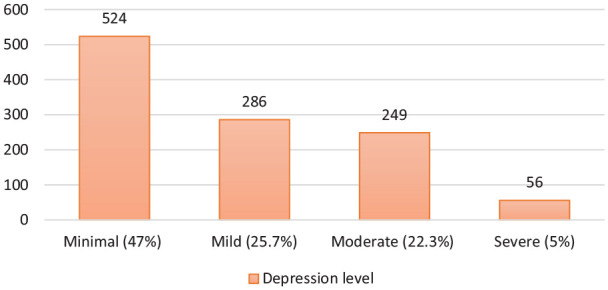
The COVID-19 pandemic caused mild-level depression in the Turkish society.
土耳其是 COVID-19 大流行导致死亡率最高的国家之一。大流行导致个人出现焦虑和抑郁。然而,关于 COVID-19 对个人的影响及其应对方法的信息不足。因此,需要迅速评估与大流行相关的精神问题。
本研究旨在确定受 COVID-19 影响的社会中抑郁水平和相关因素。
本研究采用描述性横断面设计进行规划。该研究于土耳其首次确诊 COVID-19 后 2 周开始,于 2020 年 3 月 23 日至 4 月 3 日进行。研究包括 1115 名年龄在 18 至 65 岁之间的成年参与者,他们是土耳其共和国的公民。研究通过在线问卷进行,使用个人信息表和贝克抑郁量表收集数据。使用 IBM SPSS Statistics 版本 20 软件程序对数据进行评估。
18 至 29 岁、单身、学生且收入低于支出的女性参与者的抑郁评分高于其他参与者。与其他参与者相比,那些担心被感染和感染他人、有清洁癖、对未来感到焦虑、感到悲伤和焦虑的人抑郁程度较低。在隔离期间不得不改变居住地、感到孤独、害怕死亡、绝望、睡眠问题、感到无用和无价值、开始吸烟和饮酒以及中度抑郁的参与者。与其他人相比,与家人共度时光、为自己腾出时间、忙于家庭教育或工作的参与者的抑郁评分较低。
COVID-19 大流行导致土耳其社会出现轻度抑郁。