• 文献检索
  • 文档翻译
  • 深度研究
  • 学术资讯
  • Suppr Zotero 插件Zotero 插件
  • 邀请有礼
  • 套餐&价格
  • 历史记录
应用&插件
Suppr Zotero 插件Zotero 插件浏览器插件Mac 客户端Windows 客户端微信小程序
定价
高级版会员购买积分包购买API积分包
服务
文献检索文档翻译深度研究API 文档MCP 服务
关于我们
关于 Suppr公司介绍联系我们用户协议隐私条款
关注我们

Suppr 超能文献

核心技术专利:CN118964589B侵权必究
粤ICP备2023148730 号-1Suppr @ 2026

文献检索

告别复杂PubMed语法,用中文像聊天一样搜索,搜遍4000万医学文献。AI智能推荐,让科研检索更轻松。

立即免费搜索

文件翻译

保留排版,准确专业,支持PDF/Word/PPT等文件格式,支持 12+语言互译。

免费翻译文档

深度研究

AI帮你快速写综述,25分钟生成高质量综述,智能提取关键信息,辅助科研写作。

立即免费体验

关于婴幼儿食品中农药的科学意见。

Scientific opinion on pesticides in foods for infants and young children.

作者信息

Ockleford Colin, Adriaanse Paulien, Hougaard Bennekou Susanne, Berny Philippe, Brock Theodorus, Duquesne Sabine, Grilli Sandro, Hernandez-Jerez Antonio F, Klein Michael, Kuhl Thomas, Laskowski Ryszard, Machera Kyriaki, Pelkonen Olavi, Pieper Silvia, Smith Robert, Stemmer Michael, Sundh Ingvar, Teodorovic Ivana, Tiktak Aaldrik, Topping Christopher J, Gundert-Remy Ursula, Kersting Mathilde, Waalkens-Berendsen Ine, Chiusolo Arianna, Court Marques Danièle, Dujardin Bruno, Kass Georges E N, Mohimont Luc, Nougadère Alexandre, Reich Hermine, Wolterink Gerrit

出版信息

EFSA J. 2018 Jun 28;16(6):e05286. doi: 10.2903/j.efsa.2018.5286. eCollection 2018 Jun.

DOI:10.2903/j.efsa.2018.5286
PMID:32625927
原文链接:https://pmc.ncbi.nlm.nih.gov/articles/PMC7009577/
Abstract

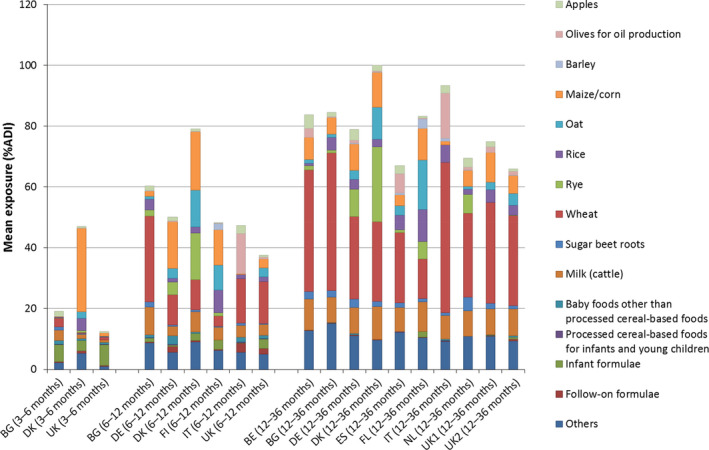
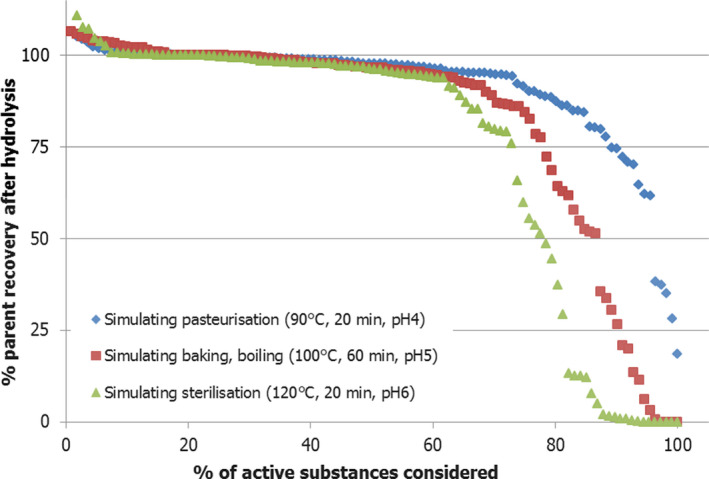
Following a request from the European Commission, the EFSA Panel on Plant Protection Products and their Residues (PPR Panel) prepared a scientific opinion to provide a comprehensive evaluation of pesticide residues in foods for infants and young children. In its approach to develop this scientific opinion, the EFSA PPR Panel took into account, among the others, (i) the relevant opinions of the Scientific Committee for Food setting a default maximum residue level (MRL) of 0.01 mg/kg for pesticide residues in foods for infants and young children; (ii) the recommendations provided by EFSA Scientific Committee in a guidance on risk assessment of substances present in food intended for infants below 16 weeks of age; (iii) the knowledge on organ/system development in infants and young children. For infants below 16 weeks of age, the EFSA PPR Panel concluded that pesticide residues at the default MRL of 0.01 mg/kg for food for infants and young children are not likely to result in an unacceptable exposure for active substances for which a health-based guidance value (HBGV) of 0.0026 mg/kg body weight (bw) per day or higher applies. Lower MRLs are recommended for active substances with HBGVs below this value. For infants above 16 weeks of age and young children, the established approach for setting HBGVs is considered appropriate. For infants below 16 weeks of age the approach may not be appropriate and the application of the EFSA guidance on risk assessment of substances present in food intended for infants below 16 weeks of age is recommended. The contribution of conventional food to the total exposure to pesticide residues is much higher than that from foods intended for infants and young children. Because of the increased intake of conventional food by young children, these have the highest exposure to pesticide residues, whereas infants 3-6 months of age generally have lower exposure. The impact of cumulative exposure to pesticide residues on infants and young children is not different from the general population and the EFSA cumulative risk assessment methodology is also applicable to these age groups. Residue definitions established under Regulation (EC) No 396/2005 are in general considered appropriate also for foods for infants and young children. However, based on a tier 1 analysis of the hydrolysis potential of pesticides simulating processing, the particular appropriateness of existing residue definitions for monitoring to cover processed food, both intended for infants and young children as well as conventional food, is questionable.

摘要

应欧盟委员会的要求,欧洲食品安全局植物保护产品及其残留问题专家组(PPR专家组)编写了一份科学意见,以全面评估婴幼儿食品中的农药残留。在制定该科学意见的过程中,PPR专家组除其他因素外,还考虑了:(i)食品科学委员会设定的婴幼儿食品中农药残留默认最大残留限量(MRL)为0.01毫克/千克的相关意见;(ii)欧洲食品安全局科学委员会在关于16周龄以下婴儿食用食品中存在的物质风险评估指南中提供的建议;(iii)关于婴幼儿器官/系统发育的知识。对于16周龄以下的婴儿,PPR专家组得出结论,对于每日健康基准值(HBGV)为0.0026毫克/千克体重(bw)或更高的活性物质,婴幼儿食品中默认MRL为0.01毫克/千克的农药残留不太可能导致不可接受的暴露。对于HBGV低于该值的活性物质,建议采用更低的MRL。对于16周龄以上的婴儿和幼儿,既定的HBGV设定方法被认为是合适的。对于16周龄以下的婴儿,该方法可能不合适,建议应用欧洲食品安全局关于16周龄以下婴儿食用食品中存在的物质风险评估指南。传统食品对农药残留总暴露量的贡献远高于婴幼儿食品。由于幼儿对传统食品的摄入量增加,他们对农药残留的暴露量最高,而3至6个月大的婴儿通常暴露量较低。农药残留累积暴露对婴幼儿的影响与一般人群无异,欧洲食品安全局的累积风险评估方法也适用于这些年龄组。根据(EC)No 396/2005号法规确定的残留定义通常也被认为适用于婴幼儿食品。然而,基于对模拟加工过程中农药水解潜力的一级分析,现有残留定义对于监测涵盖婴幼儿食品和传统食品的加工食品的特别适用性值得怀疑。
https://cdn.ncbi.nlm.nih.gov/pmc/blobs/fd6f/7009577/02bc9ea58160/EFS2-16-e05286-g007.jpg
https://cdn.ncbi.nlm.nih.gov/pmc/blobs/fd6f/7009577/cf557ebaf525/EFS2-16-e05286-g001.jpg
https://cdn.ncbi.nlm.nih.gov/pmc/blobs/fd6f/7009577/2fd6354d8fee/EFS2-16-e05286-g002.jpg
https://cdn.ncbi.nlm.nih.gov/pmc/blobs/fd6f/7009577/f8b2dd9fc6c4/EFS2-16-e05286-g003.jpg
https://cdn.ncbi.nlm.nih.gov/pmc/blobs/fd6f/7009577/5a4ed0468c98/EFS2-16-e05286-g004.jpg
https://cdn.ncbi.nlm.nih.gov/pmc/blobs/fd6f/7009577/02bc9ea58160/EFS2-16-e05286-g007.jpg
https://cdn.ncbi.nlm.nih.gov/pmc/blobs/fd6f/7009577/cf557ebaf525/EFS2-16-e05286-g001.jpg
https://cdn.ncbi.nlm.nih.gov/pmc/blobs/fd6f/7009577/2fd6354d8fee/EFS2-16-e05286-g002.jpg
https://cdn.ncbi.nlm.nih.gov/pmc/blobs/fd6f/7009577/f8b2dd9fc6c4/EFS2-16-e05286-g003.jpg
https://cdn.ncbi.nlm.nih.gov/pmc/blobs/fd6f/7009577/5a4ed0468c98/EFS2-16-e05286-g004.jpg
https://cdn.ncbi.nlm.nih.gov/pmc/blobs/fd6f/7009577/02bc9ea58160/EFS2-16-e05286-g007.jpg

相似文献

1
Scientific opinion on pesticides in foods for infants and young children.关于婴幼儿食品中农药的科学意见。
EFSA J. 2018 Jun 28;16(6):e05286. doi: 10.2903/j.efsa.2018.5286. eCollection 2018 Jun.
2
Guidance on the risk assessment of substances present in food intended for infants below 16 weeks of age.16周龄以下婴儿食用食品中所含物质的风险评估指南。
EFSA J. 2017 May 31;15(5):e04849. doi: 10.2903/j.efsa.2017.4849. eCollection 2017 May.
3
The 2021 European Union report on pesticide residues in food.2021年欧盟食品中农药残留报告。
EFSA J. 2023 Apr 26;21(4):e07939. doi: 10.2903/j.efsa.2023.7939. eCollection 2023 Apr.
4
Statement on the toxicological properties and maximum residue levels of acetamiprid and its metabolites.关于啶虫脒及其代谢物毒理学特性和最大残留限量的声明。
EFSA J. 2024 May 15;22(5):e8759. doi: 10.2903/j.efsa.2024.8759. eCollection 2024 May.
5
Safety and nutritional assessment of GM plants and derived food and feed: the role of animal feeding trials.转基因植物及其衍生食品和饲料的安全性与营养评估:动物饲养试验的作用
Food Chem Toxicol. 2008 Mar;46 Suppl 1:S2-70. doi: 10.1016/j.fct.2008.02.008. Epub 2008 Feb 13.
6
Pilot study on uncertainty analysis in EFSA Reasoned Opinions on the modification of pesticide maximum residue levels.欧洲食品安全局关于农药最大残留限量修订的合理意见中不确定性分析的初步研究。
EFSA J. 2017 Jul 27;15(7):e04906. doi: 10.2903/j.efsa.2017.4906. eCollection 2017 Jul.
7
The 2020 European Union report on pesticide residues in food.2020年欧盟食品中农药残留报告。
EFSA J. 2022 Mar 30;20(3):e07215. doi: 10.2903/j.efsa.2022.7215. eCollection 2022 Mar.
8
Scientific Opinion of the PPR Panel on the follow-up of the findings of the External Scientific Report 'Literature review of epidemiological studies linking exposure to pesticides and health effects'.动物健康与福利专家组关于《将接触农药与健康影响联系起来的流行病学研究文献综述》外部科学报告研究结果后续跟进的科学意见。
EFSA J. 2017 Oct 31;15(10):e05007. doi: 10.2903/j.efsa.2017.5007. eCollection 2017 Oct.
9
Setting the stage for the review of the international estimate of short-term intake (IESTI) equation.为国际短期摄入量估计(IESTI)方程的综述奠定基础。
J Environ Sci Health B. 2018 Jun 3;53(6):343-351. doi: 10.1080/03601234.2018.1439807.
10
Opinion on the re-evaluation of sodium carboxy methyl cellulose (E 466) as a food additive in foods for infants below 16 weeks of age and follow-up of its re-evaluation as food additive for uses in foods for all population groups.关于重新评估羧甲基纤维素钠(E 466)作为16周龄以下婴儿食品中的食品添加剂以及对其作为所有人群食品添加剂重新评估的后续跟进意见。
EFSA J. 2022 Dec 9;20(12):e07665. doi: 10.2903/j.efsa.2022.7665. eCollection 2022 Dec.

引用本文的文献

1
The 2023 European Union report on pesticide residues in food.2023年欧盟食品中农药残留报告。
EFSA J. 2025 May 14;23(5):e9398. doi: 10.2903/j.efsa.2025.9398. eCollection 2025 May.
2
The 2022 European Union report on pesticide residues in food.2022年欧盟食品中农药残留报告。
EFSA J. 2024 Apr 23;22(4):e8753. doi: 10.2903/j.efsa.2024.8753. eCollection 2024 Apr.
3
Guidance document on the impact of water treatment processes on residues of active substances or their metabolites in water abstracted for the production of drinking water.

本文引用的文献

1
Use of EFSA Pesticide Residue Intake Model (EFSA PRIMo revision 3).使用欧洲食品安全局农药残留摄入模型(EFSA PRIMo第3版修订本)。
EFSA J. 2018 Jan 15;16(1):e05147. doi: 10.2903/j.efsa.2018.5147. eCollection 2018 Jan.
2
Scientific support for preparing an EU position in the 49th Session of the Codex Committee on Pesticide Residues (CCPR).为欧盟在农药残留法典委员会(CCPR)第49届会议上制定立场提供科学支持。
EFSA J. 2017 Jul 25;15(7):e04929. doi: 10.2903/j.efsa.2017.4929. eCollection 2017 Jul.
3
Guidance on the risk assessment of substances present in food intended for infants below 16 weeks of age.
关于水处理工艺对用于饮用水生产的取水口中活性物质或其代谢物残留影响的指导文件。
EFSA J. 2023 Aug 28;21(8):e08194. doi: 10.2903/j.efsa.2023.8194. eCollection 2023 Aug.
4
The 2021 European Union report on pesticide residues in food.2021年欧盟食品中农药残留报告。
EFSA J. 2023 Apr 26;21(4):e07939. doi: 10.2903/j.efsa.2023.7939. eCollection 2023 Apr.
5
The 2020 European Union report on pesticide residues in food.2020年欧盟食品中农药残留报告。
EFSA J. 2022 Mar 30;20(3):e07215. doi: 10.2903/j.efsa.2022.7215. eCollection 2022 Mar.
6
Household pesticide exposures and infant gross motor development in the MADRES cohort.家庭农药暴露与 MADRES 队列中婴儿粗大运动发育。
Paediatr Perinat Epidemiol. 2022 Mar;36(2):220-229. doi: 10.1111/ppe.12850. Epub 2021 Dec 29.
7
The 2019 European Union report on pesticide residues in food.2019年欧盟食品中农药残留报告。
EFSA J. 2021 Apr 7;19(4):e06491. doi: 10.2903/j.efsa.2021.6491. eCollection 2021 Apr.
8
Statement on the derivation of Health-Based Guidance Values (HBGVs) for regulated products that are also nutrients.关于既是营养成分又是受监管产品的基于健康的指导值(HBGVs)推导的声明。
EFSA J. 2021 Mar 18;19(3):e06479. doi: 10.2903/j.efsa.2021.6479. eCollection 2021 Mar.
9
Cumulative dietary risk assessment of chronic acetylcholinesterase inhibition by residues of pesticides.农药残留对慢性乙酰胆碱酯酶抑制作用的累积膳食风险评估
EFSA J. 2021 Feb 10;19(2):e06392. doi: 10.2903/j.efsa.2021.6392. eCollection 2021 Feb.
10
Cumulative dietary risk characterisation of pesticides that have chronic effects on the thyroid.对甲状腺有慢性影响的农药的累积膳食风险特征描述
EFSA J. 2020 Apr 29;18(4):e06088. doi: 10.2903/j.efsa.2020.6088. eCollection 2020 Apr.
16周龄以下婴儿食用食品中所含物质的风险评估指南。
EFSA J. 2017 May 31;15(5):e04849. doi: 10.2903/j.efsa.2017.4849. eCollection 2017 May.
4
The 2015 European Union report on pesticide residues in food.2015年欧盟食品中农药残留报告。
EFSA J. 2017 Apr 11;15(4):e04791. doi: 10.2903/j.efsa.2017.4791. eCollection 2017 Apr.
5
A better approach to in vivo developmental neurotoxicity assessment: Alignment of rodent testing with effects seen in children after neurotoxic exposures.一种更好的体内发育神经毒性评估方法:使啮齿动物测试与神经毒性暴露后儿童中观察到的效应保持一致。
Toxicol Appl Pharmacol. 2018 Sep 1;354:176-190. doi: 10.1016/j.taap.2018.03.012. Epub 2018 Mar 12.
6
The gut microbiota: a major player in the toxicity of environmental pollutants?肠道微生物群:环境污染物毒性的主要影响因素?
NPJ Biofilms Microbiomes. 2016 May 4;2:16003. doi: 10.1038/npjbiofilms.2016.3. eCollection 2016.
7
Are There Sensitive Periods for Food Acceptance in Infancy?婴儿期食物接受存在敏感期吗?
Curr Nutr Rep. 2017;6(2):190-196. doi: 10.1007/s13668-017-0203-0. Epub 2017 Apr 29.
8
OECD/EFSA workshop on developmental neurotoxicity (DNT): The use of non-animal test methods for regulatory purposes.经合组织/欧洲食品安全局发育神经毒性(DNT)研讨会:用于监管目的的非动物测试方法的使用。
ALTEX. 2017;34(2):311-315. doi: 10.14573/altex.1701171.
9
Early Nutritional Interventions for Brain and  Cognitive Development in Preterm Infants: A Review of the Literature.早产儿脑与认知发育的早期营养干预:文献综述
Nutrients. 2017 Feb 23;9(3):187. doi: 10.3390/nu9030187.
10
Maturation of the infant microbiome community structure and function across multiple body sites and in relation to mode of delivery.婴儿微生物群落结构和功能在多个身体部位的成熟情况以及与分娩方式的关系。
Nat Med. 2017 Mar;23(3):314-326. doi: 10.1038/nm.4272. Epub 2017 Jan 23.