Anastassiadou Maria, Choi Judy, Coja Tamara, Dujardin Bruno, Hart Andy, Hernandez-Jerrez Antonio F, Jarrah Samira, Lostia Alfonso, Machera Kyriaki, Mangas Iris, Mienne Alexandra, Schepens Marloes, Widenfalk Anneli, Mohimont Luc
EFSA J. 2021 Feb 10;19(2):e06392. doi: 10.2903/j.efsa.2021.6392. eCollection 2021 Feb.
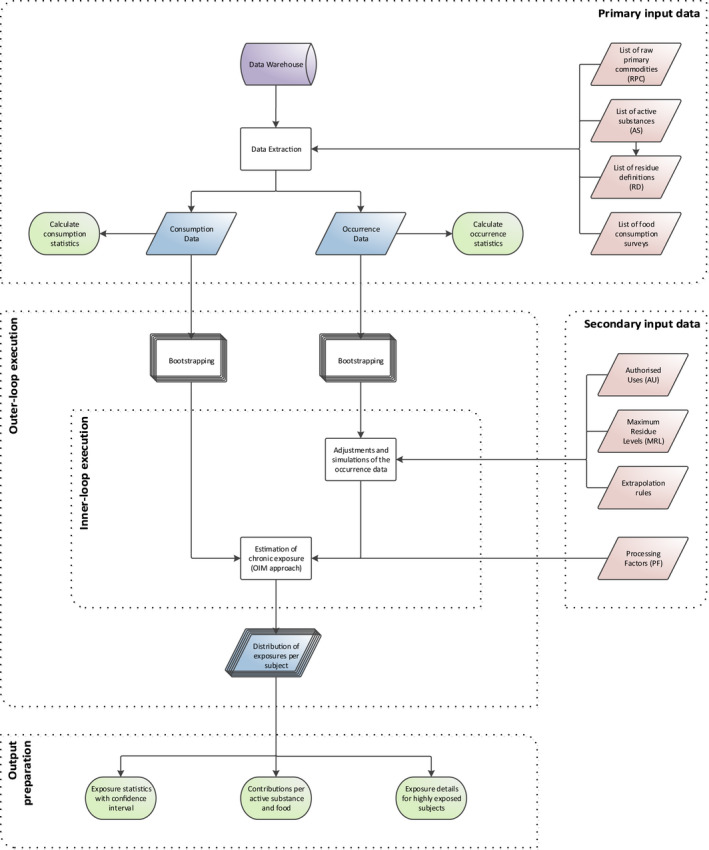
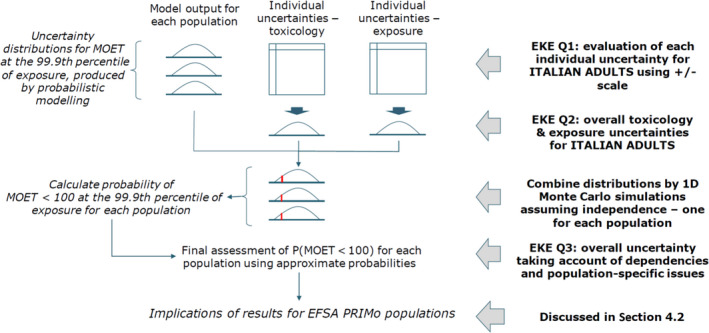
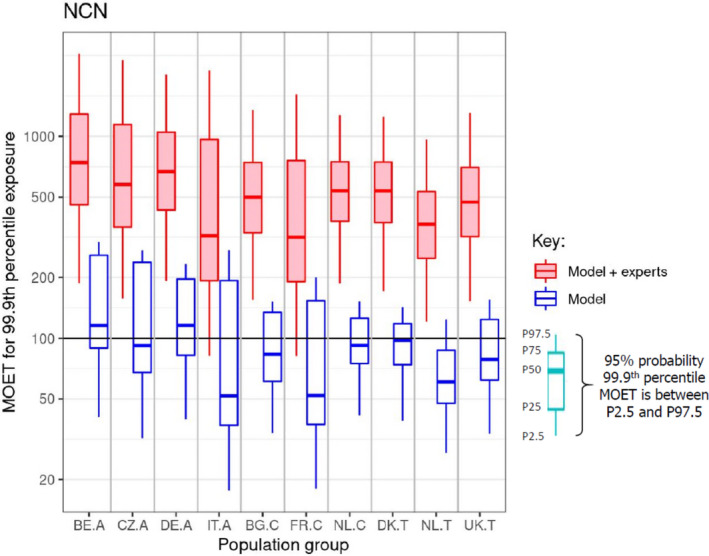
A retrospective cumulative risk assessment of dietary exposure to pesticide residues was conducted for chronic inhibition of acetylcholinesterase. The pesticides considered in this assessment were identified and characterised in a previous scientific report on the establishment of cumulative assessment groups of pesticides for their effects on the nervous system. The exposure assessments used monitoring data collected by Member States under their official pesticide monitoring programmes in 2016, 2017 and 2018, and individual food consumption data from 10 populations of consumers from different countries and from different age groups. Exposure estimates were obtained by means of a two-dimensional probabilistic model, which was implemented in SAS software. The characterisation of cumulative risk was supported by an uncertainty analysis based on expert knowledge elicitation. For each of the 10 populations, it is concluded with varying degrees of certainty that cumulative exposure to pesticides contributing to the chronic inhibition of acetylcholinesterase does not exceed the threshold for regulatory consideration established by risk managers.
针对慢性抑制乙酰胆碱酯酶的情况,开展了一项关于膳食中农药残留暴露的回顾性累积风险评估。本次评估中所考虑的农药,已在先前一份关于建立农药累积评估组以评估其对神经系统影响的科学报告中得到识别和特征描述。暴露评估使用了成员国在2016年、2017年和2018年官方农药监测计划下收集的监测数据,以及来自不同国家和不同年龄组的10组消费者群体的个体食物消费数据。暴露估计值通过在SAS软件中实施的二维概率模型获得。基于专家知识启发的不确定性分析为累积风险的特征描述提供了支持。对于这10组人群中的每一组,均得出不同程度确定性的结论:导致慢性抑制乙酰胆碱酯酶的农药累积暴露未超过风险管理者确定的监管考虑阈值。