Department of Pediatrics, Kangbuk Samsung Hospital, Sungkyunkwan University School of Medicine, Seoul, Korea.
Division of Biostatistics, Department of R&D Management, Kangbuk Samsung Hospital, Sungkyunkwan University School of Medicine, Seoul, Korea.
Yonsei Med J. 2020 Sep;61(9):797-804. doi: 10.3349/ymj.2020.61.9.797.
Climate and lifestyle changes increase an individual's susceptibility to various allergens and also the incidence of allergic diseases. We aimed to examine the changes in sensitization rate for aeroallergens over a 10-year period in Korean children.
We retrospectively reviewed the medical records of 4493 children who visited the allergy clinic at a tertiary hospital in Korea for allergic rhinitis or asthma from January 2009 to December 2018. The serum specific immunoglobulin E (IgE) levels were measured to confirm the sensitization against (), , weed and tree pollen mixtures, as well as cat and dog dander through ImmunoCAP test.
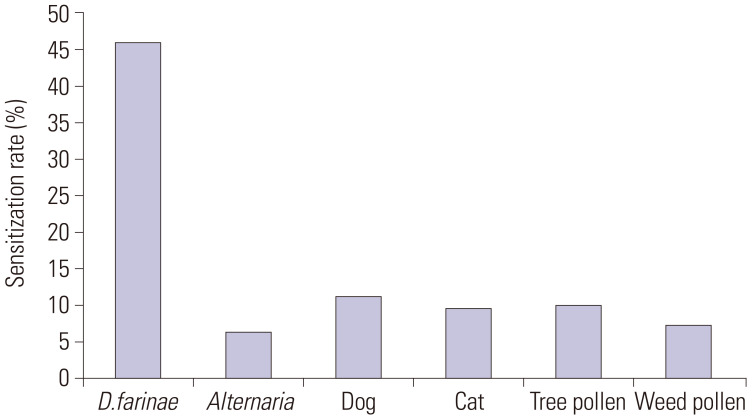
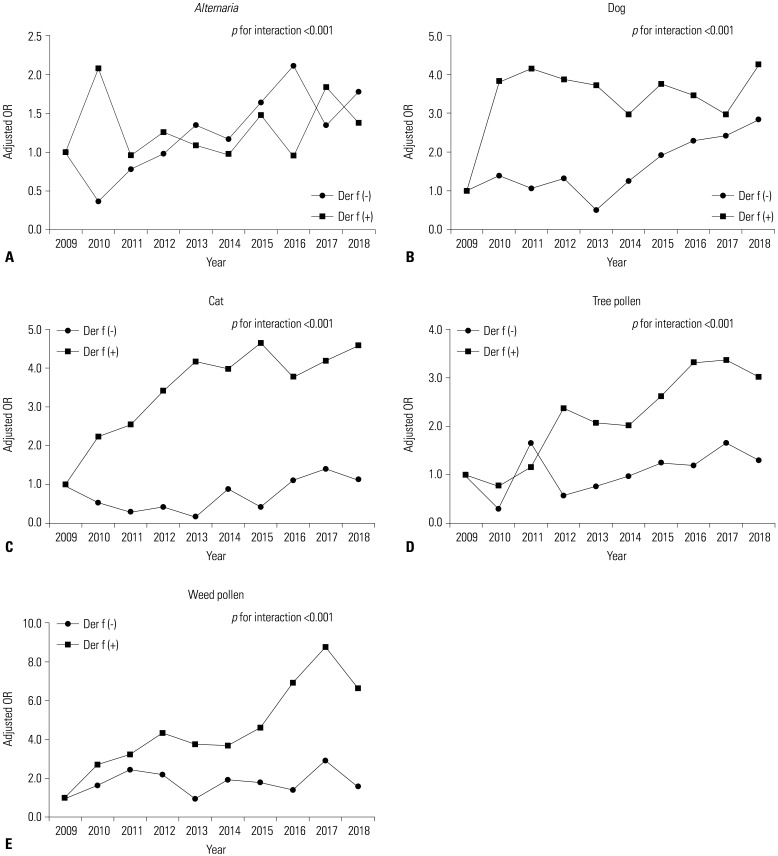
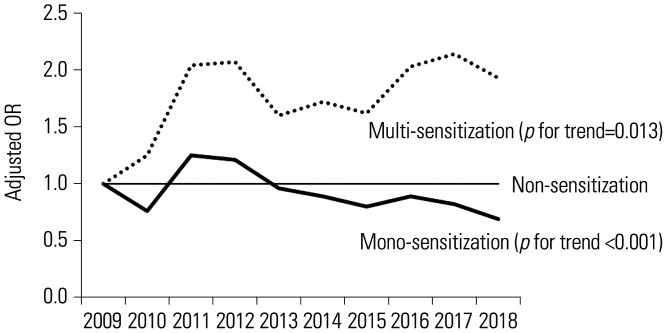
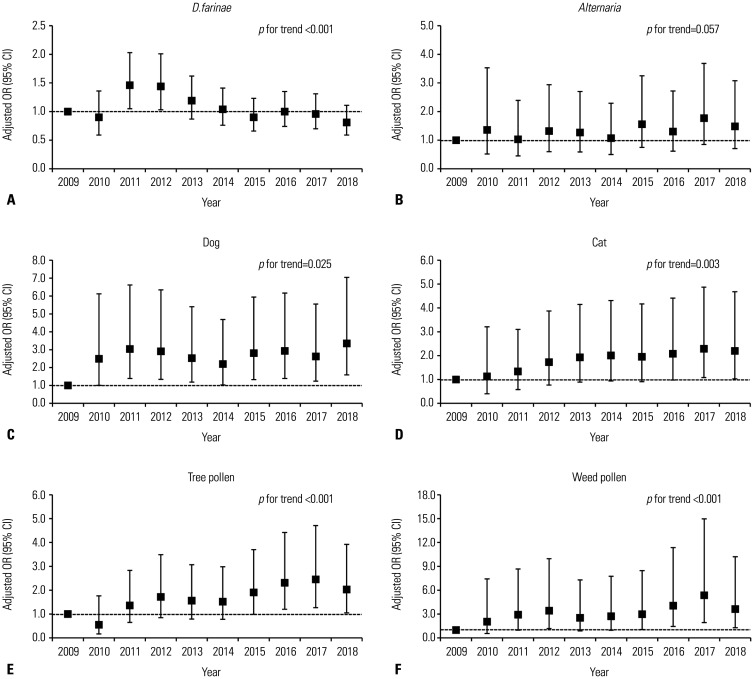
was the most common sensitizing aeroallergen (45.9%) during the 10-year span. The sensitization rate for tree pollen mixture ( for trend <0.001), weed pollen mixtures ( for trend <0.001), dog dander ( for trend=0.025), and cat dander ( for trend=0.003) showed ascending trends during the 10-year study period. Furthermore, the sensitization rate for multiple allergens (≥2) in 2018 increased significantly compared to that in 2009 ( for trend=0.013). Compared with children without sensitization to , those with sensitization to showed higher sensitization rates to other aeroallergens ( for interaction <0.001).
Children's sensitization rate to cat and dog dander and weed and tree pollen mixtures significantly increased during the 10-year period in Korea. Children with sensitization to are likely to be sensitized to other aeroallergens as well.
气候和生活方式的改变增加了个体对各种过敏原的易感性,也增加了过敏性疾病的发病率。我们旨在研究韩国儿童在 10 年内对空气过敏原致敏率的变化。
我们回顾性分析了 2009 年 1 月至 2018 年 12 月期间在韩国一家三级医院过敏科就诊的 4493 例过敏性鼻炎或哮喘儿童的病历。通过免疫 CAP 试验测量血清特异性免疫球蛋白 E(IgE)水平,以确认对 ()、 、杂草和树木花粉混合物以及猫和狗皮屑的致敏情况。
在 10 年期间, 是最常见的致敏空气过敏原(45.9%)。树木花粉混合物的致敏率( for trend <0.001)、杂草花粉混合物( for trend <0.001)、狗皮屑( for trend=0.025)和猫皮屑( for trend=0.003)在 10 年研究期间呈上升趋势。此外,2018 年对多种过敏原(≥2)的致敏率与 2009 年相比显著增加( for trend=0.013)。与未致敏于 的儿童相比,致敏于 的儿童对其他空气过敏原的致敏率更高( for interaction <0.001)。
在韩国,儿童对猫和狗皮屑以及杂草和树木花粉混合物的致敏率在 10 年内显著增加。对 的致敏儿童也可能对其他空气过敏原致敏。