Jo Seung Bin, Kim Hyun Kyung, Lee Hae Nim, Kim Yu-Jin, Dev Patel Kapil, Campbell Knowles Jonathan, Lee Jung-Hwan, Song Minju
Institute of Tissue Regeneration Engineering (ITREN), Dankook University, 119 Dandae-ro, Cheonan 31116, Korea.
UCL Eastman-Korea Dental Medicine Innovation Centre, Dankook University, 119 Dandae-ro, Cheonan 31116, Korea.
Nanomaterials (Basel). 2020 Sep 4;10(9):1750. doi: 10.3390/nano10091750.
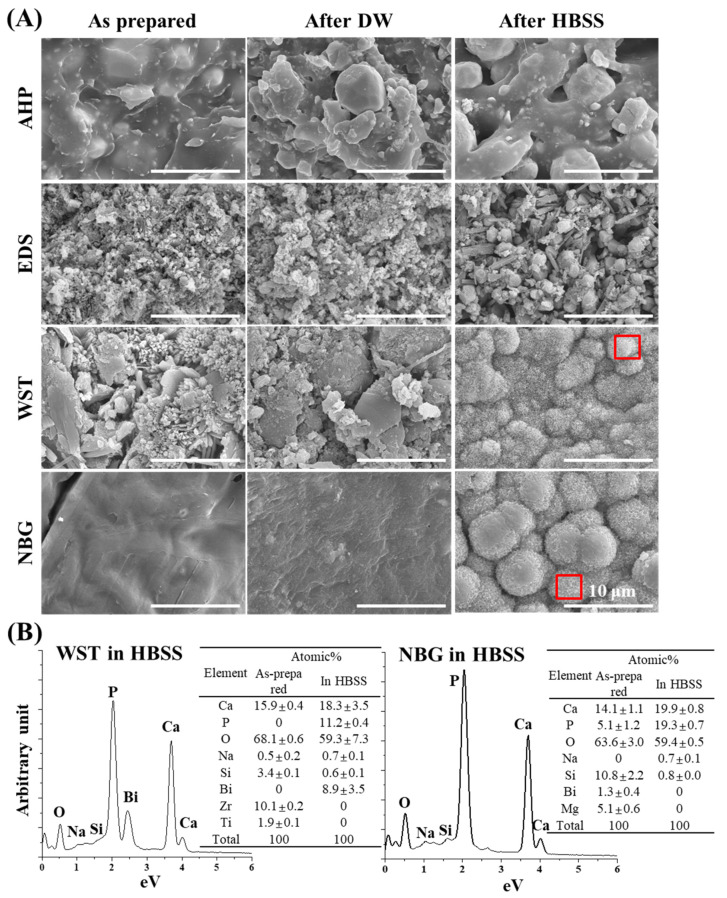
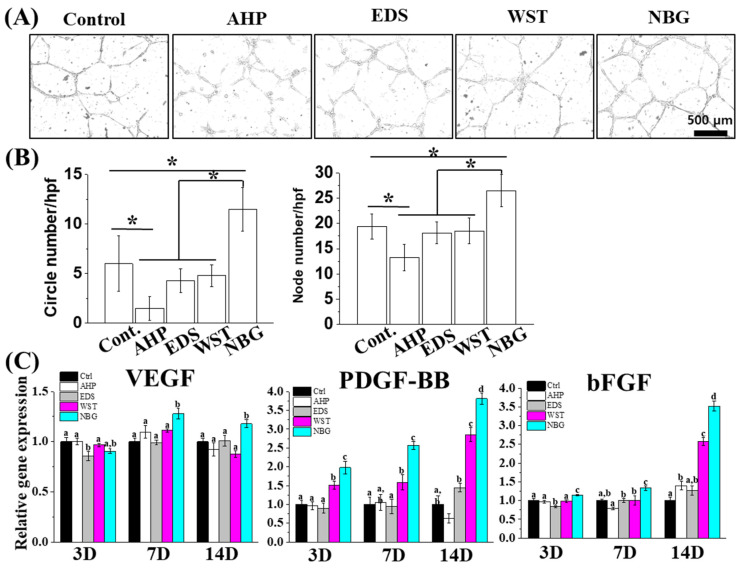
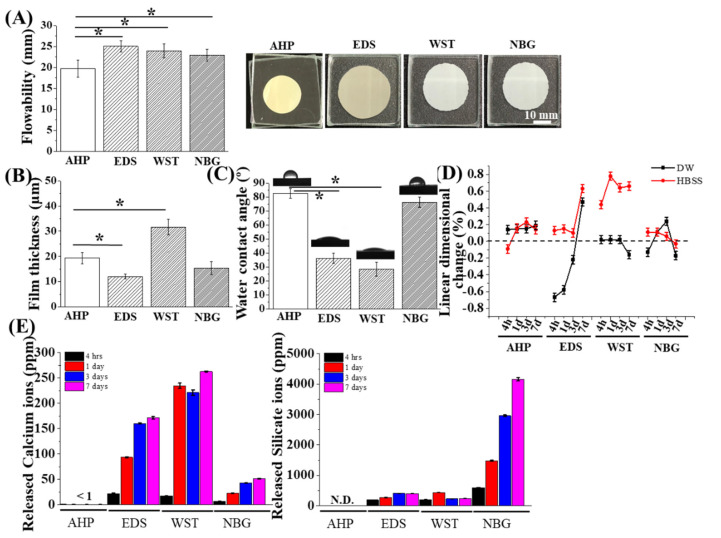
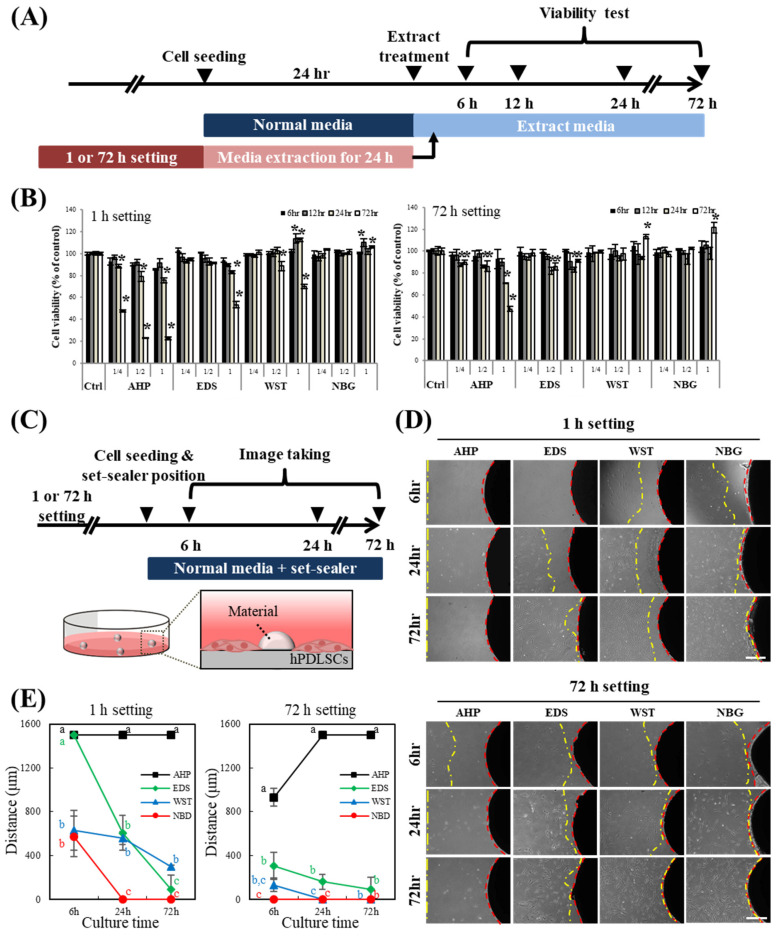
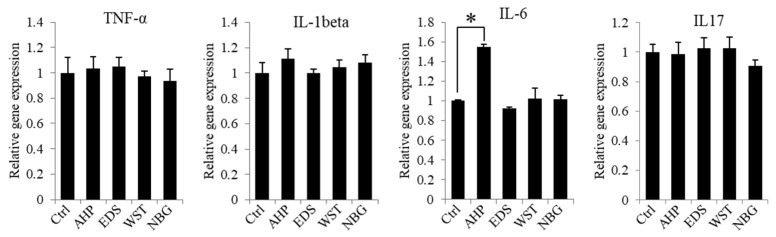
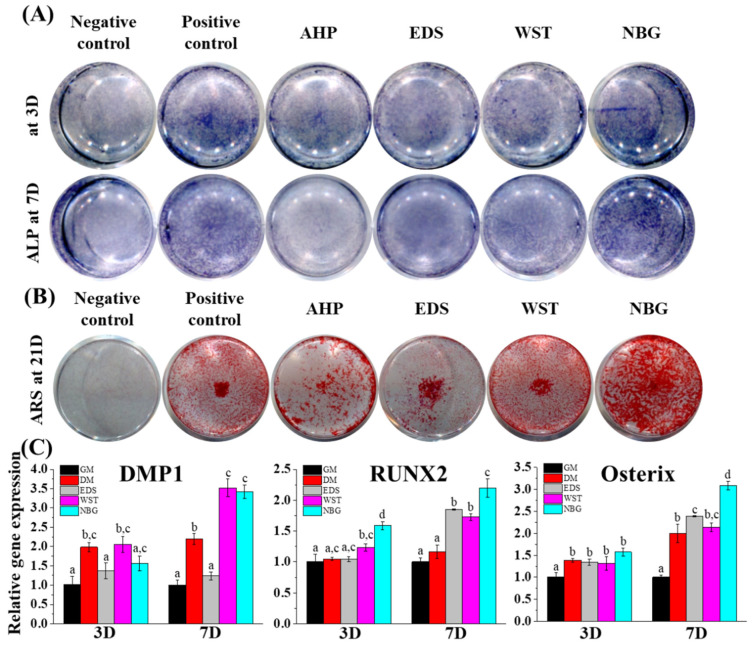
Calcium silicate-based bioactive glass has received significant attention for use in various biomedical applications due to its excellent bioactivity and biocompatibility. However, the bioactivity of calcium silicate nanoparticle-incorporated bioactive dental sealer is not much explored. Herein, three commercially available bioactive root canal sealers (Endoseal MTA (EDS), Well-Root ST (WST), and Nishika Canal Sealer BG (NBG)) were compared with a resin-based control sealer (AH Plus (AHP)) in terms of physical, chemical, and biological properties. EDS and NBG showed 200 to 400 nm and 100 to 200 nm nanoparticle incorporation in the SEM image, respectively, and WST and NBG showed mineral deposition in Hank's balanced salt solution after 28 days. The flowability and film thickness of all products met the ISO 3107 standard. Water contact angle, linear dimensional changes, and calcium and silicate ion release were significantly different among groups. All bioactive root canal sealers released calcium ions, while NBG released ~10 times more silicon ions than the other bioactive root canal sealers. Under the cytocompatible extraction range, NBG showed prominent cytocompatibility, osteogenecity, and angiogenecity compared to other sealers in vitro. These results indicate that calcium silicate nanoparticle incorporation in dental sealers could be a potential strategy for dental periapical tissue regeneration.
基于硅酸钙的生物活性玻璃因其优异的生物活性和生物相容性,在各种生物医学应用中受到了广泛关注。然而,对于含有硅酸钙纳米颗粒的生物活性牙科封闭剂的生物活性,目前研究较少。在此,将三种市售的生物活性根管封闭剂(Endoseal MTA(EDS)、Well-Root ST(WST)和Nishika Canal Sealer BG(NBG))与一种树脂基对照封闭剂(AH Plus(AHP))在物理、化学和生物学性能方面进行了比较。扫描电子显微镜图像显示,EDS和NBG分别含有200至400纳米和100至200纳米的纳米颗粒,WST和NBG在28天后在汉克平衡盐溶液中出现矿物质沉积。所有产品的流动性和薄膜厚度均符合ISO 3107标准。各组之间的水接触角、线性尺寸变化以及钙和硅酸根离子释放存在显著差异。所有生物活性根管封闭剂均释放钙离子,而NBG释放的硅离子比其他生物活性根管封闭剂多约10倍。在细胞相容性提取范围内,与其他封闭剂相比,NBG在体外表现出显著的细胞相容性、成骨性和血管生成性。这些结果表明,在牙科封闭剂中加入硅酸钙纳米颗粒可能是一种促进牙尖周组织再生的潜在策略。